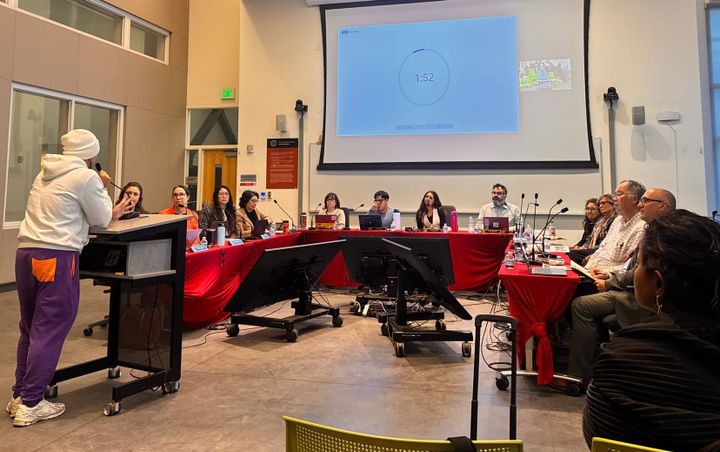
Network of Billionaires Squaring Off Against Teachers Union for Control of City College’s Future
Four out of the nine candidates for City College's board of trustees have been endorsed by two separate billionaire PACs, GrowSF and Abundance San Francisco.
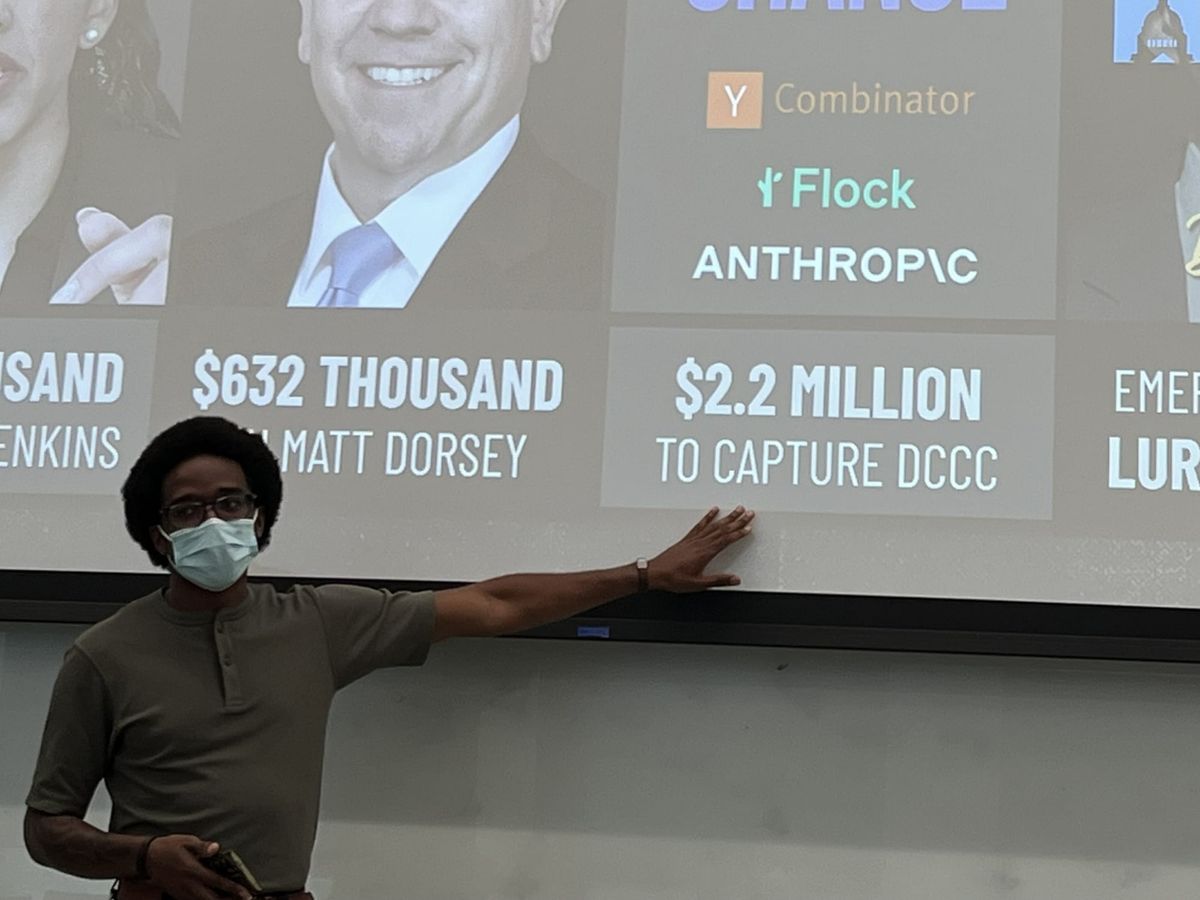
Two tech billionaire-backed political organizations, GrowSF and Abundant San Francisco, have endorsed Ruth Ferguson, Elijah Ball, Erwin Tam and Monroe Lace for City College’s Board of Trustees.
GrowSF and Abundant SF are part of what political watchdog the Phoenix Project calls the “Astroturf Network.” The term “astroturfing” refers to a carefully orchestrated and well-financed political campaign presenting itself as a community-based, grassroots movement.
GrowSF brands itself as committed to “making San Francisco work for everyone.” It is headed by Sachin Agarwal, a tech entrepreneur who used to work at Apple, Twitter and Lyft, and Steven Bacio, a software engineer who worked at Amazon and Google.
Abundant SF boasts a similar mission: delivering “outcomes that make our city vibrant and affordable.” It is the local chapter of the bigger Abundance Network, a political group founded by Misha Chellam, a serial entrepreneur, and Zack Rosen, founder of tech company Pantheon. Its political arm is called Families for a Vibrant San Francisco.
Analysis of publicly available data shows that GrowSF’s major donors include crypto-CEO Chris Larsen and Y Combinator partners Jessica Livingston and Garry Tan, while Families for a Vibrant San Francisco is heavily backed by Larsen, former Twitch CEO Emmett Shear, Twilio co-founder Jeff Lawson, and Yelp co-founder Jeremy Stoppelman.
Fiscal responsibility is a priority for these groups.
“Ball knows how a campus gets built and paid for, Lace knows where the students would come from, and Tam knows how to read the books,” says GrowSF’s voter guide. “[Ferguson] has the college's cost problem down to specifics.”
Of Ball, Abundant SF says in its vote guide that “he can provide the guidance our government needs to best execute complex matters involving land use and development.”
For Tam and Ferguson, Abundant SF emphasizes their “financial expertise,” and for Lace, they point to her interest in dual enrollment for high schoolers.
In 2024, City College nearly lost its accreditation for noncompliance around financial planning and board governance. Today, the dominant narrative about City College is that it is struggling with a budget deficit and shrinking reserves, with declining student enrollment as the culprit for loss of funding. In March, the Chancellor announced a plan to stop offering classes at the college’s Downtown Center, and to relocate them to other centers due to impending cuts in state funding and low enrollment.
“In order to address a lot of the issues that City College will be facing, especially with running into our structural deficit, I realized we need to have a broad coalition,” Ball said when asked about those endorsing him.
Ball, Tam, Lace and Ferguson have endorsements from other GrowSF candidates including Mayor Daniel Lurie, Senator Scott Weiner, school board President Phil Kim, and several district supervisors.
The Astroturf Network has facilitated at least $78 million spending on local candidates and ballot initiatives by some of San Francisco’s most prominent billionaires since 2020.
“[What] concerns me is that the billionaire agenda tends to go towards gentrification and consolidating executive power,” said Robin Pugh, AFT 2121 president and business teacher at City College.
AFT 2121 has made their choices for community college board of trustees, supporting the labor-backed slate of Bunny McFadden, Leah LaCroix and Jeremy Lee, along with United Educators of San Francisco and SEIU 1021. These unions are also teaming up to support several board of education candidates in a campaign dubbed, “SF Teachers vs. GrowSF.”
“One of the things that we see some of these billionaire-backed candidates do is throw up their hands and buy into the ‘doom loop’ about both San Francisco and City College,” Pugh said. “[The Board] has been talking about a structural deficit and throwing up their hands, wringing their hands. And it's just not true.”
Pugh pointed to AFT 2121’s own analysis of the budget, where they have actually found a surplus of $20 million for the 2024-25 school year.
The “doom loop” she’s referring to is a term picked up by mainstream media outlets to describe the phenomenon of capital abandoning urban centers after the COVID-19 pandemic. It has also been used to describe San Francisco’s increasing homelessness, drug use and other crimes of poverty.
According to the Phoenix Project’s Doom Loop Report, the doom loop is being used by billionaire interests to usher in increased policing and private investment.
“What public-private partnerships really are is a framework for privatizing public goods,” said Jeremy Mack, executive director of the Phoenix Project. Lurie’s mayoral transition plan report committed to making public-private partnerships a North Star for policymaking.
When it comes to public education, Mack pointed to the Astroturf Network’s history with school closures, specifically Neighbors for a Better San Francisco, funded heavily by real estate mogul William Oberndorf.
“Obendorf and half of the Neighbors’ board are venture capitalists that are deeply invested in the charter school movement,” Mack said. “So they have their take on why they don't think that the public sphere should run public education, that it should all be privatized.”
SFUSD’s reasons for school closures were budget deficits and declining enrollment — the same narrative being told about City College.
Time will tell if this billionaire network will have its say in City College politics. The Guardsman’s interviews of Ferguson, Ball and Lace found that, while they are interested in solving the college’s budget crisis and enrollment problem, they also plan to center student success.