Wet, Windy Weather Is Headed San Francisco's Way
With a storm on the horizon that looks to be at a level not seen in decades, City College is looking to fortify and prepare as best it can.
Power outages ate study time. Accidents made long commutes worse. Falling trees smashed cars. Wind and rain made working outdoors hard. Stormwater flooded homes. The 2022-23 El Nino really impacted City College students. It was relatively weak, but it was bad enough.
Now we’re hearing a lot about a “super” El Nino. Scientists confirm that the indicators have reached record strength and will likely last into next spring.
Add to that the compounding factors of a warming atmosphere, an ocean heat wave, an active Pacific hurricane season and this could be a crazy stormy winter.
Or maybe not. It’s just looking more likely. And we don’t know where or when exactly.
What does it mean for City College?
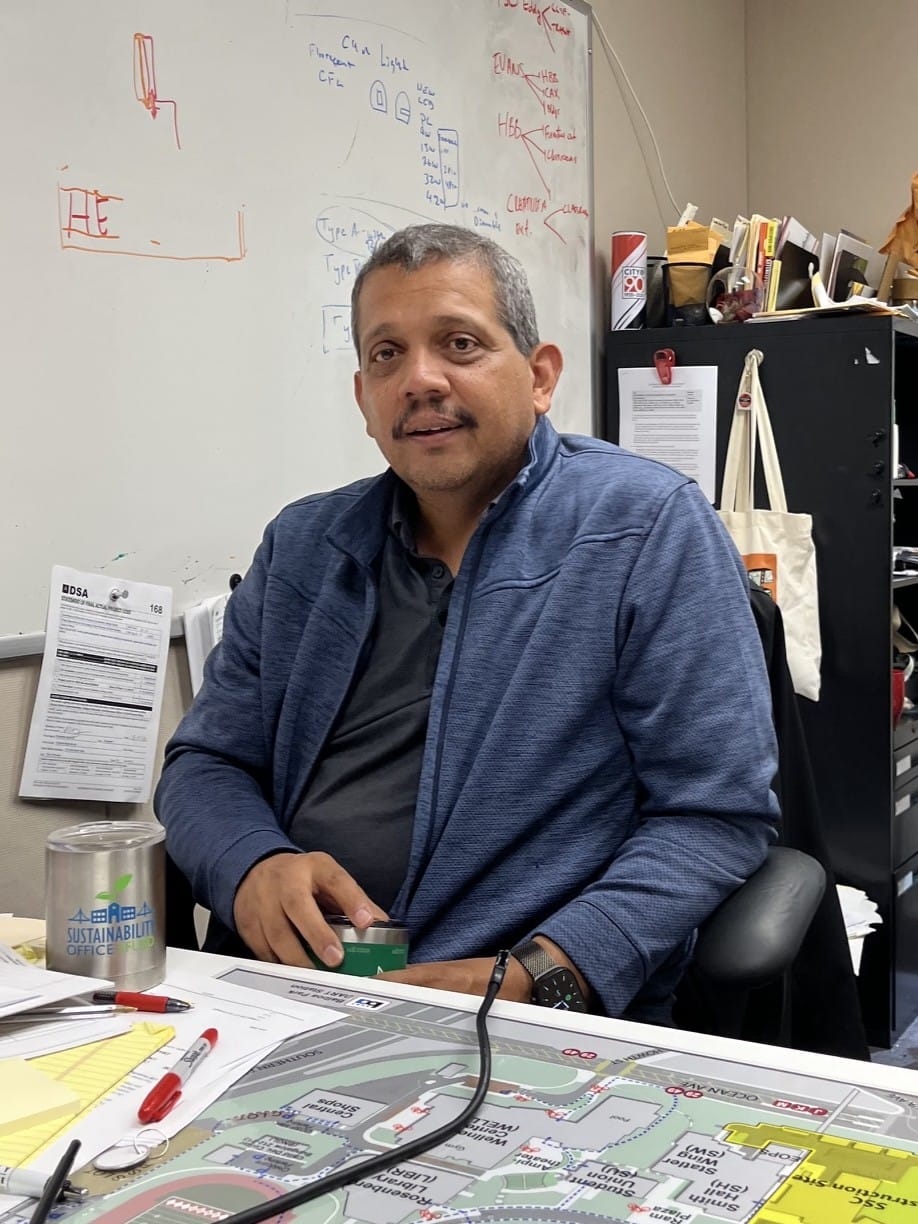
It’s the things he doesn’t know that worry Associate Vice Chancellor Alberto Vasquez, head of Facilities Department since 2020. “If it's a deluge of water we're not alone. The problem won't just be City College. It'll be downstream, the neighborhood, the area or the whole city, right? Yeah, it's really hard to manage.”
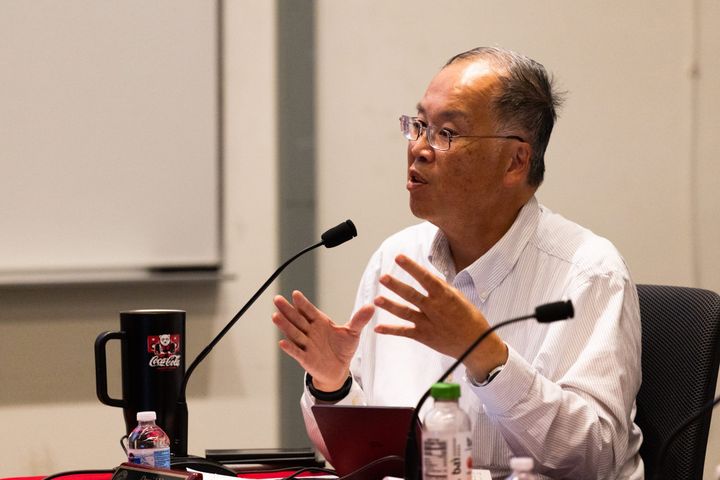
The El Nino conditions could “open the storm door” and there could be a tendency for storms to come in clusters, according to climatologist Daniel Swain.
This year could be similar to the 1982-83 El Nino which brought epic rain to central California, with landslides everywhere and major coastal erosion. Highway 101 was closed for a week.
Vasquez said all we can do is prepare the best we can.
“Before the first storm,” in September and October, he said that teams will be working together clearing roofs, removing tree roots and debris from building drains, and blasting out all storm drains with high pressure water. He said there’s enough funds and staffing.
“Our buildings and grounds team, our engineers, our plumbers, they all have some level of responsibility because if something's damaged on the roof, it becomes a plumbing issue. Then the plumbing issue becomes a carpentry issue. So they all have a vested interest to minimize that impact,” said Vasquez.
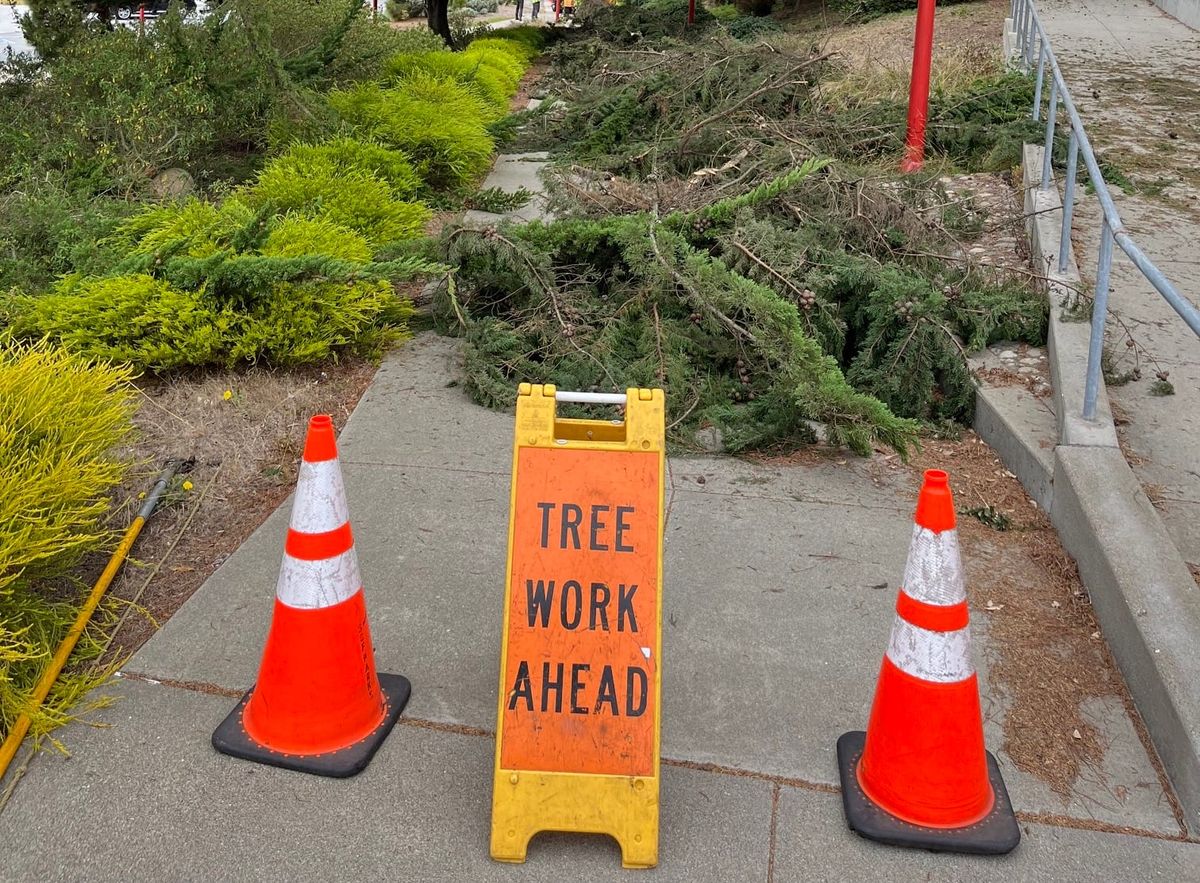
Campus tree health was assessed in 2019, according to Jasmine Kaw of Building and Grounds. Recently, Davey Tree has been trimming and removing hazardous trees.
The combination of high waves, high sea level, high tides and high rainfall will contribute to “considerable coastal flooding and erosion,” said oceanographer Mark Merifield.
City College’s Evans Center is built on former tidal marshland. However, Vasquez said he knows of no flooding issues there.
The library and student union have had problems with water coming up from natural waterways flowing under the campus. Vasquez said they’re figuring out how to solve it.
Both a huge new housing development and the new Diego Rivera Theater are under construction next to the Harry Britt and STEAM buildings.
Building Pipelines
Currently the underground pipes and wiring are being put in. Some are on City College property through an easement agreement. City College utilities will be connected to the new system probably sometime in October, according to Michael Kupryyanov of Nibbi Bros.
The site will drain out under the new Lee Avenue to enter the main SFPUC combined storm and sanitary (sewage) line running west under Ocean Avenue.
Those drain pipes are undersized, and a quarter of all “overland flow” must be captured onsite, according to planning documents for the development. The plan calls for a system of swales to capture the run-off.
But they aren’t built yet.
What used to be the old reservoir basin is now acres of exposed soil sloping down towards the commercial corridor on Ocean Avenue.
Fortunately the Harry Britt building, the Diego Rivera Theater site and STEAM are located on high ground.
“It’s huge. They had to drop it in with a crane,” said Vasquez referring to the stormwater retention tank located underground next to the Student Success Center. “The DRT will have one too.”
The college’s treasured Diego Rivera mural is currently stored in the old Diego Rivera Theater. During past storms, the “Creative Arts Lake” formed near it. The good news is that the problematic storm drain under the Creative Arts building has been replaced.
According to Music department chair Madeline Mueller, water has never reached the upper lobby area where the mural is stored. Cameras and sensors continuously monitor the conditions inside.
If the power goes out it might be PGE and the whole neighborhood, said Vasquez. “Anything we have on our site, we have enough team members to do some evaluation, and if it's beyond their capacity, then we go out to our next steps in hiring somebody who can assist us.”
SF Department of Public Works teams stand ready to clear fallen trees and clogged storm drains, replace blown out manhole covers and fill potholes, according to Rachel Gordon of SFDPW. Property owners should pick up their 10 free sandbags and get ready.
Here’s how to prepare. Report local flooding to 311. Adopt a drain. Sign up for SFAlert by texting your zip code to 888777. Keep a battery pack charged. That’s according to Helen Fong of SF Department of Emergency Management. They work closely with state and national agencies and will “amplify” safety alerts in multiple languages.
The truly bad news is that while we may get drenched and our beaches wash away, it could be far worse for others. Across the subtropics, El Ninos can disrupt monsoons and cause droughts, which would impact a lot of people, many already facing climate change and economic crises.