
How Philip K. Dick Predicted the Future of Artificial Intelligence in literature
The legendary writer and thought leader’s backlog is getting more realistic by the second.
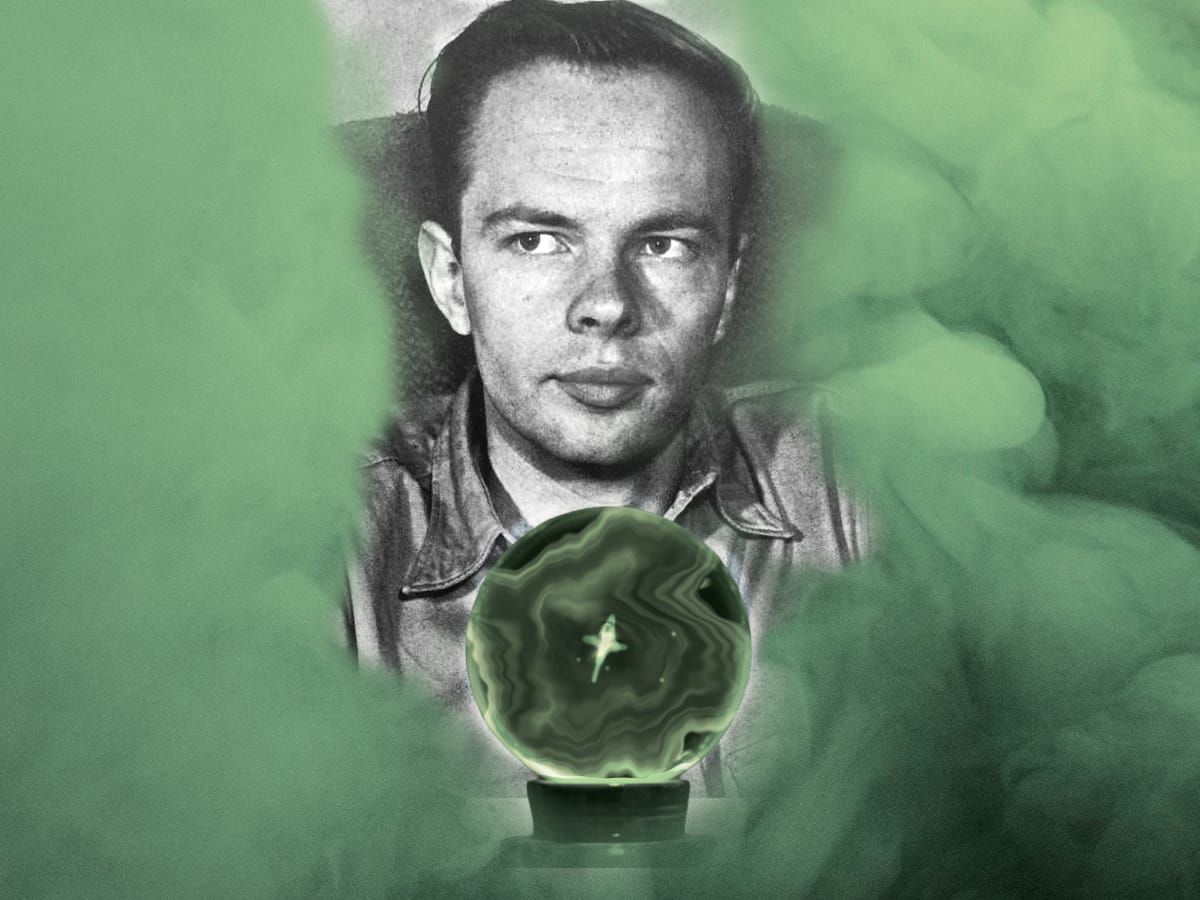
Why doesn’t Social Distortion, the legendary punk band shaped by deep rockabilly nostalgia, have a memoir?
That thought has been stuck in my mind in a loop since Social Distortion canceled their concert at the Masonic Center, which was to take place on my birthday. Every time I go to a bookstore, I ask for a Social Distortion or Mike Ness book. They deserve a memoir with the same respect as “Rotten: No Irish, No Blacks, No Dogs” by John “Johnny Rotten” Lydon about the Sex Pistols or “Dead Kennedys: Fresh Fruit for Rotten Vegetables, The Early Years” by Alex Ogg.
The last time I went to Bound Together, the anarchist bookstore in Lower Haight here in San Francisco, I asked again for a Social Distortion book. Since they didn't have one, I picked up “The Three Stigmata of Palmer Eldritch” by Philip K. Dick, the father of the capitalist dystopia and the real Nostradamus. Going back to the cyberpunk classics should be an obligatory diet, especially these days.
Later, the Amazon algorithm's synthetic magic recommended a book called “Social Distortion: Biography.” However, the reviews are terrible, just one star. In the comments, users describe the book as “shit generated by AI,” and one particular comment says the book repeatedly refers to the lead singer as a "her," even though fans know Mike Ness is a man, or at least is recognized as a man, and should be referred to with "him."
According to the article “How A.I. Books Sneak Their Way Into Stores” by Alexandra Alter, published in The New York Times last June, self-published books on Amazon with more than 50% of their content generated by AI total 2,168, including 970 novels in which more than 90% of the pages were written with AI. I’m sure the Social Distortion biography is part of that number.
In October 2026, the Spanish newspaper El País published an analysis by journalist Kiko Llaneras that found one in three best-selling self-published books were generated by AI.
In both cases, journalists used the software Pangram to detect whether the content was created by AI. Apparently, it is the most accurate and reliable software in which to trust if humans made some literature trick.
Maybe that’s why Pangram was the official technological tool in two recent literary scandals. Thélyson Orélien, a Haitian-Canadian author, was removed from the prestigious Prix Goncourt, awarded by the Académie Goncourt, on the grounds that the content was created using AI and involved plagiarism. Weeks later, David Silva Rojas, the Peruvian writer and winner of the Almadía-Ventosa Arrufat prize for short novels, was accused by El País of using 99% AI in the creation of his story, according to a Pangram diagnostic. His prize wasn’t withdrawn, but presentations of the novel in Spain were canceled pending an investigation.
At that point, I was halfway through the Philip K. Dick book I had, a 1965 novel set in a dystopian future where big corporations use hallucinogenic drugs to alter art for convenience, including cheesy AI-generated books that keep society anesthetized and manipulated. Dick writes that technology linked to the progressive idea of comfort produces laziness and lack of humanity.
Dick was probably the most visionary science fiction writer of his time. He understood the risks in the evolution of technology, including developments in AI and the consequences of addiction to it. This includes addiction to creating whatever type of content or art using pre-standardized patterns, as well as the search for truth. That’s the reason people ask large language models like ChatGPT for everything, from math problems and historical dates to book analyses and interpersonal conflicts, and are satisfied with the first answer.
According to Dick, that could be the field for distorting reality, where humans ask AI whether, for instance, a novel was written by AI.
Does that mean we now need to prove our human vulnerability and sensibility, our curiosity, frustration, sweat, desire, sadness or hope in front of AI software, with all its programming errors? Can AI describe the orgasmic experience of seeing Social Distortion live on stage, with the riffs destroying our ears, in the middle of the ecstasy of the moshpit, sweat and tears?
In the final pages of the novel, the human and AI realities collide. The only way to survive is through pleasure, and fewer humans can feel it.