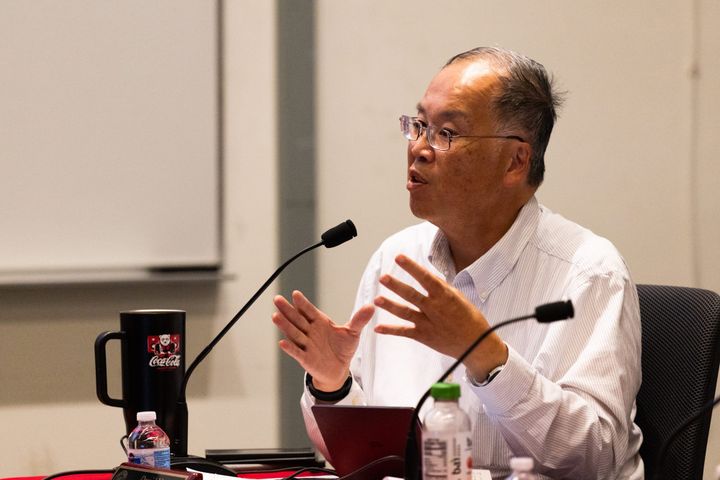
Journalists Gather For Community College Conference
The Guardsman took home 23 awards in the competition phase of the event.
Editors note: This story was written and submitted as an entry in the “On The Spot News” competition. It won first place.
In August 2024, two deputies from the San Joaquin County Sheriff's Office visited reporter Aaron Leathley’s home to question her about a search warrant she obtained while reporting on the case of a Stockton school board member.
Though it was determined a court clerk gave her the warrant while it was sealed, violating a court order, the sheriff’s office said Leathley would be investigated as a co-conspirator. On Leathley’s part, the warrant was obtained lawfully.
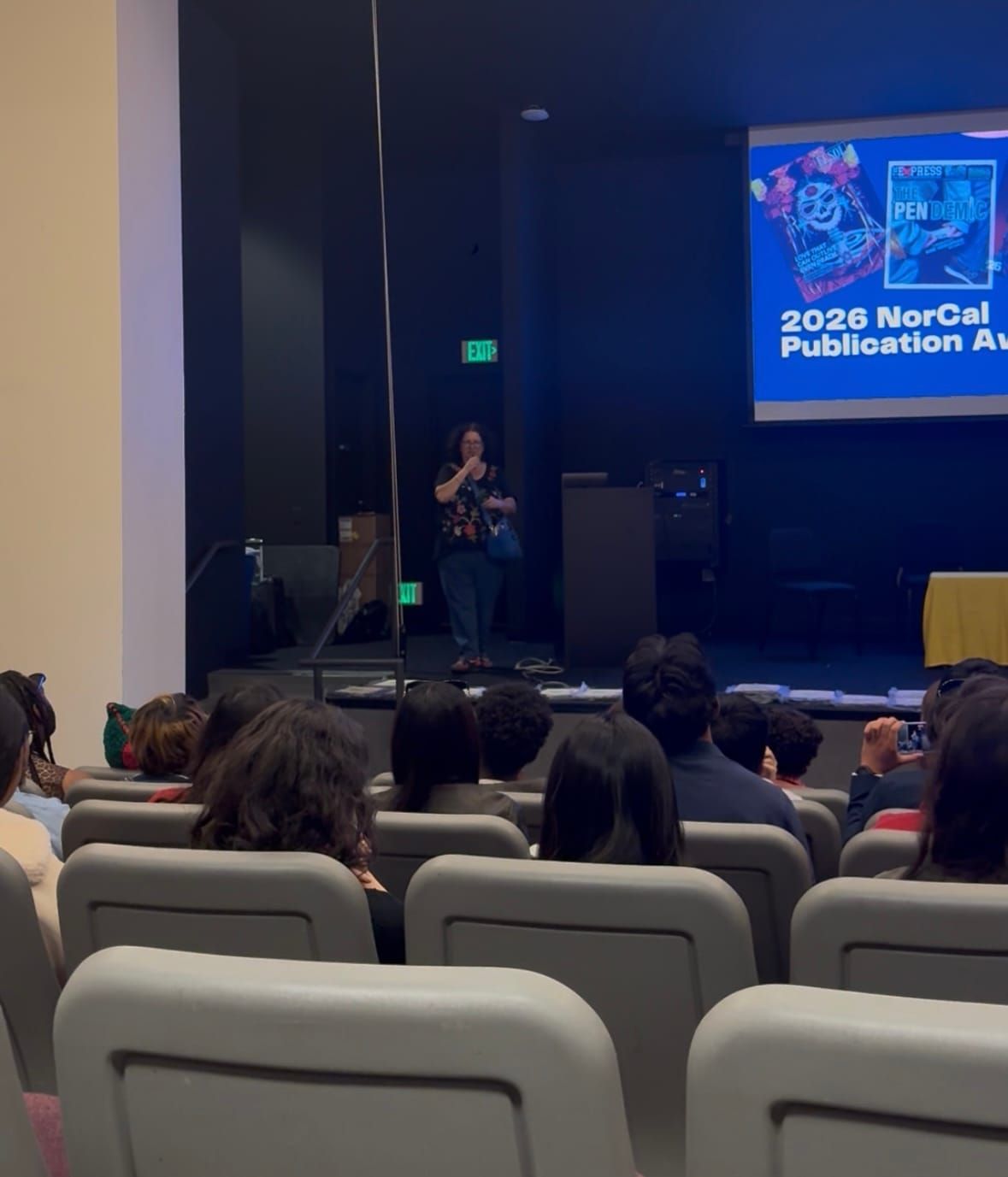
The story is an example of the increased targeting of journalists, the topic of the keynote panel at the Journalism Association of Community Colleges Northern California conference, taking place at San Francisco State University on Saturday.
Leathley, a reporter for Abridged, along with Annie Scaccia, a journalism professor at Contra Costa College, and Cassie Dickman, a journalism professor at Sacramento City College and Los Medanos College, spoke to roughly 150 eager journalism students from community colleges across Northern California. They urged them to know their rights as journalists, especially when no one else does.
“The [journalism] industry has been through a series of challenges … there are fewer journalists and therefore fewer people equipped to know how the press works,” Scaccia said.
The Press Freedom Tracker recorded 269 incidents of attacks on journalists in the United States this year alone, which includes criminal charges, assaults, and search and seizures.
The panelists spoke to how these attacks are experienced at the local level.
“They try to convince you that you don't know your rights,” Dickman said. “They know that newsrooms don't have a lot of funding so they just try to weed you out.”
Dwindling funds have led to weaker legal protections, according to Leathley.
“There's an awareness that local newspapers are less staffed legally,” she said. “There's not as strong of a legal pushback sometimes because of that constriction.”
Sciacca also pointed to the way laws inadvertently impact journalists. She cited Modesto’s attempted ban on masks and personal safety gear at protests, protections upon which journalists rely.
The antidote to these attacks, the panelists told students, is knowing their rights and leaning on colleagues.
Scaccia works with the Pacific Media Workers Guild, which pushed back against the Modesto mask ban and published a letter with other press freedom organizations condemning the 2024 sheriff’s visit to Leathley’s house.
For Dickman, legal knowledge is power: “Remember what you’ve been taught and hold firm.”