'Keeper of the Fire' Film Premiere at Brava Theater
By Diana Chuong
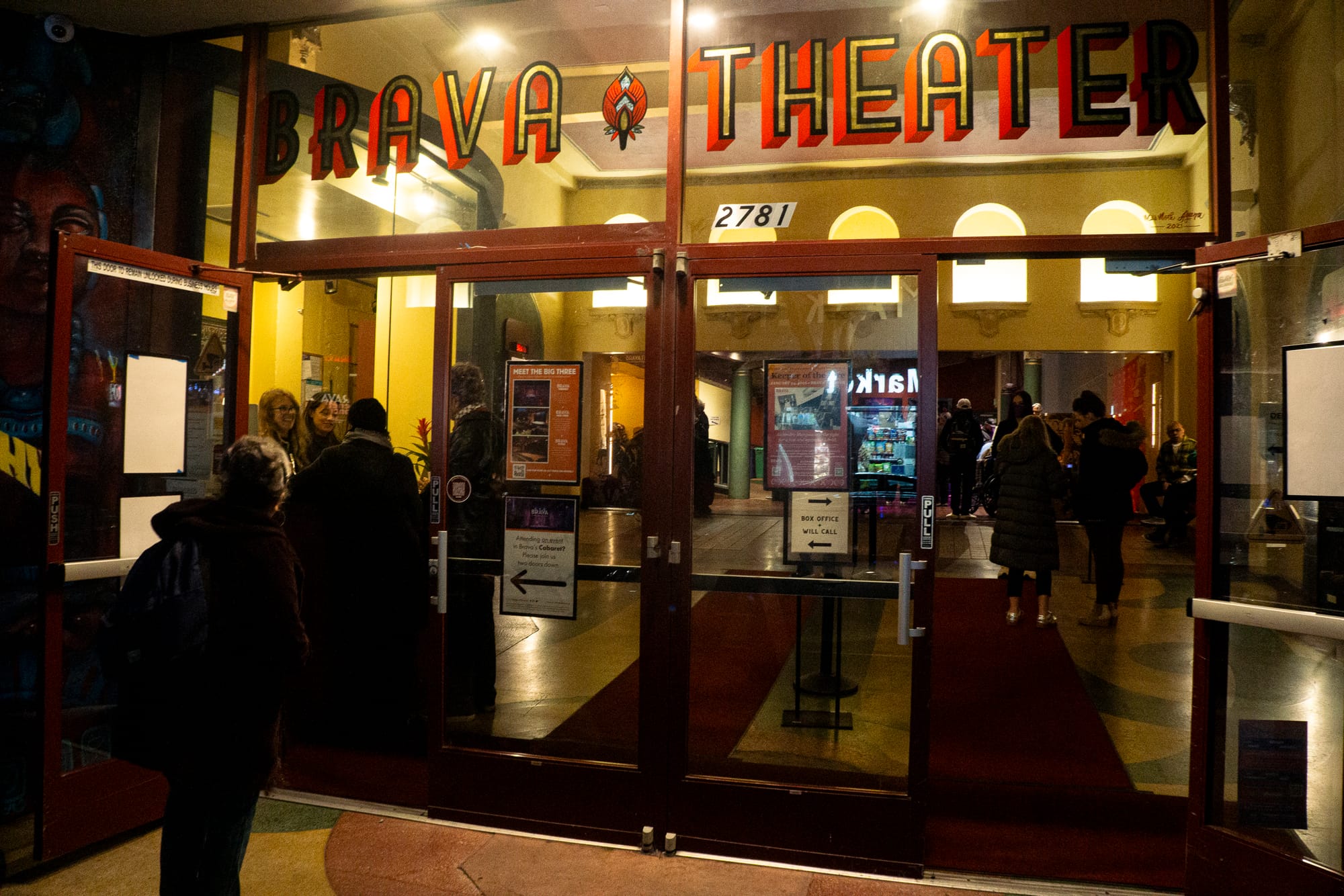
Slightly tucked away in the Inner Mission, at the end of the tree tunnel on 24th Street, stands the vibrant Brava Theater with its beautifully designed and colorful mural scape.
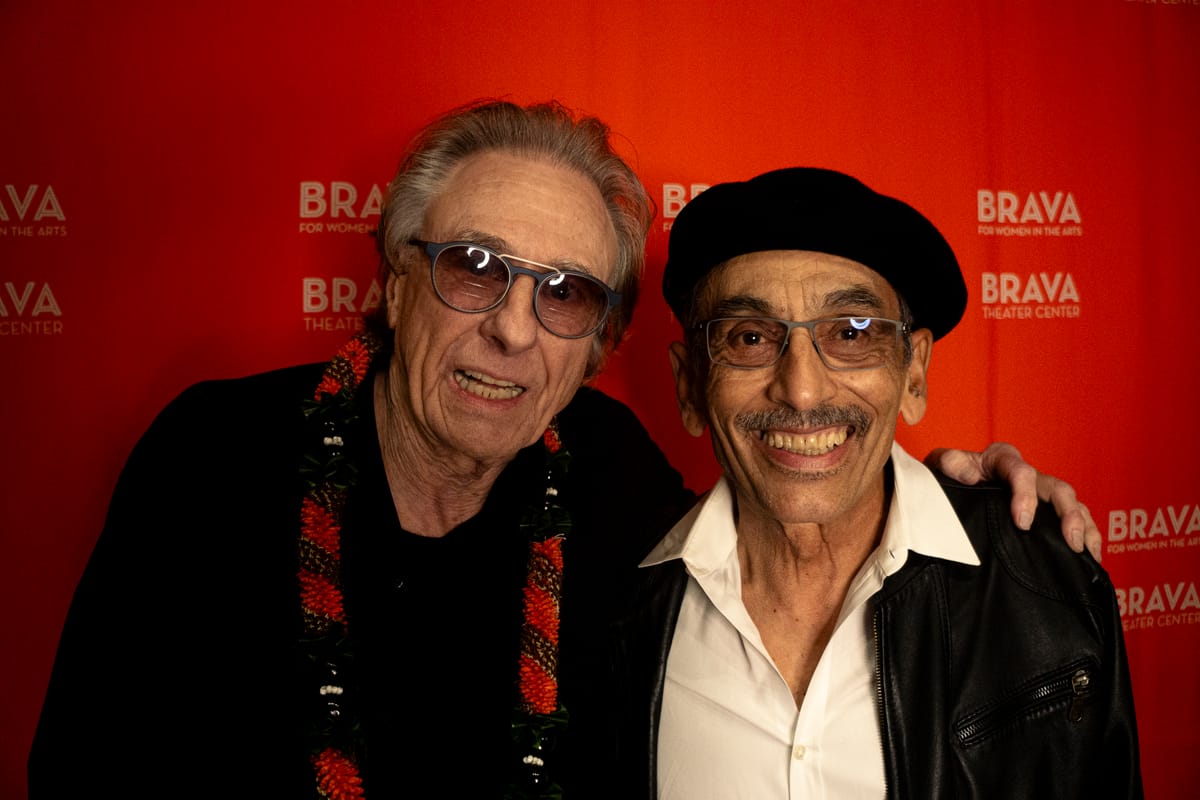
The performing arts center welcomed viewers on a peaceful Saturday evening, Jan. 24, for the film premiere of “Keeper of the Fire”, directed by award-winning photographer Louis F. Dematteis and Emmy award-winning director David L. Brown.
The 28-minute documentary shares the story of Alejandro Murguía, San Francisco’s poet laureate, and his lifelong activism for social justice and freedom from the streets of the Mission District to Nicaragua.
This will be Dematteis and Murguía’s second film project together.
“The Other Barrio,” their first production, is a short story by Murguía which chronicles the merciless fires caused by greedy landlords in the Mission during the 1970s. Their goal was to push out tenants in order to sell the property for a bigger profit. “Fire was being used as a means for gentrification,” explains Dematteis.
Bringing Back Memories
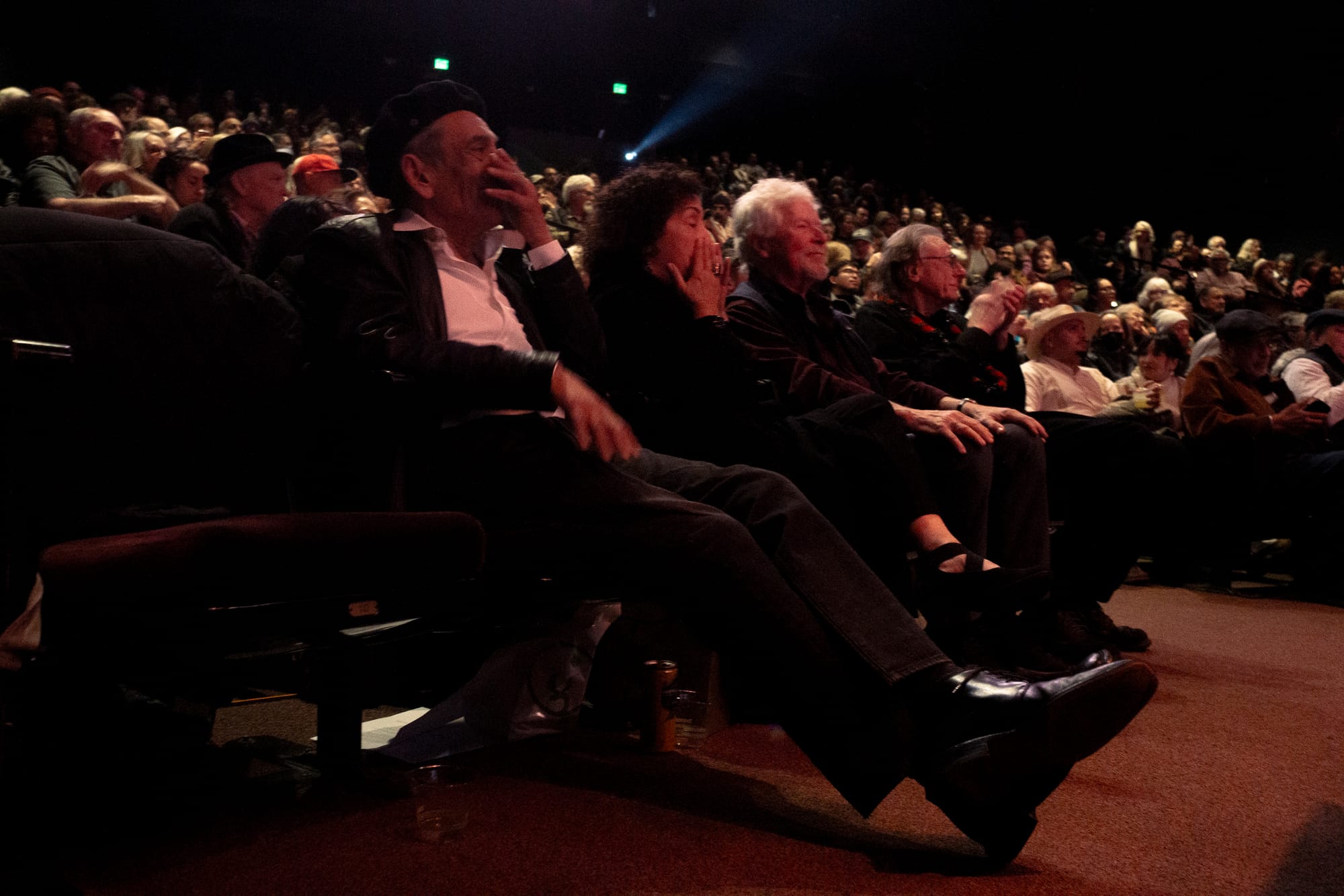
In “Keeper of the Fire”, the panoramic shots of the neighborhood’s archival footage captivated the audience as their eyes could not have been taken off the screen. It wasn’t a viewing of a film premiere, but rather old home videos of the Mission.
“Only the memories remain. That’s how I would explain it”, said Lottie Pacheco-Lobatos, a San Francisco native.
“The portrayal of the Mission in their film was timeless,” said Pacheco-Lobatos. “I saw familiar faces of artists, poets, and business owners along the community I grew up with.”
Pacheco-Lobattos called the changes bittersweet, reflecting on the families who were displaced and the neighborhoods that no longer exist.
The scene was further heightened as the audience’s beaming expressions turned to looks of judgment and disappointment. “Silicon City,” a poem by Murguía, was voiced over by himself over footage of the city’s current lonesome state.
Huracan Gomez, a San Francisco resident since 1970, held a poignant reaction to the film.
“I felt the movie connected the Mission in a poetic way,” Gomez said. “I was reminded of the building fires, specifically on 16th Street and Valencia. Lives were lost.”
Gomez also highlighted that gentrification has changed the Mission District, “the mood of the people was joyous, now we are terrorized.”
Fire as a Metaphor
“‘Keeper of the Fire’ is sort of metaphoric,” Murguía said. “I have tried to keep the energy, the fire going of our community, of our arts, of our poetry, of our murals, and resistance.”
Another important perspective presented by Dematteis is that the element of fire relates to the idea of oral traditional storytelling.
“In many Indigenous societies, it is the storyteller, the keeper of the fire, who remembers the stories of the group and passes it on," Dematteis said.
The Poet’s Role
The film also discussed the poet’s role in society, bringing the connection between Murguía’s poetry to his lifelong social activism. Footage shows Murguía participating in protests and being a community organizer in the Mission streets, as well as fighting in Nicaragua’s civil war in the 1980s.
“One of the prominent roles of both writers and poets is to use language accurately and precisely,” Murguía said.
He added, highlighting the importance of language itself and how it is being distorted in our present day. “Language is being used to distort reality, history and factual evidence.”
“It’s not just my movie, but also the story of the Mission District, and the story of poetry and its role in society.”
Murguía believes that poetry, especially, is the voice of the community.
“If you want to understand the Latino community, read the Latino poets and they will tell you what it’s like to be a Latino in this environment.”