
Staff Voices at the Decision-Making Table: What Does the Staff Senate Do?
By Ahmad S. Aimaq
In the City College system of “participatory governance,” decision-making is not limited to administrators. Students, faculty, and staff each have representatives who play a role in policymaking, planning, and the college's future. Within this structure, the Classified Senate is the body that represents non-instructional employees, e.g. groundskeepers, janitors, librarians and financial aid specialists.
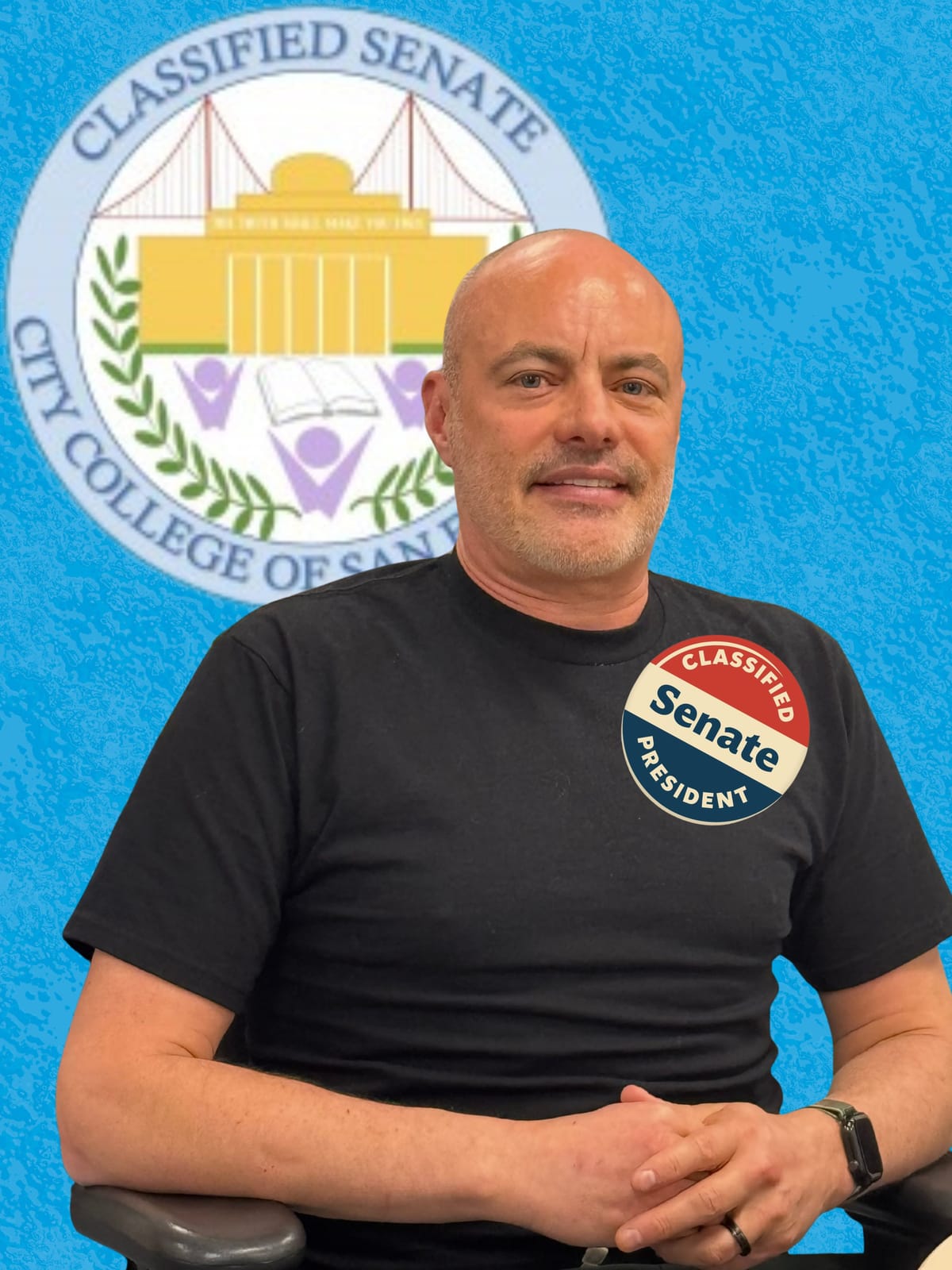
Michael Medina-Snider, president of the Classified Senate, explains that their mission is to represent “the needs, concerns, and viewpoints of classified professionals within the district’s participatory governance system,” but excludes matters related to collective bargaining.
Whereas "the union focuses on collective bargaining wages, workplace safety, and working conditions, the Classified Senate is about having a voice in governance, sitting at the table with students, faculty, and administration as part of shared decision making.”
That is, the Senate does not negotiate salaries and wages; rather, it offers its opinion on major college decisions and serves on important committees. “We are represented on budget, planning, accreditation, health and safety across participatory governance committees,” Snider said.
Classified Professionals Represented
Edward H. Tang, first vice president of the Senate and a staff member in the Counselling Department, said the body belongs to all non-teaching workers. “The Senate represents all classified professionals, whether they are union-represented or not.”
The main goal, he said, is to ensure that non-teaching workers have a seat at the table, just like other groups. “It’s about making sure we are part of shared governance and that our perspectives are included,” Tang said.
Tanya Clarkson, Classified Senate treasurer and senior clerk in the English Department, describes the body’s role in a more tangible way.
“Classified professionals have a seat at the table where critical decisions are made. If we’re not part of those conversations, it can feel like we’re invisible and our voices deserve to be heard,” she said. “Many key decisions directly impact the daily work of classified staff.”
All three board members highlight a common challenge: low participation due to staff time constraints.
“It can be difficult for classified professionals to participate because we work full-time schedules, typically eight to five,” says Tang. “If we step away to attend a governance meeting, the work doesn’t disappear — it’s still waiting for us.”
Many employees, they say, are not fully aware of the Senate’s role and its impact on decision-making.
“Sometimes people don’t fully understand what the Senate does, so outreach and communication are essential,” Clarkson said.
Governance Spotlight Award
The Senate highlights accomplishments with the creation of the Governance Spotlight Award, a program designed to recognize employees who are active on governance committees. “We created the Governance Spotlight Award to recognize classified professionals who actively participate in governance,” Medina-Snider says. The recognition includes a formal letter of appreciation and a small gift and is intended to encourage participation.
One of the Senate’s most important initiatives has been the December Toy Drive for students’ children.
“Supporting student parents has been one of our proudest accomplishments,” Clarkson said.
Snider added that the initiative has been their most successful effort in helping student parents. The program is implemented in collaboration with other college entities and reflects the Senate’s social role beyond formal meetings.
State Membership Funding Stabilization
Another major achievement for City College’s Classified Senate has been the institutionalization of the annual membership cost at the state level. “Now we no longer have to secure that funding every year,” Snider said, adding that it stabilized the Senate’s finances and allows it to focus on other programs.
“Ultimately, everything we do should benefit students,” Tang said. “If students are not succeeding, then we haven’t done our job.” In their view, non-teaching staff have a vital role to play in student success, even if their work isn’t always visible.