Student Films Captivate Audiences At Festival of the Moving Image
From frigid ocean swims to AI cautionary tales, three filmmakers discuss the years of work and resourcefulness behind their standout projects.
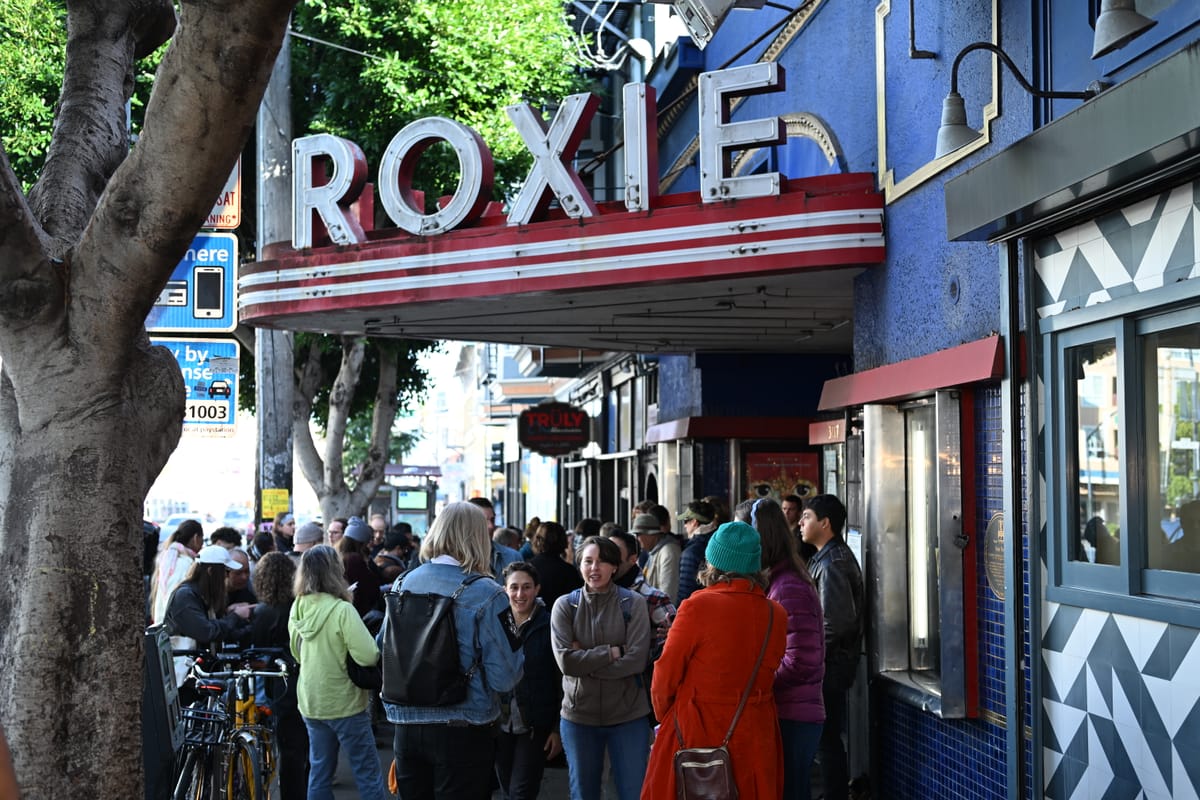
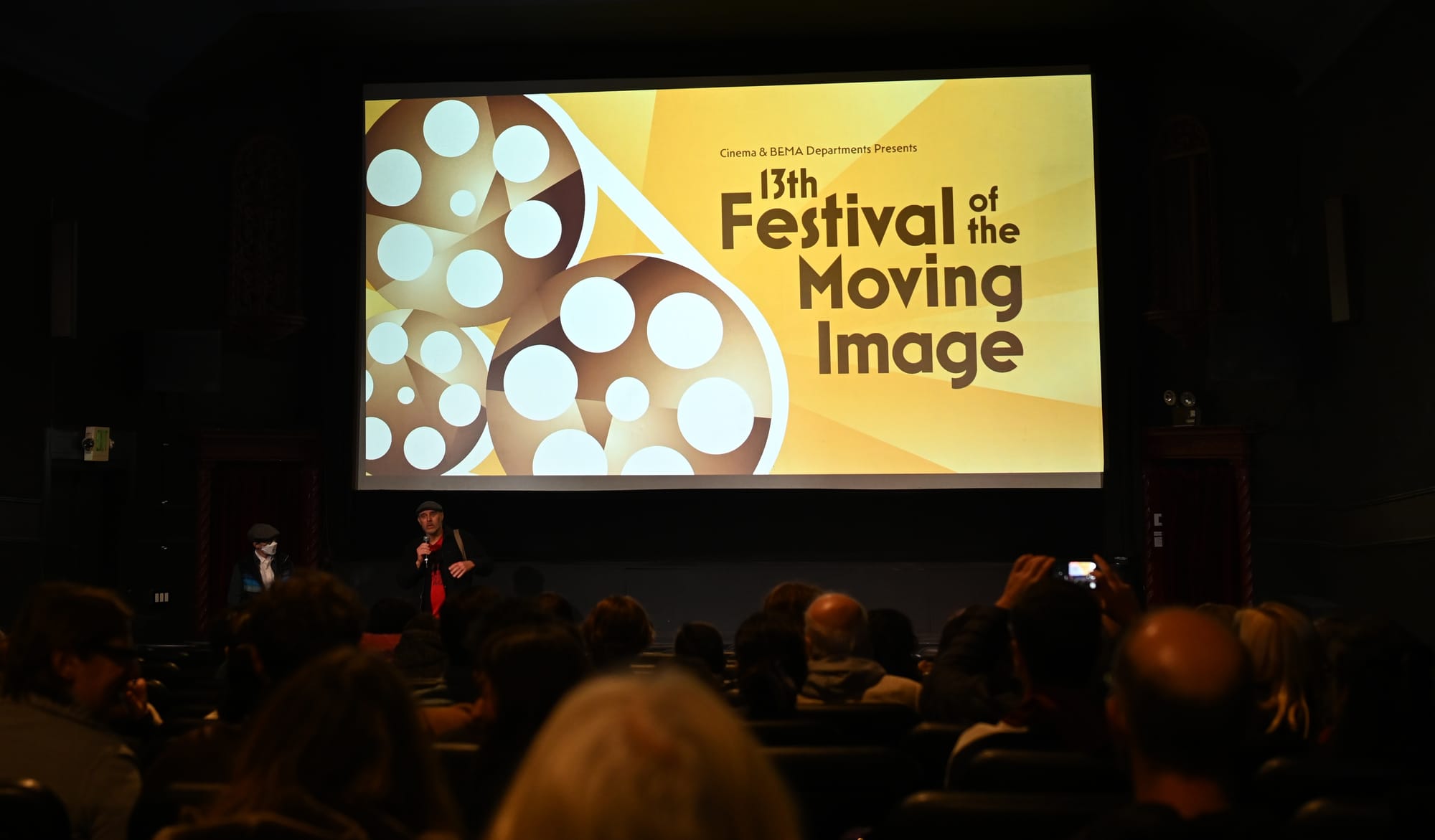
On a chilly December afternoon, a crowd assembled in the Big Roxie theater, shedding their coats and beanies for the 13th Annual Festival of the Moving Image. The two-hour program featured more than 20 student films from City College’s Broadcast Electronic Media Arts (BEMA) and Cinema departments.
Misha Antonich of the BEMA department and Cinema Department Chair Denah Johnston have been collaborating on the festival for nearly a decade, providing students the opportunity to display their work on a professional screen in front of an audience beyond their filmmaking peers.
Of the expansive showcase, three films stood out.
Lands End
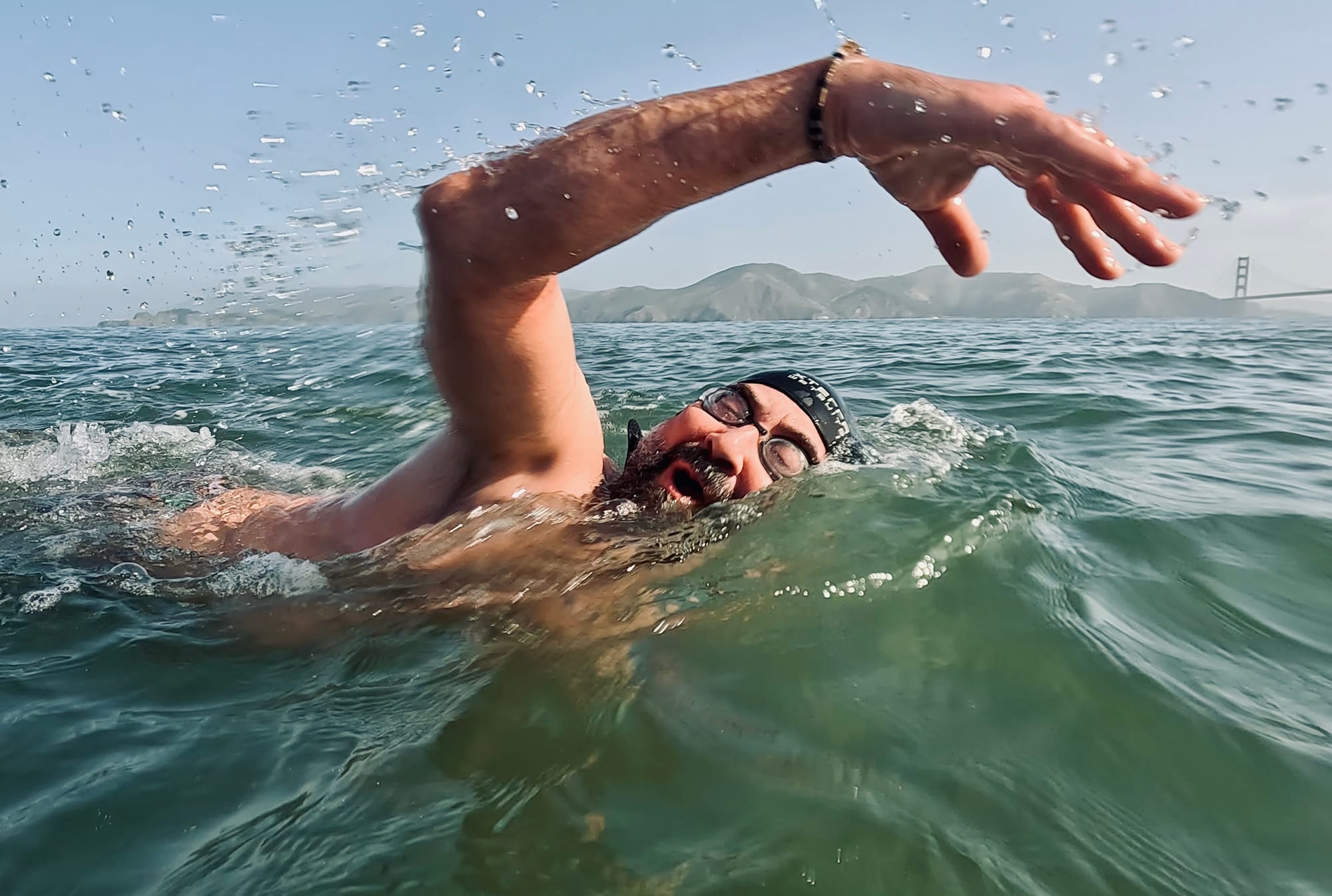
Steve Peletz plunges audiences into the Pacific alongside the wild swimmers of China Beach in Lands End. The mini-documentary follows a group of adrenaline seekers who get their fix from the frigid temperatures and unforgiving currents that only open-water swimming can provide.
A swimmer himself, Peletz contended with the same harsh conditions as his subjects, training his camera on the action to capture striking footage. Most of the film unfolds among the waves, with occasional to-camera interviews on land woven throughout. From those conversations, viewers learn that many swimmers began coming to China Beach during the pandemic, and it subsequently “became a party every day.”
Peletz began casually filming these escapades with a GoPro he tucked into his swim shorts, completing roughly 1,000 swims over four years. Initially, he thought he might “make a gift for [his] friends” with the footage.
The filmmaker chiseled away at his doc over the course of six different classes. In a course focused on sound, Peletz worked with instructor Dan Olmsted to layer heartbeats over the tinny sloshing of waves, heightening the scene's tension. “Sound can make or break a film,” Peletz said.
For Peletz, the thrill of screening at the Roxie came from hearing the audience respond in real time. When dolphins unexpectedly surfaced in the background of one shot, audible gasps rippled through the theater.
ADDIE
Tonya Soloveva’s ADDIE explores humanity’s relationship with artificial intelligence through the story of an aimless young woman and her AI assistant, tasked with shaping her into a functioning adult. The short is a Black Mirror-esque take on the pitfalls of AI-reliance.
She encountered the script in Alexandra Lacey’s directing class, which allows the students to read through scripts from the screenwriting class and select their favorites. Screenwriter David Paculdo wrote ADDIE, and Soloveva was drawn to the subject matter. “AI is everywhere, it’s getting into our lives, and everybody is happy about it,” she said. “But do we think about the possible consequences?”
The film was shot over two days on a self-funded budget of $1,800. Soloveva and her team scouted locations, conducted pre-shoots and blocked scenes in advance to maximize efficiency during the 12-hour shooting windows. The anchor of the film, Shoana T. Hunt, initially auditioned for a secondary role, but Soloveva was impressed by their detailed performance and cast them as the lead instead.
“It was like magic,” Soloveva said of the shoot.
The film has been submitted to more than 15 festivals, including Sundance, with decisions expected in early 2026. Soloveva hopes the film encourages viewers to reflect on their relationships with chatbots, particularly “how much you should trust them.”
Autumn
Brynn Casto’s Autumn is a coming-of-age story exploring queer identity and self-discovery. The film builds toward a tearful, reconciliatory conclusion and features a moody soundtrack, including “A Quick One…” by Have a Nice Life.
Casto spent four years writing and revising the script, drawing from her own experiences as a trans woman. After exploring film programs at other Bay Area community colleges, she enrolled at City College and completed a certificate in film theory.
Another piece from Lacey’s directing class, the film was produced on a $3,600 budget. Lead actor Ronan Leamy also came from the same course. “He would ask me, ‘When does my character cry? When does my character smile?” Casto said. “You would not assume that he could do that kind of role just by talking to him.”
Visually, Autumn draws from an Americana lineage — Spielberg, Lucas — using wide suburban shots and natural lighting. “I really like naturalism, especially in performance,” Casto said.
The production itself was anything but smooth, marked by a lost location, a screaming landlord and a burst water main. However, none of that chaos is evident on screen.
By the final frames, audience members were visibly moved by Leamy’s performance.
“I wanted to demystify and destigmatize that section of the trans experience,” Casto said of the film’s depiction of early transition. “I wanted to show that it’s playful. It doesn’t have to be this crazy thing.”
Casto now works as a gaffer in the Bay Area. “I pretty much work with one person from City College at least per shoot,” she said.
This spring, students will have another opportunity to showcase their films at City Shorts.