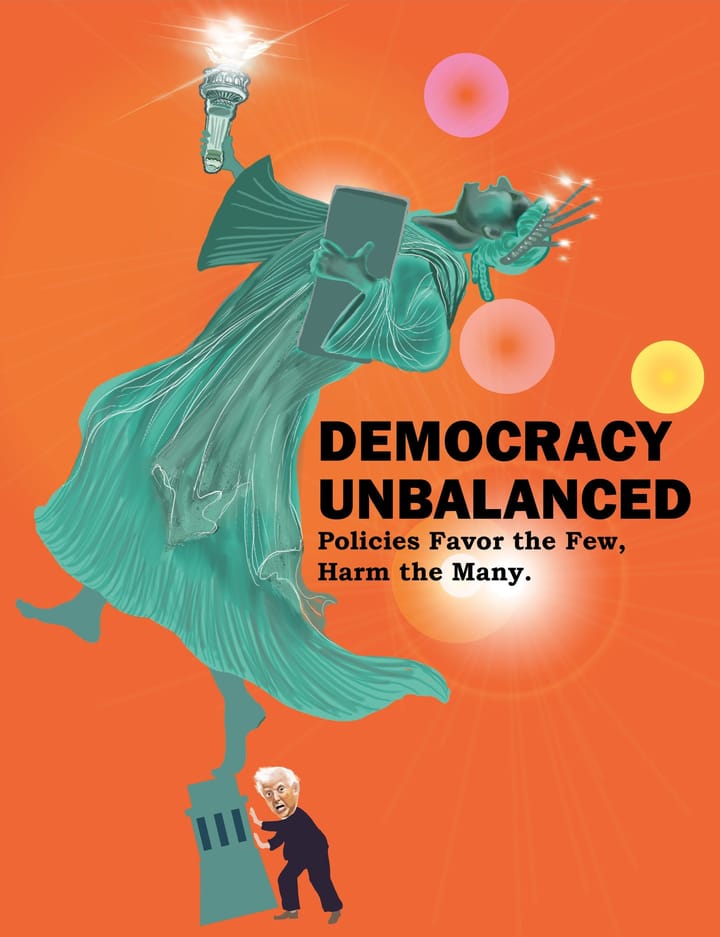
The Man Who Fell to City College
After years of instability, City College is running out of time to define what it is, and who it’s for.

I've crashed-landed here.
Devoid of any prior exposure to the West Coast, I arrived in this city just over two years ago, a stranger in a strange land. On my first trek in this uncharted land, I hiked over the hill south of Ocean Avenue, jogged down past the Whole Foods, and slipped through the gap in the fence beneath Balboa Reservoir.
Long before I knew who London Breed was, or had any idea how to navigate the transit system, I walked down a street renamed in honor of a Mexican painter. Before I’d had even a window into the city’s unique political culture, I stood at the foot of Saint Francis, shaped from melted guns, an ebony statue standing like a cross beneath the stairwell to City College. And there, sitting upon huge stone pillars, were the words carved into the face of the college’s old Science Hall: “The Truth Shall Make You Free.” This was no school motto – this was a calling. Struck by this divine ordination to hit the books, I threw open the doors of the Harry Britt Building with nothing but the clothes on my back and yelled, “I’m here! Show me what's possible and my path to liberation!” The desks in Administration fell quiet, before I was nudged over towards the guest computers to click aimlessly through an outdated registration portal.
Miraculous intervention put my life on hold, and now two years later, I'm still hanging on. 90 years later, and the college is hanging on, too.
Define “Community”
In 1970, when the junior college severed from the San Francisco Unified School District, it became its own publicly funded education category. This uniquely American conception of “community” college reflected a growing need for local, affordable education that was accessible to anyone. Junior colleges were no longer limited to university prep work; their mission encompassed community service, adult education, and vocational training.
Unique among community colleges, however, City College is inseparable from the city of San Francisco. Its charter is city-specific, and its trustees are publicly elected officials potentially gunning to become city supervisors. The chancellor makes $350,000 a year, only marginally less than the mayor. For all intents and purposes, City College should be just as beloved a municipal entity as the Muni.
So far, it has survived budget cuts, threats to accreditation and a global pandemic. And yet, the fire still burning on the City College hill is its newfound reputation for political instability. Thirteen chancellors in 11 years kept the hierarchy disorganized, leaving core positions vacant for years. At a school where the tug-of-war over the budget often manifests as union disputes, the teachers' union is punching so far above its weight that you could chart a trustee’s political aspirations by the strength of their relations with AFT.
With long-standing vacancies in the marketing department and an administration that turns over faster than its students, the lack of cohesive vision at the helm is starting to show.
Alas, there are no clean answers. Community colleges, by their very definition, are cursed with ambiguity, always straddling definitions of what they are. Are they catered towards transfer students, or is it a vocational school? Do they retain as many full-time faculty as a university, or rely on part-timers working second jobs to be here for the love of the game? Up until now, the answer has always been “all of the above.”
One thing's for sure, no one’s coming to save us. Hold Harmless provisions from the state have run out, the City has enough sinking ships to plug up with parcel taxes as it is, and the Department of Education surely won't be coming to the rescue. We’re on our own, folks. Will we choose to sit around and wait to be graced by the mayor’s remembrance, or will we be an institution so impressive that the City will not be able to get City College out of their minds when they think of municipalities to partner with?
Change takes time, but the vision to bring the “city” to City College starts here. Layoffs and course cuts can't stave off enrollment losses forever. We have to know what it is the college is trying to be, which, judging by enrollment, cannot be what it used to be.