The Taliban’s War on Girls’ Education
Afghan women's deprivation of education and its dire human and global consequences.
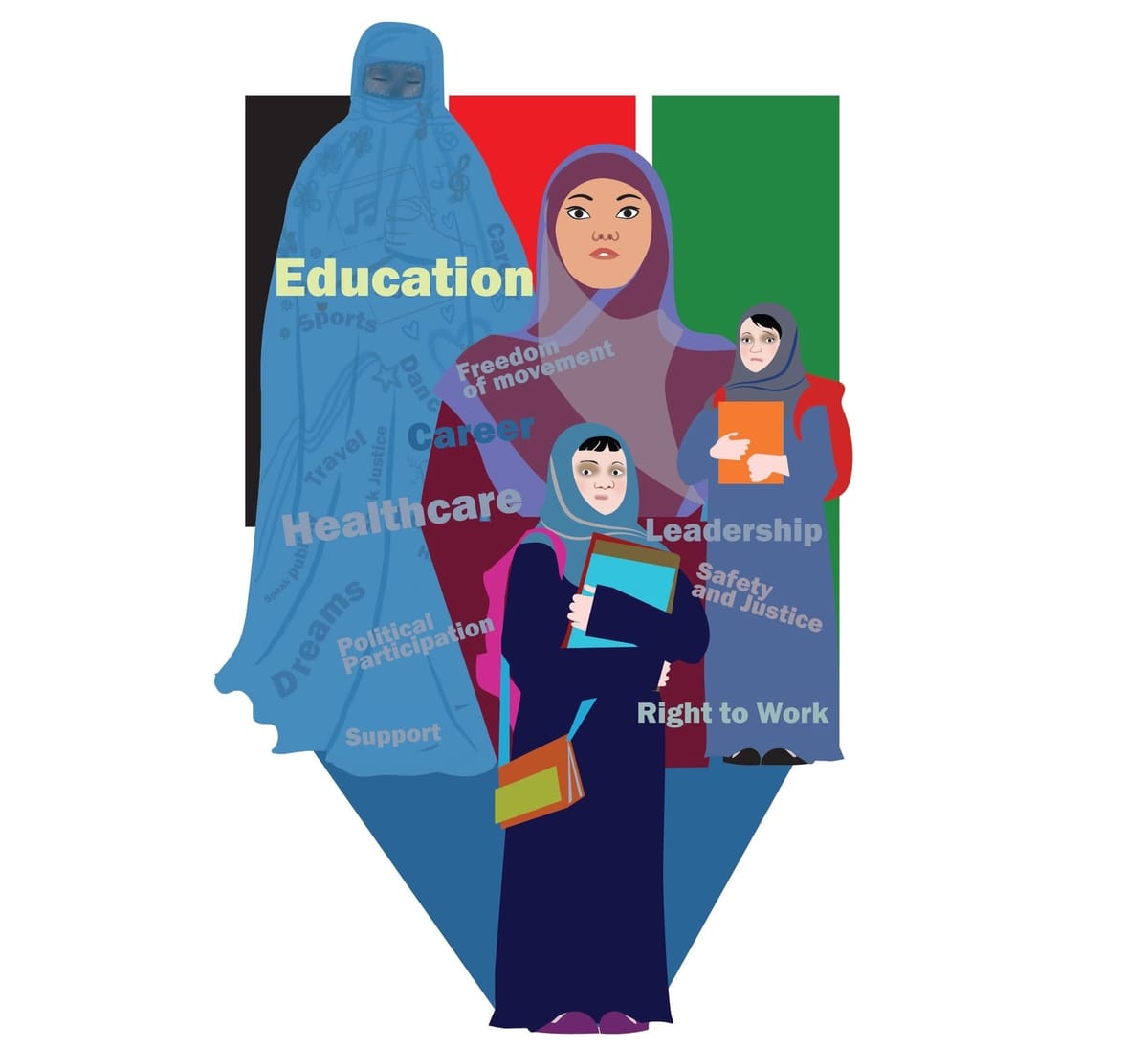
By Ahmad S. Aimaq
While students in San Francisco start a new year and a new semester, girls in my home country of Afghanistan are deprived of their basic human right to education.
Afghanistan is the only country in the world that officially bans secondary and higher education for women and girls. This policy — a decision made by the Taliban in 2021 after seizing power — has catastrophically stifled the lives of millions of young women, and put the political, social and economic future of the country on the path of gradual collapse.
The reality of life for women in Afghanistan is a wound that I cannot let go of. It torments me, the unfairness of the situation. This attack on women’s education had no justification — neither religious, scientific, nor political. Every human, regardless of gender, deserves the right to an education.
When the Taliban took over in 2021, Afghanistan lost not only its government but also the hope of a bright future.
The Taliban quickly imposed severe restrictions on women and various educated segments of society. The first decision was to prevent girls from attending secondary school. Next, they closed universities to women. The Taliban also excluded women from many sectors of the workforce.
What was initially billed as a temporary measure has now become a permanent level of control enforced upon Afghan women.
Social Development
Education is not simply an individual right but rather the main building block of progress and development in every society. Countries that invest in women's education prove more successful in health, economic growth, social stability, and poverty reduction. In contrast, the complete elimination of women from schools and their resulting non-participation in society equates to the elimination of half the intellectual and human capacity of a society.
The exclusion of women from education has social and human consequences. The closure of schools leads to early marriages. Poverty spreads, women’s economic dependence on men intensifies, and domestic violence increases.
Many families, having lost hope, force their daughters into early marriages to avoid being forced into marriage by the Taliban. Mental health issues skyrocket, with numerous reports of increasing depression and feelings of worthlessness among teenage girls.
A generation of women confined to their homes and with no access to education is doomed to a bleak future.
Concern Without Action
The international community often expresses concern about the dire situation for Afghan women, but little action has been taken. Statements and empty words cannot effect change. Afghans need hope, and we cannot be optimistic about change until we see effective pressure on the Taliban to fully restore women’s right to education. Until that happens, it is the women and girls of our country who pay the price every day.
We cannot expect stability, security and development in a society where half of the population is deprived of the right to education. Every day that the international community delays and compromises with the Taliban furthers the destruction of a generation’s future.
Silent Resistance
Despite all the Taliban’s control and restrictions on women, they were unable to completely prevent women from getting an education. Girls in Afghanistan have found alternative ways to learn — through homeschooling, online education, and community-based literacy educators.
Their proud efforts to continue learning in the face of oppression demonstrate that the pursuit of education cannot ever be fully eliminated.
Education is an essential right, not simply a privilege, and this resistance will never be extinguished.