Modesto college cuts journalism
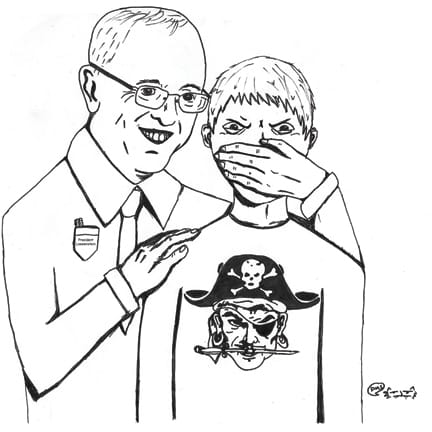
Modesto Junior College administration’s drastic cuts to several popular programs, including the elimination of the entire mass communications department, are at best driven by hopeless ignorance and at worst designed to silence student voices at the school.
By The Guardsman Staff
Modesto Junior College administration’s drastic cuts to several popular programs, including the elimination of the entire mass communications department, are at best driven by hopeless ignorance and at worst designed to silence student voices at the school.
In late February, MJC President Gaither Loewenstein proposed cutting the mass communications department, along with the faculty adviser to student government, as a solution to the college’s projected $8 million deficit for 2011-12 fiscal year.
Despite opposition from the entire college community and an offer from faculty to take pay cuts to save their programs, Loewenstein and the school district’s board of trustees shirked shared governance and transparency laws and unilaterally approved the cuts.
“We feel that he’s deliberately handicapped any type of protest at the college,” MJC journalism instructor and newspaper advisor Laura Paull said.
It appears Loewenstein and the board will succeed next year in closing MJC’s award-winning newspaper, The Pirates’ Log, which has been an institution at the school since 1926.
Lowenstein justified eliminating the mass communications department by questioning the viability of journalism as a profession.
His unapologetic stance that an industry’s profitability defines its value rather than the essential principles it upholds is frightening. It sickens the The Guardsman that a man in charge of educating future California professionals would have such ignorance or disregard of the civic necessity fulfilled by the press.
In the budget proposal the board rubber-stamped, Loewenstein, wrote that journalism’s future lies in “new media,” which he described as “the convergence of computer graphics, gaming, digital applications and the Internet as means of delivery with content derived from the traditional disciplines of art, music and theatre.”
According to Loewenstein’s convoluted media scholarship, the new role of the press, an institution enshrined in the First Amendment to the U.S. Constitution, will be to produce entertaining content for video games, or that training in art, music and theater is applicable to work in a newsroom.
It is true that journalism is a tough business to break into these days. The stakes have risen, competition has increased, pay has dropped and the reputations of large media corporations in the U.S. – the sole source of news for many Americans – are in shambles.
But a new generation of journalists is poised to redefine the industry based on a new model that does not sacrifice the truth for slight increases in profit margins. We are in the middle of a “new media” revolution, but not of the kind Loewenstein described in his budget cuts proposal.
Journalists at The Guardsman and The Pirates’ Log are already heavily invested in using all forms of “new media” to present our content, including multimedia and various forms of social networking. No skills learned in theater, music or art classes informed that transition, but rather reporting, critical thinking, and research skills learned in journalism classes.
It’s difficult to believe Loewenstein and the board actually think the future of journalism lies in video games. Instead they value the First Amendment’s guarantees of free expression and the press so little, and power and profit so much, they are willing to say anything to silence opposition.
But it won’t work. Any attempts to kill, demean or demoralize the future journalists of this country will only make us stronger. That is the level of dedication we have toward printing the truth and checking corruption. That is the power of “new media.”
Email:
editor@theguardsman.com