Electric cars join CarShare fleet
Students who want to reduce their impact on the environment but dread the bus will soon have a cleaner, greener option for getting to class.
By Emily Daly
The Guardsman
Students who want to reduce their impact on the environment but dread the bus will soon have a cleaner, greener option for getting to class.
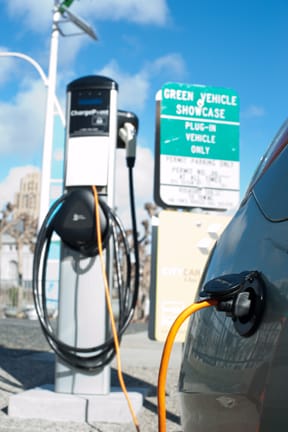
The Bay Area nonprofit City CarShare is introducing a new car sharing program for electric vehicles called “eFleet,” said Anita Daley, City CarShare’s outreach director. The organization’s use of electric vehicles, or EVs, is due to begin in the late spring.
In the beginning phase of the program, City CarShare will purchase 29 of the cars for public use. According to City CarShare’s October press release, the vehicles would spare the environment 12,000 tons of carbon dioxide emission in the first two years of the program.
“We constantly strive to provide vehicles that have a reduced carbon impact, and EVs are a good way to do that,” Daley said. “This new technology works, is easy to use and is here to stay. As a result, we can all decrease our collective carbon impact on the environment.”
Daley said the eFleet program is meant to reduce the carbon impact on the environment by educating the public about electric vehicles and making them more quickly and widely accepted.
“If you recharge using a renewable resource such as wind, hydro or solar, the EV can be considered completely emission free,” said Mike Harrigan, City CarShare’s eFleet program manager.
The eFleet project is funded largely by a $1.7 million grant from the Metropolitan Transportation Commission. The commission wanted to sponsor pilot programs by organizations working on greener forms of transportation, MTC Program Coordinator Brenda Dix said.
Organizations were required to be sponsored by a public agency in order to submit grant proposals. City CarShare’s sponsor was the San Francisco County Transportation Authority, Dix said. Additional grants were given to other Bay Area private and nonprofit organizations such as Better Place, a program that installs electric batteries in San Francisco and San Jose taxis.
Daley said she believes the public will embrace the technology of electric cars, which could mean a big improvement to California’s air quality. The state’s population has an average of 1.8 cars per household, the highest figure in the country, according to the Bay Area Air Quality Management District website.
“We know that more than half of emissions in the Bay Area are coming from driving,” said Ralph Borrmann, a public information officer from the Bay Area Air Quality Management District. He said the use of EVs would make the air cleaner and reduce pollution.
It is hard to predict how many people would soon switch to electric cars, Borrmann said, but it was considered radical when hybrid cars were introduced a decade ago, and it’s now normal to see these types of cars on the road.
Although the car sharing program is normally limited to those older than 21, the company has partnerships with colleges, including City College, that provide cars to students over the age of 18. Discounts are available for both City College students and faculty.
City College student Elena Sanchez said she thought the program was a good solution for students who use public transit and either can’t afford a car or don’t want to take on the responsibility of owning one. However, she said it would be hard to convince students who currently have cars, such as herself, to give them up.
Email:
edaly@theguardsman.com