Gateway program offers at-risk students a pathway to college
By Liska Koenig CHIEF COPY EDITOR
On Aug. 17 City College became part of Gateway to College, a national pilot program to help teenagers who are facing an uncertain future without graduating from high school.
“Gateway to College is a second chance for students,” said resource specialist and Gateway mentor Jeanne Batallones. “Given the right support, these students could succeed and transition into a college environment.”
“It’s pretty safe to say that almost all of them have experienced some kind of trauma in their life,” said Laurie Scolari, associate dean of outreach and recruitment at City College. “Some of them are foster youths, others have had trouble with the law, and we have quite a few students with young children.”
Gateway to College not only aims to equip students with the skills to earn a high school diploma, it also prepares them to progress toward earning an associate college degree.
“I was struggling in school, but now I'm really determined,” said 16-year old Tamashati Anderson. “I am hoping to graduate from here in July and get all the prerequisites to go to college.What makes the program unique is the learning structure.”
“We are trying to build a community of learners,” Scolari said. “All students take math and English classes together, followed by Learn 50, a college success class.”
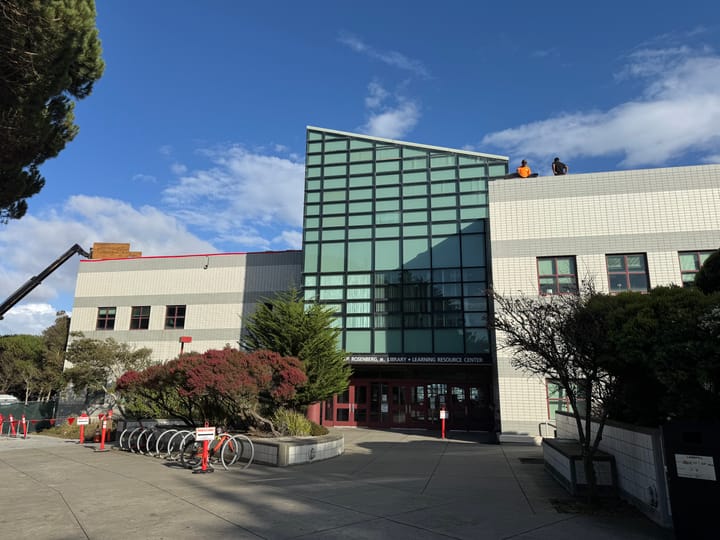
Several computer labs on Southeast campus are also available to help participants build computer skills.
“We establish a personal connection with these students,” said Gateway to College Outreach Recruiter Olton Rensch. “People really start opening up. Every morning I go out there, talk to students and try to encourage them if they need it.”
In cooperation with community organizations Transitional Aged Youth and One-Stop USA, two full-time counselors, including Batallones, are on campus every day to help students and connect them to services like child care, medical services, housing and job placement.
To qualify, participants must have already dropped out of high school or be behind in their credits, have a history of absence from class and have grades that will make it unlikely for them to graduate.
Fifty-four students aged 16-20 made it through the application process which includes orientation sessions, essay writing, an interview and a placement test for math and English. More than 100 students applied for Gateway to College, but about half of them didn’t follow through with the application. Some didn’t come to the following orientation session, and others didn’t show up for the interview, according to Scolari.
“If I had to give somebody advice about Gateway to College, I’d tell them to stay focused,” Anderson said. “Even though you don’t have a high school diploma, don’t forget this is college.”
Anderson added she wants to eventually get a degree in business.
The program, which is free to students, is funded by a grant from the Gateway to College National Network, an Oregon-based non-profit organization which receives funding from the Bill and Melinda Gates Foundation. Gateway to College at Southeast campus receives additional funding through cooperation with the San Francisco Unified School District.
“The way it works is that high schools get money for every day a student shows up for class,” Scolari said. “This is called ADA — average daily attendance — and amounts to about $6,000 per student a year. In partnership with SFUSD, Gateway to College gets that money to fund the program.”
Gateway to College has been received with enthusiasm, and Scolari expects a much higher participation and is full of hope for the future.
“The grant that currently supports Gateway to College caters for a student population of 300, but with the ADA money we are receiving we will be able to help a lot more students in the future,” she said.