‘In Flux’: Conversations Between Concrete, Steel, and Glass
An exclusive look into the innovative sculpture art exhibit displaying works by local artist Danny Rosales.
By Faith Gabrielle Zapata
Concrete, steel, and glass — these materials make up the floors we walk on, the doors we open, the windows we look through and more. At first glance, they might seem ordinary, but local sculpture artist Danny Rosales sees them as anything but.
To him, they serve a greater purpose: one of pure artistry, and he desires to instill a new perspective of the mundane in viewers of his artwork.
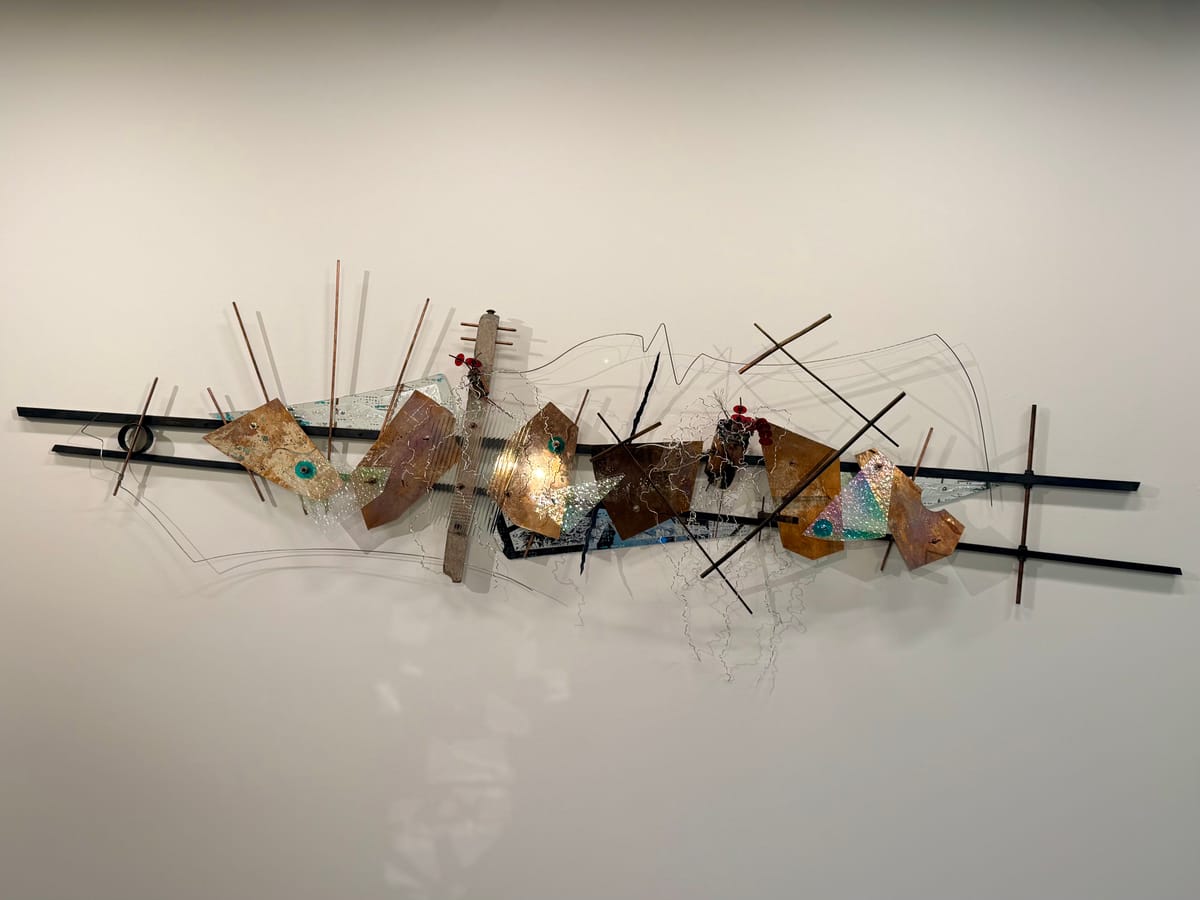
Currently on full display at the City College Art Gallery is “In Flux,” Rosales’ innovative sculpture art exhibition. Merging the practice of art viewings with performance art, Rosales creates a unique experience for his audience by devotedly returning to the gallery each week to move pieces around, transforming his art in real time.
“This is me taking advantage of this space,” Rosales said.
The City College Art Gallery, located inside Ocean Campus’ STEAM Building, consists of a singular room whose empty, white walls serve as a blank canvas for selected artists to work around.
A true innovator of his craft, Rosales has always strived to do what hasn’t been done before. And as a result, the concept of his sculpture exhibit, constantly being ‘in flux,’ was born.
“It’s a learning process, you know — it’s a school,” he said. “I want to learn something, too. I want everyone to learn something. I might make it better, I might screw it up, but I won’t know unless I do it. And this is a good place to do that.”
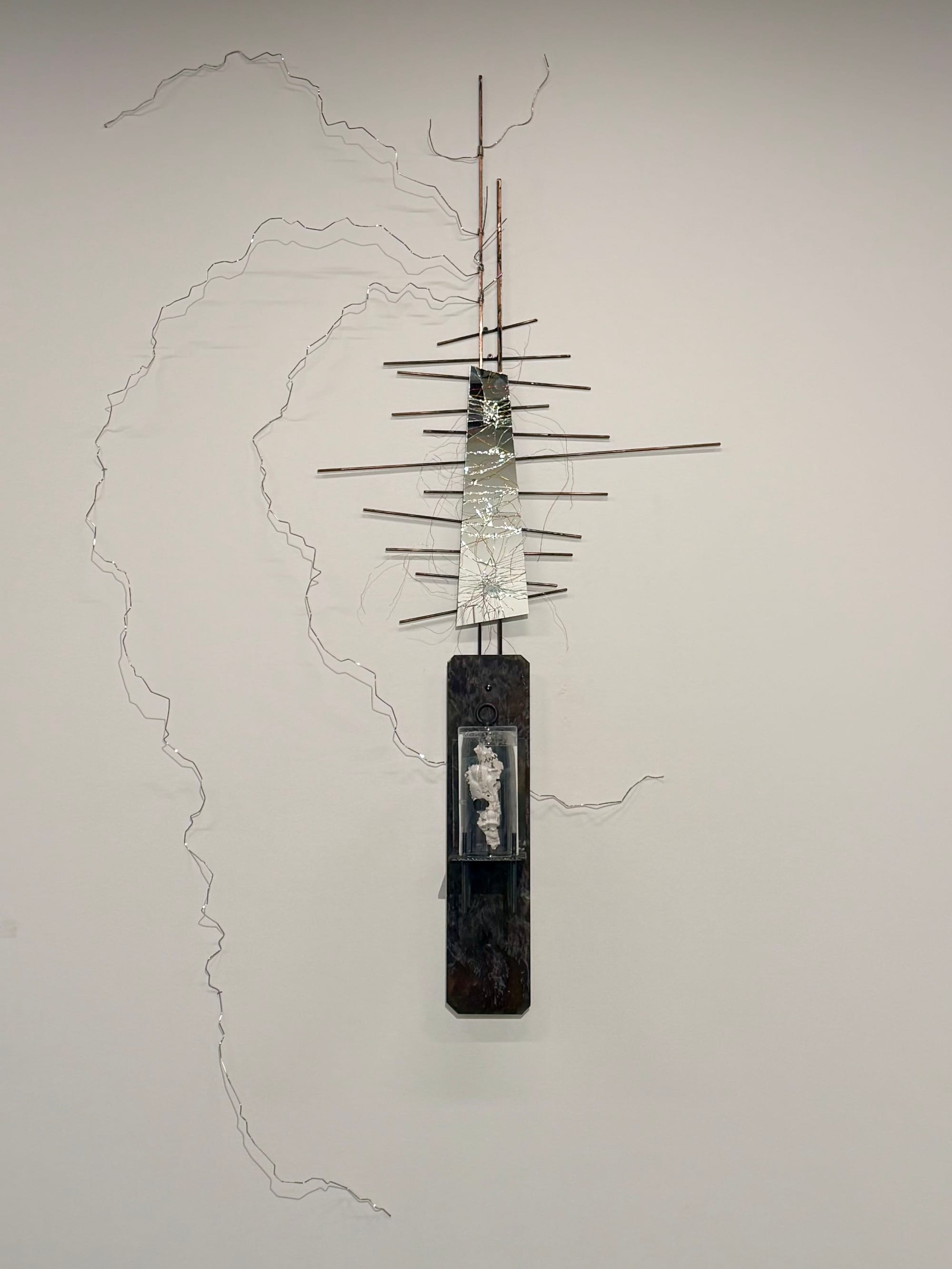
Over a year and a half ago, Rosales was invited by City College Art Gallery director and faculty member Nancy Elliott to visit the gallery beforehand to create pieces specifically for the space where they would live for the duration of the exhibit.
Elliott spoke of Rosales’ art practice, noting the beautiful contrast between the hard, rigid materials he uses and how he employs them within his work.
“He’s dealing with these very hard materials in a very airy, light way. They seem dangerous, but they also seem elegant. I liked that contrast. I think being able to see that level of craft, besides the ingenuity of the materials, is what I thought students would like,” Elliott said.
Rosales blends his experience in the building trades with his creative output by using materials he knows well, which is where concrete, steel, and glass come in. Growing up, he was always interested in art, but didn’t discover his niche within these specific materials in tandem with sculpture until later on.
Elliott also stated that she wants students and viewers to understand that there are many different paths that one can take when it comes to being an artist. She mentions Rosales’ background in construction and engineering, saying that the exact quality that makes his art stand out is the ways in which all of his skills and life experience, art-related or not, still have a direct impact on the art he creates.
During the reception held on Feb. 11, many students and viewers arrived and celebrated the opening of Rosales’ exhibit.
Eric Rasmussen, studio arts major, observed that Rosales’ piece “If Ten Thousand Things Weren’t Enough” (2025) deems itself a “retro” yet “futuristic” work which showcases Rosales’ ability to bridge gaps between mediums, materials and time itself.
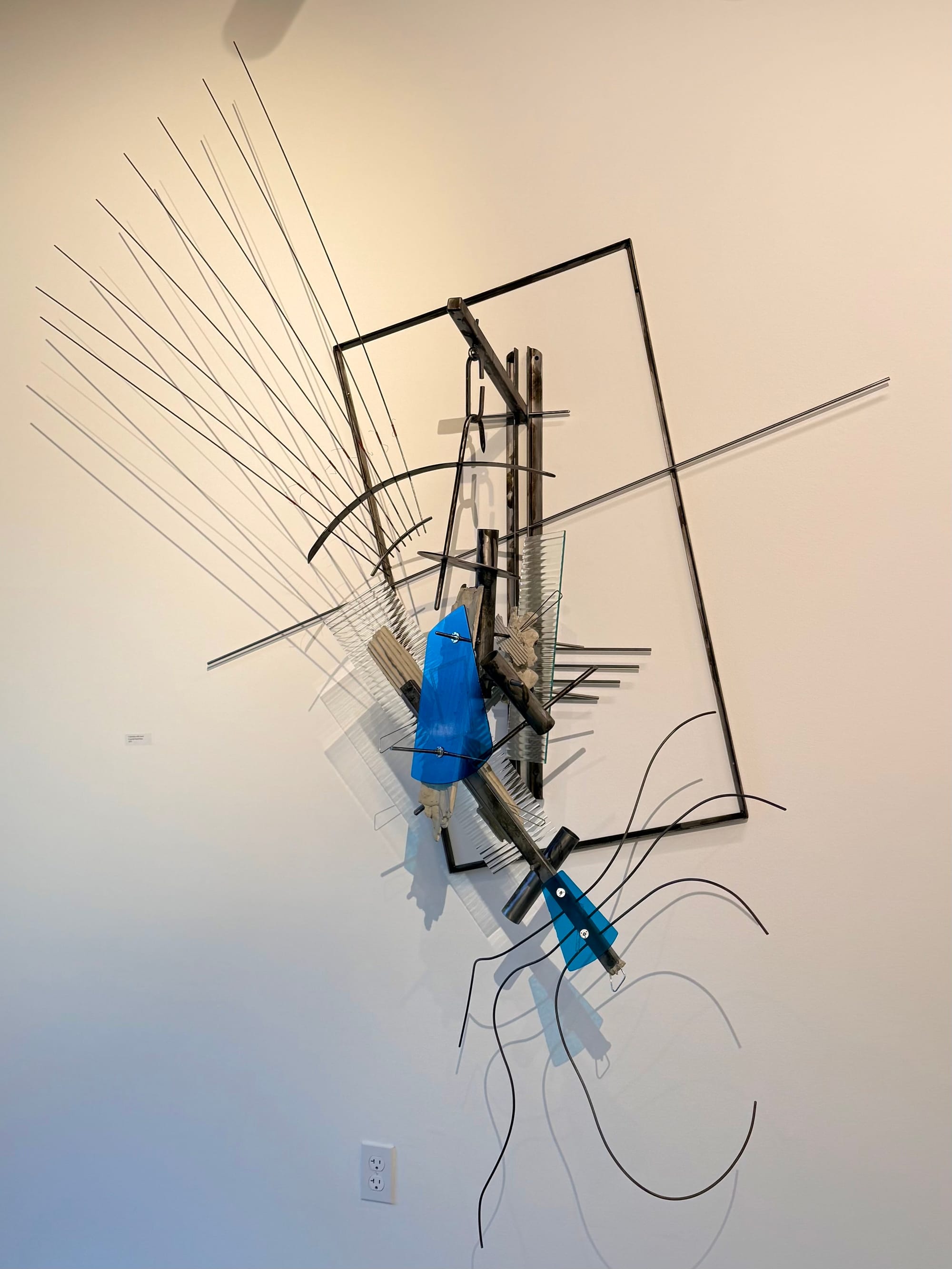
Another studio arts major in attendance, Ariel Liu, had actually seen the exhibit a week or so prior to the reception. She noted how the ever-changing aspect of “In Flux” had posed an interactive memory challenge for viewers.
“What’s different, or not here?” she recalls asking herself, upon seeing Rosales’ updates. “I don’t know—this is novel to me,” Liu said.
When asked what he hopes audience members will take away from experiencing the exhibit, Rosales replied: “Maybe I can evoke a certain freshness to the viewers, to open one’s mind a bit.”
It’s apparent that he has accomplished exactly that. At the time of publication, “In Flux” is still available to view by the public until Feb. 26. Until then, Rosales will return to the gallery every Thursday at noon to change the work in real time.
“It’s always in flux. I have no idea where it’s going, and that’s okay. If I knew where it was going, it probably wouldn’t excite me,” Rosales said. “I just want to see things from a different perspective.”