Inflatable Planetarium Debuts with Moons of Jupiter Event
Over 25 people joined the astronomy club on March 18 for “Adventures of the Moons of Jupiter,” the first show of the semester hosted in the department’s new inflatable digital planetarium set up in a classroom on the third floor of Science Hall.
By Bryne Hadnott
According to astronomy department chair Lancelot Kao, the department acquired the six-meter inflatable planetarium two years ago after requesting funding during City College’s 2023 comprehensive program review.
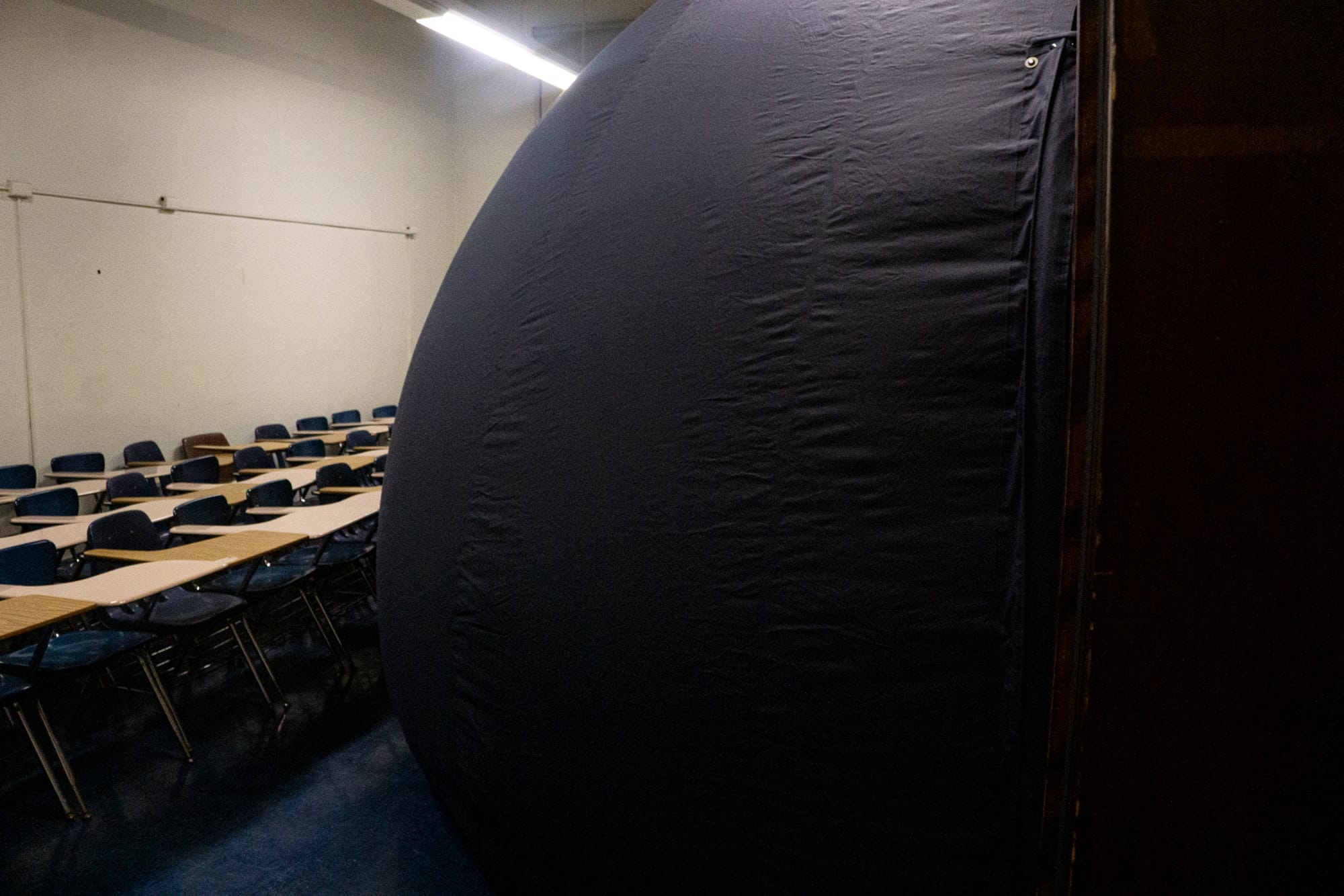
“Sadly, our planetarium on the top floor is not accessible to people with disabilities [ADA accessible] because you have to take stairs to go up there,” said Blue Polansky, City College physics student and planetarium presenter. “We wanted to make sure that we can share the planetarium experience with everybody.”
The inflatable dome fits up to 15 people seated on the ground or perched on knee high folding chairs. Visitors entered through a zippered door on the side of the dome and plunged into a darkened circular room lit only by the dim glow of the star projector.
“I'm really, really thrilled that our inflatable can fit in room 311 and this kind of evening can take place,” said astronomy professor Claia Bryja.
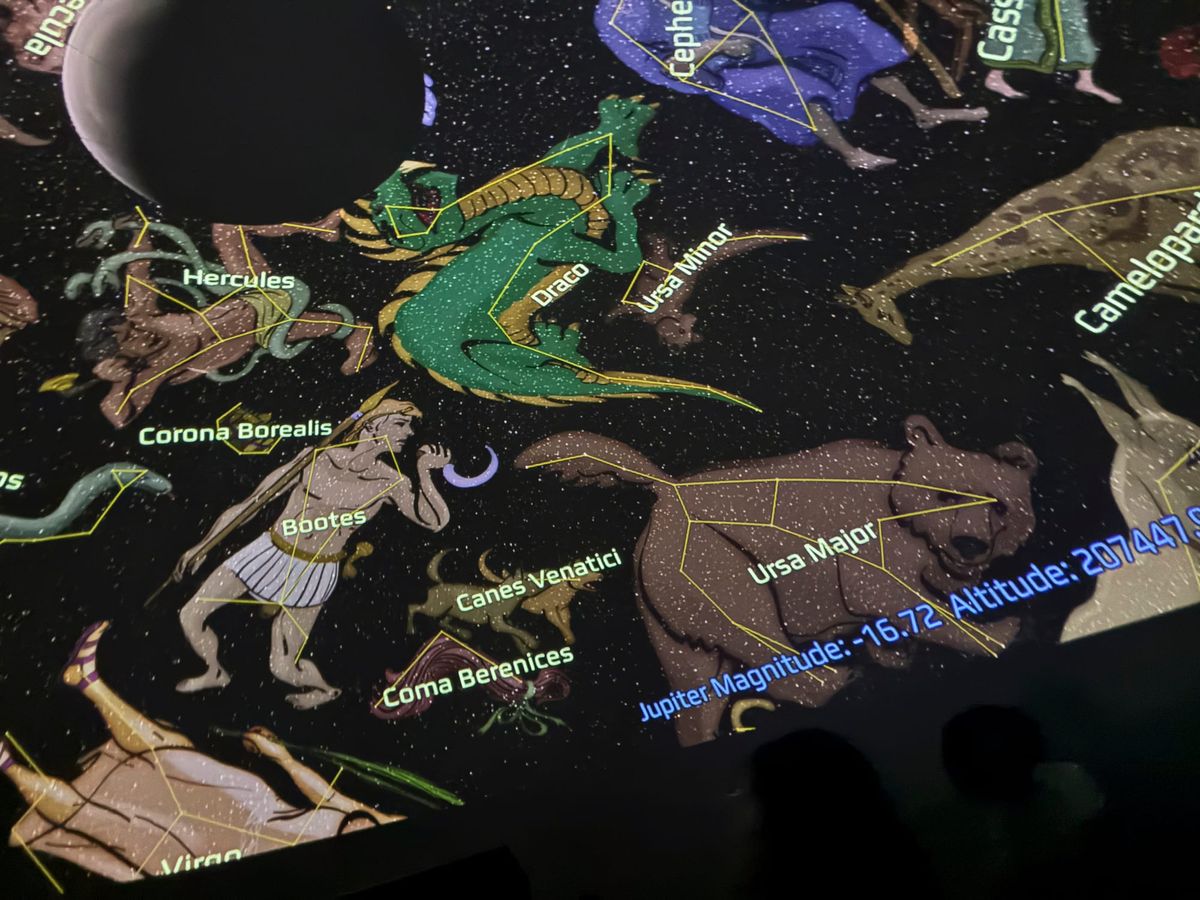
On the walls of the dome, the fifth planet from the Sun, Jupiter, loomed large among several constellations of bright stars. The red-banded gas giant was surrounded by its four largest moons, discovered by Galileo Galilei in 1610: Io, Europa, Ganymede, and Callisto.
Polansky navigated to Io, Jupiter’s innermost moon and the most volcanically active world in the solar system. Io’s volcanoes are caused by tidal heating, a phenomenon where the tug of gravity from Jupiter and the larger moons Europa and Ganymede causes solid rock beneath the surface to transform into hot, liquid magma.
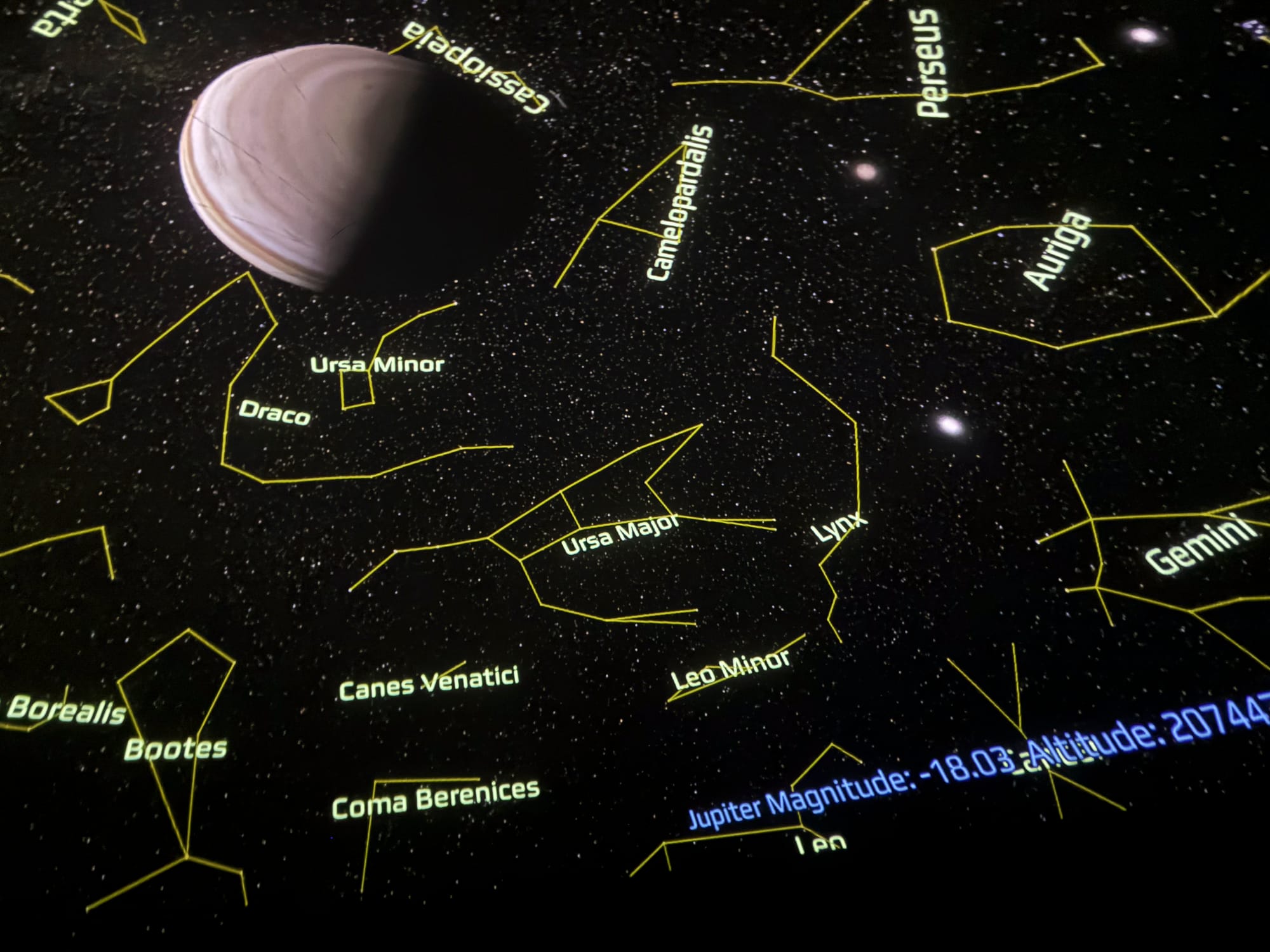
Next was Europa, an icy moon hiding a secret, subsurface ocean that astronomers believe might be a good place to search for life beyond Earth. Then, Polansky zoomed in on Jupiter’s largest moon, Ganymede, a rocky world and the only satellite in the solar system to have its own magnetic field.
The tour ended with Callisto, the farthest of the Galilean satellites. Callisto’s pockmarked surface is the oldest in the solar system and is covered in bright craters from plummeting comets and asteroids.
“I think it's a really cool technology,” said Oliver Tickel, a child development and family studies student at CCSF. “There was music playing the entire time and they got to zoom in and out on Jupiter, see how the different moons orbited, showed constellations, and shared our own personal connections to them.”
After the planetarium show, the audience could take the stairs to the roof of Science Hall to observe Jupiter and its moons through a telescope. A second telescope pointed at the Orion Nebula, located near the center of the constellation Orion.
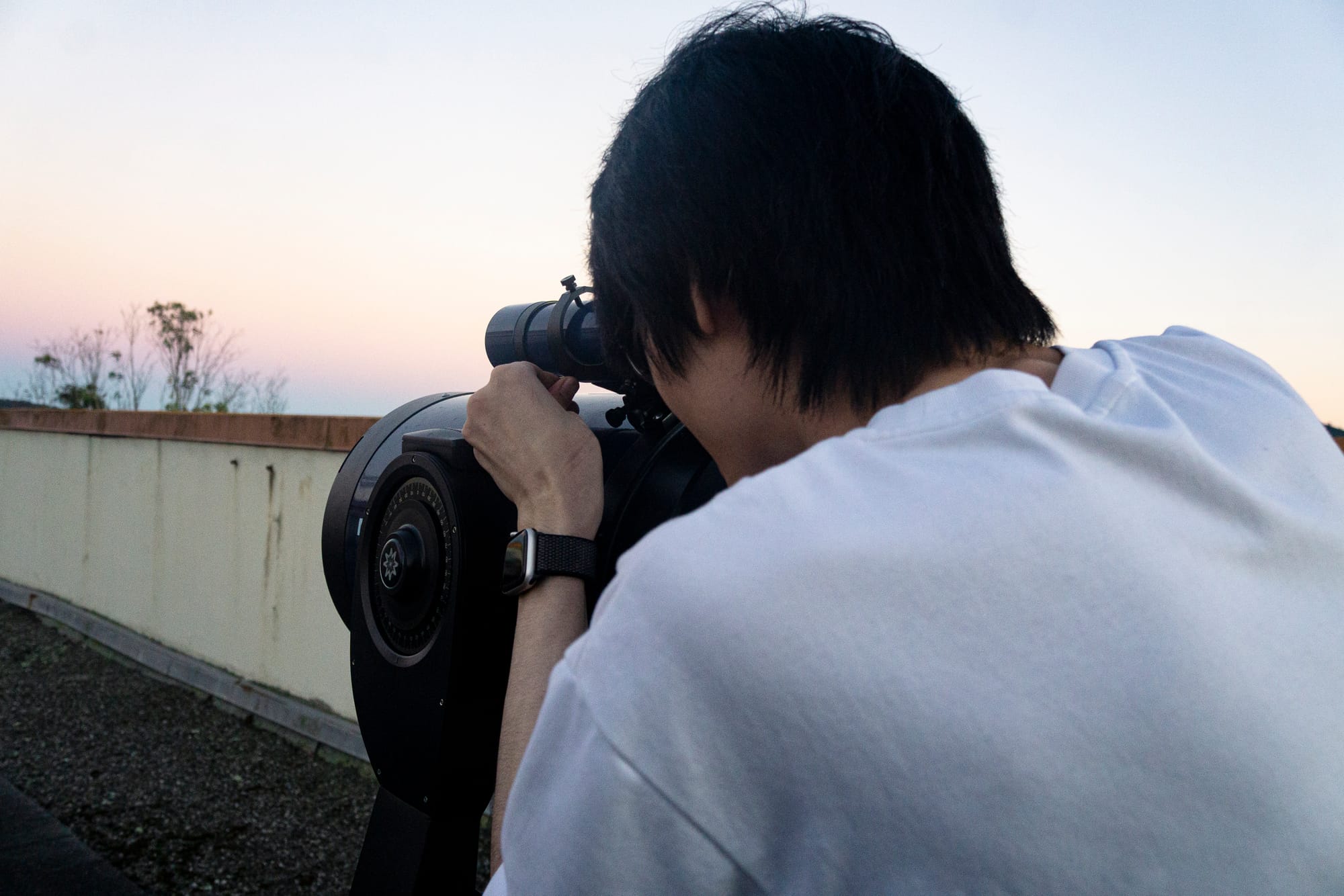
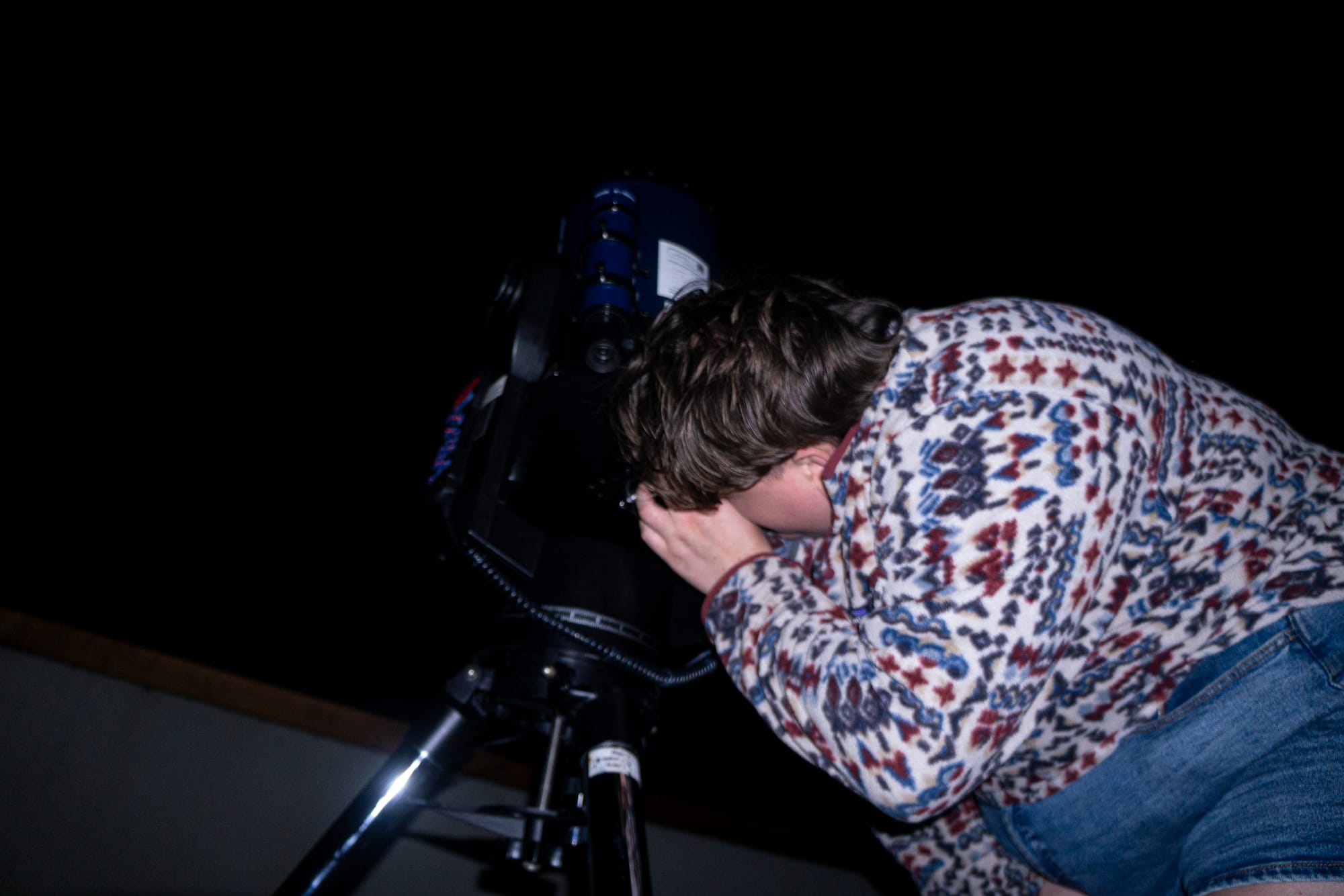
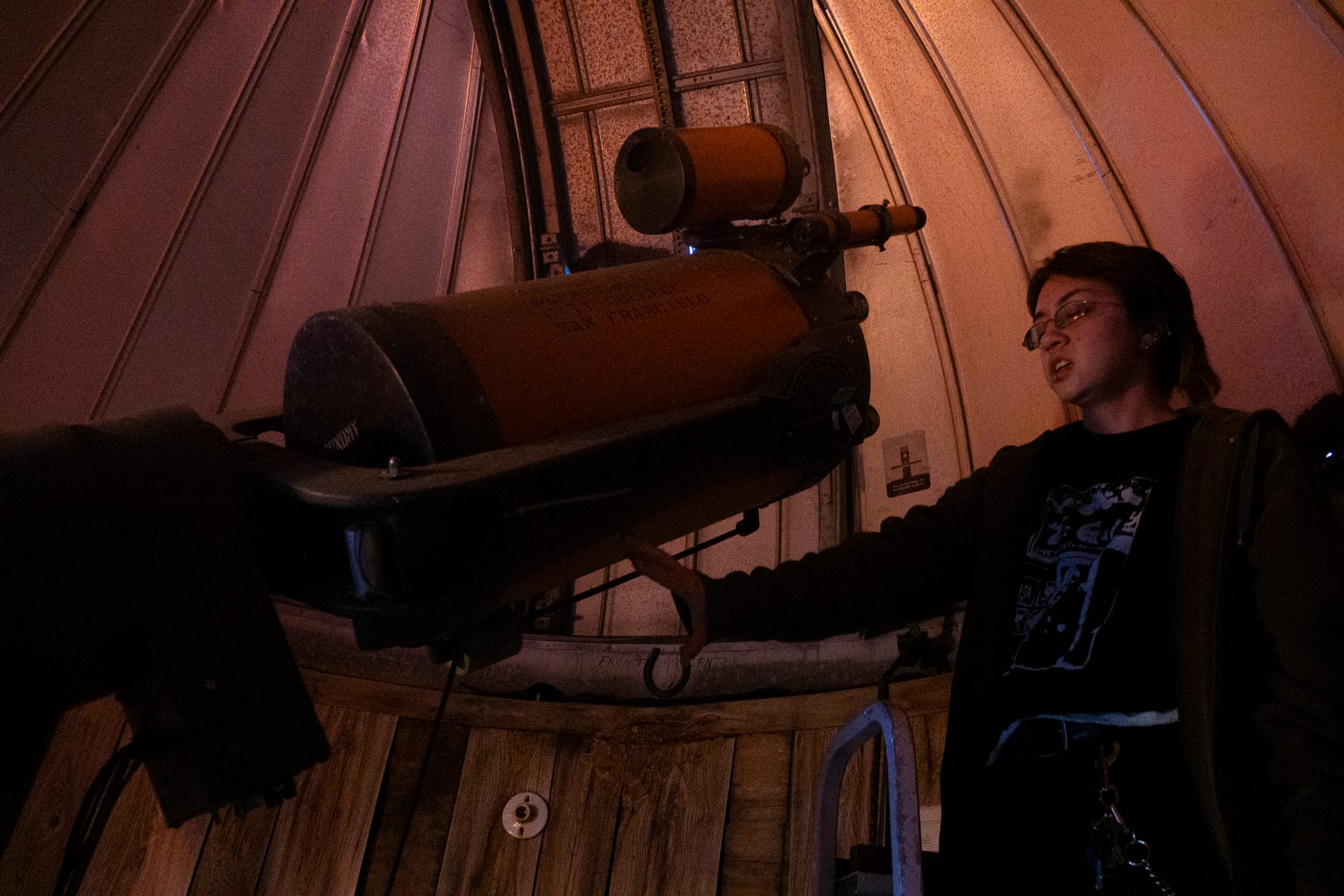
Planetarium show guest observes Jupiter and its three moons from the Science Hall roof through the telescope. Mar. 18, 2026 (Karim Farahat/The Guardsman)
“I've always had a fascination with stars in general from a young age,” said CCSF student Victorin Chen. “Gazing overhead, seeing everything above me, it instills a really calming, beautiful feeling. It's just so entrancing and kind of just really comforting.”