Lab Aides Reinstated For Now, Students Cautiously Optimistic
About $300,000 total additional funds has been moved to department budgets, so they can hire lab aides, administrators said, resolving the crisis of the disappearing student jobs after mid-semester cuts left departments unable to pay student workers.
The amount is considerably more than the $100,000 initially put forward as a solution by then Chancellor Kimberlee Messina in late September.
The same number of students have been hired for this semester as were hired last year — as of early October, according to Carter. Her team has tallied them up and confirmed with payroll that they are actually receiving paychecks.
Under the resulting plan, each of the college’s many departments chose the higher of two amounts: either the amount budgeted at the beginning of last fiscal year on July 1, 2025, or the amount departments had been allocated as of the Oct. 1, 2026, meeting with the deans and chairs and reflecting the amount included in the FY 2026-27 Adopted Budget.
Department deans and chairs and three vice chancellors worked out the plan at the Oct. 1 meeting. The administrators involved were Carter, Vice Chancellor of Academic and Institutional Affairs David Yee, and Interim Vice Chancellor of Student Affairs Clint Cowden. During that same week, Messina was put on leave and Yee became acting chancellor.
“There [were] 60 very angry people, very on top of it,” said Music and Theater Arts Department Chair Madeline Mueller, describing that meeting. Several department chairs spoke to “wild applause.”
Since then, Yee, Carter and Cowden have been presenting the plan to constituent groups around the college and answering questions and getting feedback in an effort to rebuild trust.
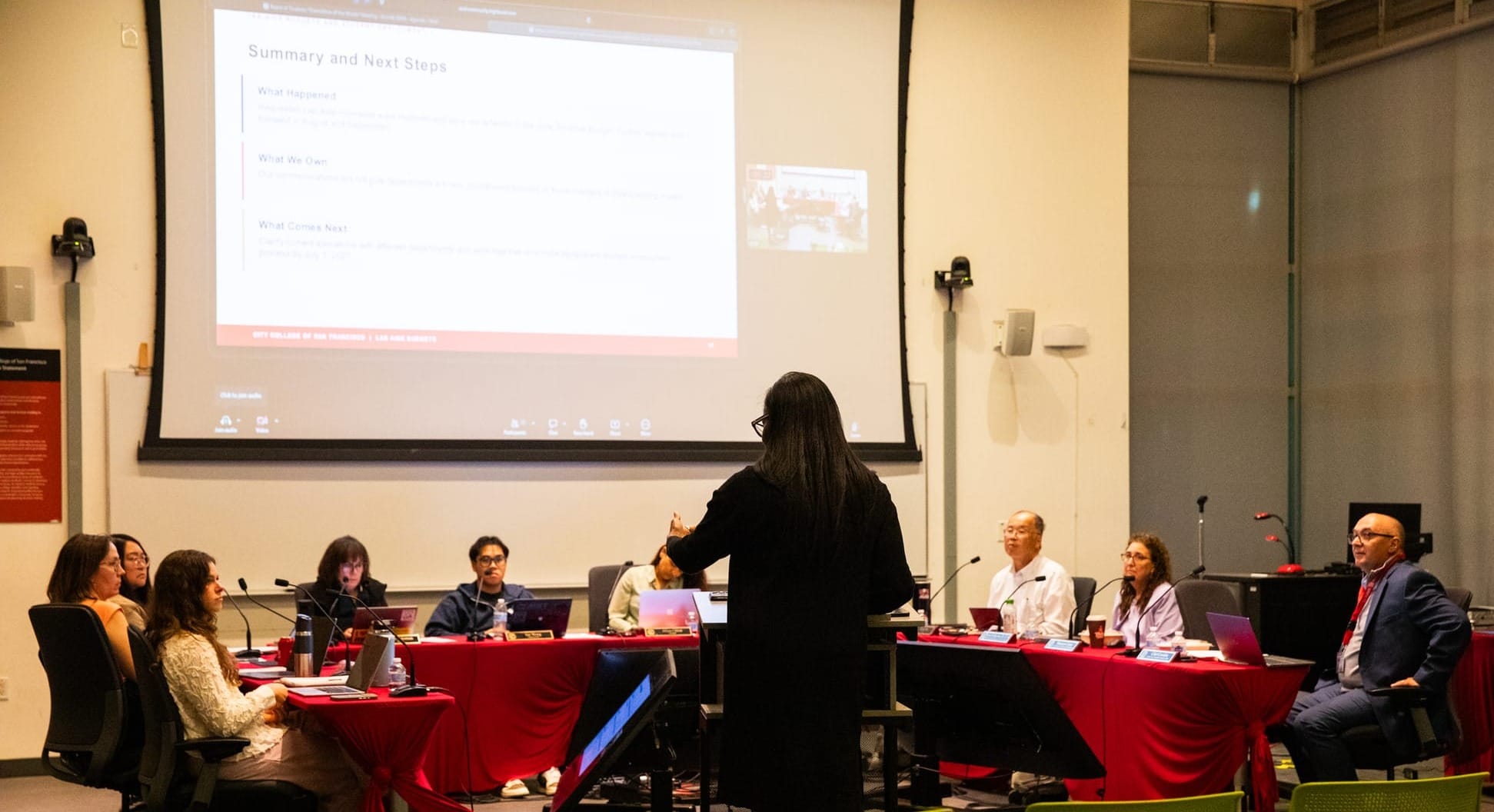
Carter presented an update on the lab aide findings to the Board of Trustees Committee of the Whole on Oct. 8, after which trustee Vick Chung thanked the three for not letting this go “into the void.”
Members of the Associated Students Executive Council expressed gratitude for the restored jobs and the respectful consultation. But they voiced skepticism about how things will proceed in the future.
ASEC leaders said that communication with students should be mandatory during budget discussions. Hernandez suggested an ad hoc joint committee of budget and student leadership. Carter cautioned such a committee would need "guardrails" and “deliverables.”
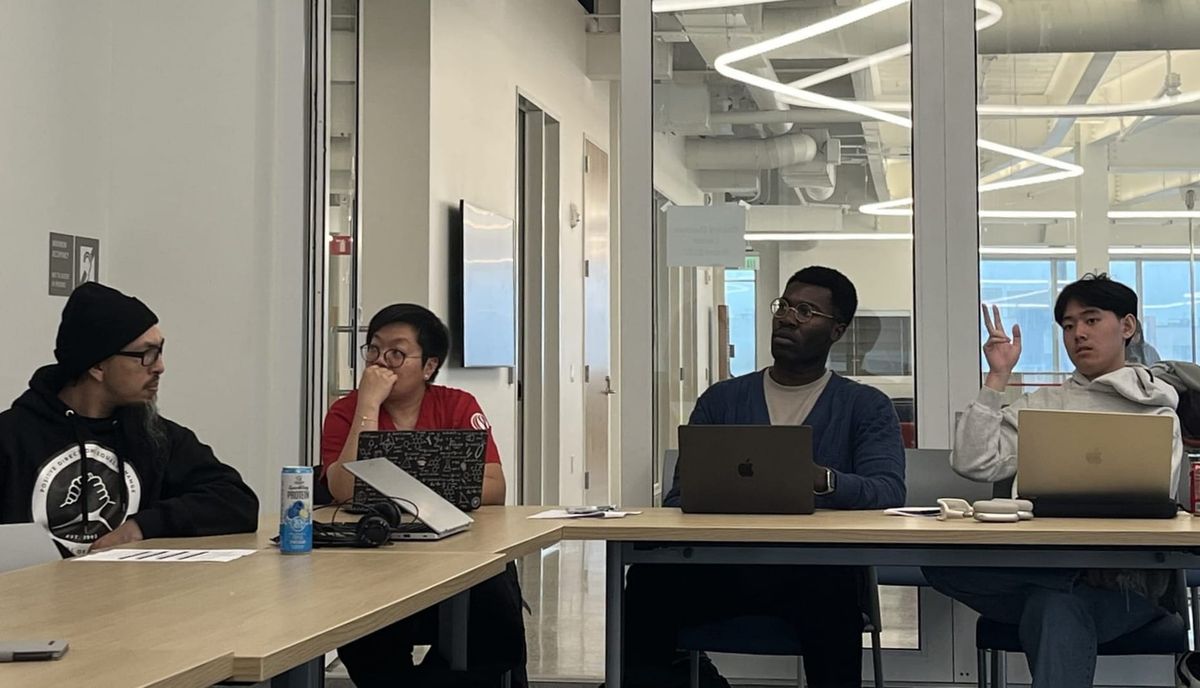
“Somebody effed up, somebody was negligent, or somebody, you know, lined their pockets … it's not fair,” said Lorenzo Castaneda, leader of the Positive Directions Equals Change Recovery Club at City College. “This institution is built for students, so we need to accommodate students at all costs, respectfully.”
Yee emphasized that all discussions need to happen now, in order for any changes to be incorporated into planning for next year’s budget. The budget process begins in January.
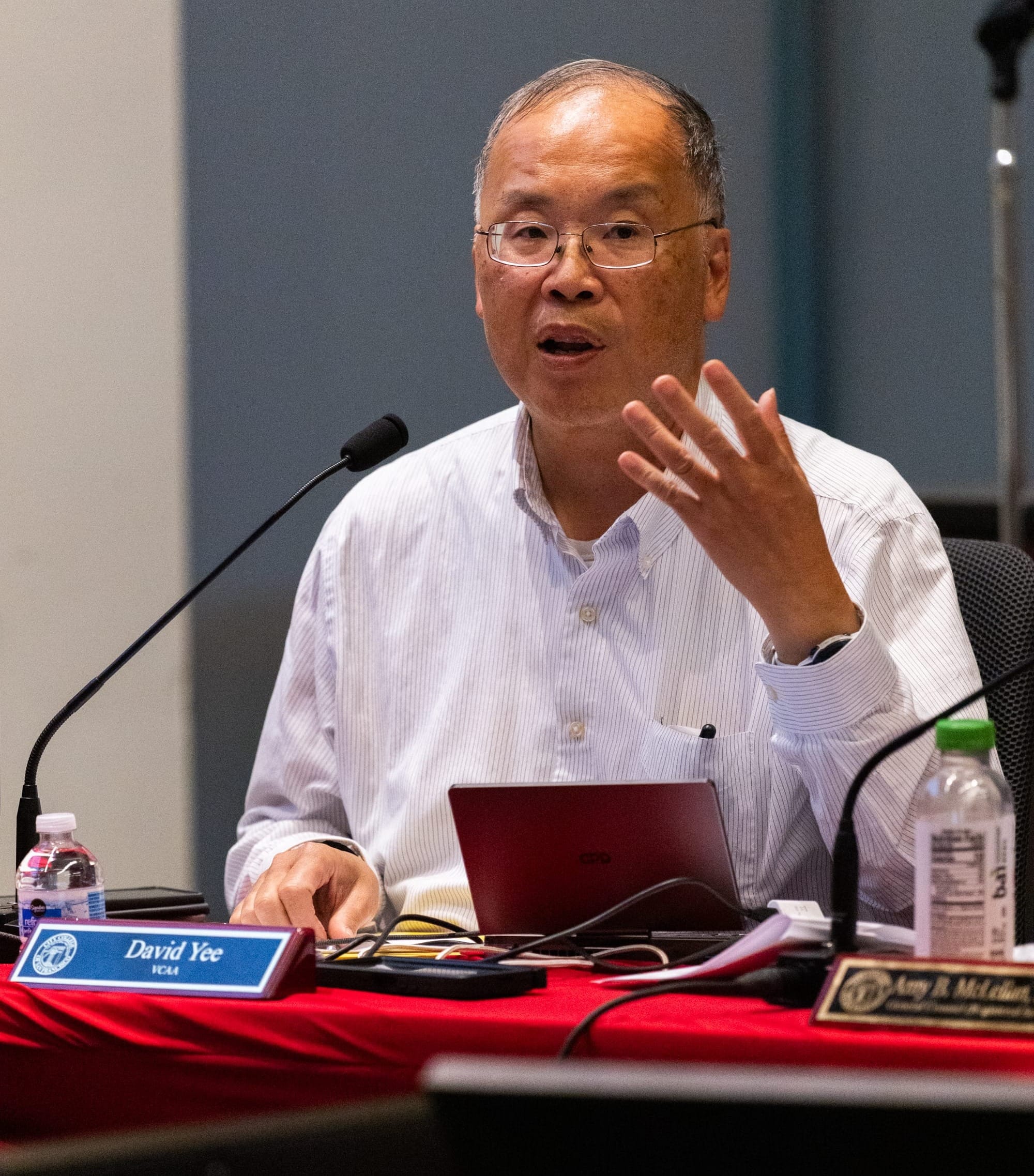
“I just want to be honest,” said Yee, telling the ASEC not to expect everything will be perfect by next fall.
The issue of lab aide workers, and of student workers in general, is tied into larger issues, such as limits on how many hours students can work per week, and on the ability of students to negotiate through a student worker union, among others.
The student worker issues have been brought up before. A year ago, student leaders raised concerns to the Participatory Governance Council not only about the 15 hour per week cap but about onboarding and the budget in general, according to Lydia Hernandez, Associated Student Council Mission Center president, who has been closely following this issue and speaking out.
"It just sat on the agenda for a whole year,” she said.
Apparently the effort has succeeded. As Yee said, he’s been at the college for “a thousand years,” working his way up over several decades from business instructor. He knows how the college works. After just a month on the job students are already referring to Cowden as “VC Clint.” Carter gets a warm welcome at every meeting.