X-Ray programs at CCSF draw world students
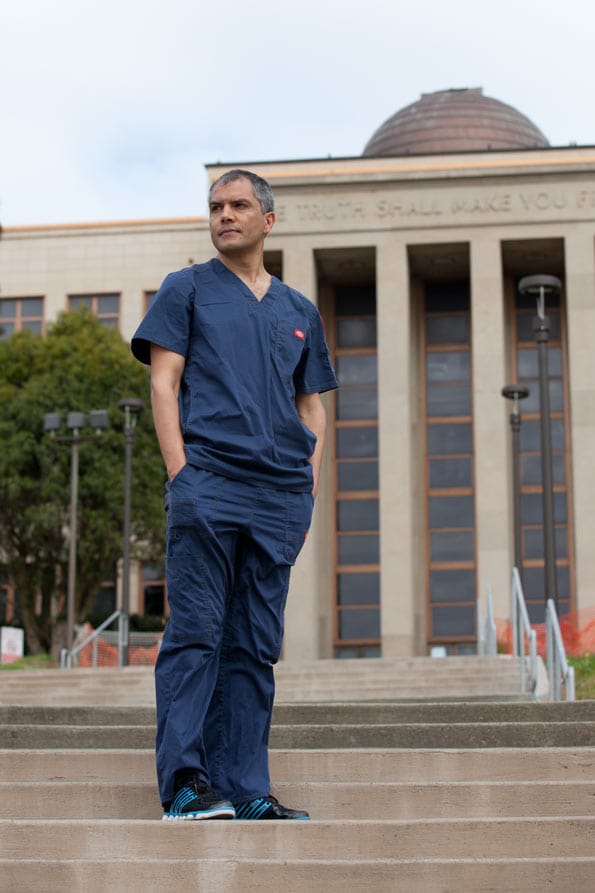
Rishi Subedi is a 35-year-old student from Nepal with bachelor’s degrees in both English literature and sociology.
The Guardsman
Lance Kramer
Rishi Subedi is a 35-year-old student from Nepal with bachelor’s degrees in both English literature and sociology. He is currently in his third semester studying diagnostic medical imaging at City College and also works about 15-20 hours a week as a medical interpreter translating from his native Nepali to English.
The DMI program is a 30-month program that prepares students to work in the field of medicine using X-ray, CT, ultrasound and MRI technologies. The program also teaches students about anatomy before they begin helping patients in hospitals throughout the Bay Area.
Subedi and his peers have started X-raying patients this semester, which is typical for the third semester in the program.
“What we have learned so far, in one year, we are practicing now in city hospitals,” said Subedi. “Myself, I am at UCSF but I will rotate between different branches at the UCSF hospital.”
With the rise in the number of students seeking to enroll in the program, getting accepted into the DMI program was a challenge for Subedi.
“In the last couple of years nursing was getting more popular, but so is the DMI program,” Subedi said. “The process to go through the applications and to get accepted in the program is more strict than it was ten years ago or five years ago because there are more people applying to the program.”
“I think that because of the financial crisis we still feel the impact,” he said. “Just like in nursing where they have seven years of ups and downs in the market, I think radiology also has that kind of flow.”
Subedi explained that because of the high number of applicants there is a lottery system for the enrollment into the DMI program.
“I applied for this program the first year and I did not get accepted,” he said. “I got qualified, but I did not get in because I did not win the lottery.”
But he applied again the following year and was finally accepted in the DMI program.
Regarding job prospects, Subedi said the industry has changed within the last ten years.
“It used to happen where people from the hospitals used to come to the program and say... you know... will you work for us?” he said. “But we do not have that kind of situation now.”
However, Subedi said, it is still a highly demanding job and with certification it can lead to attractive job opportunities in countries outside of the United States as well.
“The medical field is not a joke, and it’s not easy, because you are dealing with real life,” he said. “You make one mistake, you are taking risk of someone’s life, so you need to know what you are doing.”