Workshops held for sexual trauma survivors
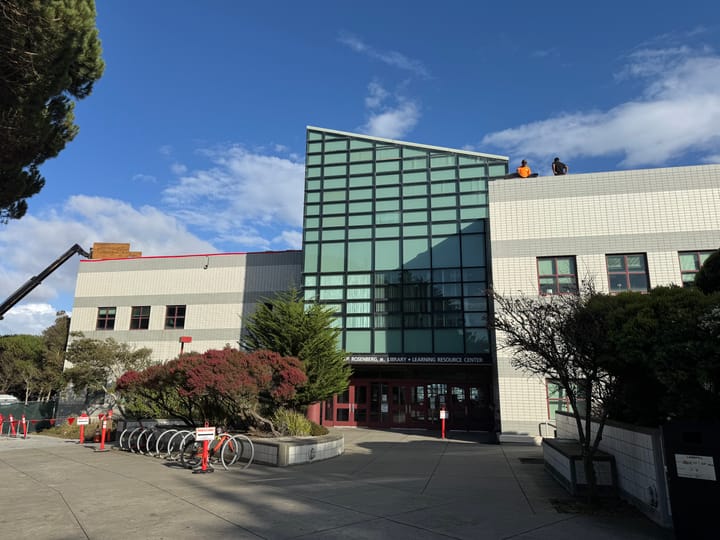
Healing for Change, an annual eight-hour conference featuring seminars, workshops and panels for female survivors of trauma, had its first meeting at the City College Mission campus after a two-year hiatus due to scheduling conflicts.
By Jen HoughtonContributing Writer
Healing for Change, an annual eight-hour conference featuring seminars, workshops and panels for female survivors of trauma, had its first meeting at the City College Mission campus after a two-year hiatus due to scheduling conflicts.
The conference, which was held Saturday, Jan. 15, focused on small group format and was organized and led by City College LGBT studies instructor Trinity Ordona, who also provides healing meditation sessions in her home.
The day began at 9 a.m. with an orientation. After leading a short meditation, Ordona introduced herself and the purpose of the meeting to a room of about three dozen women. Emotions were already running high as some attendees began to cry while Ordona announced the goals for the day.
“Feel your feelings. And that means feel the pain. We know how to do this stuff, so don’t worry,” she said.
Ordona explained that the day would consist of a two-hour workshop of choice, followed by lunch and a second two-hour workshop. She warned the attendees not to bounce from room to room but to take the time allotted to “go deeper in and deeper in, and then come out.”
Attendees were given information packets containing guidelines for the day that read: “Always, always take care of yourself. This is your day. It is okay to cry, to laugh, to be quiet, to pass, not participate, to walk out of a workshop, to ask for help, to say ‘no,’ to say ‘yes.’”
Quiet rooms and talking rooms were designated where women could go to think, write, pray, meditate and rest or talk to each other outside of a guided workshop.
Amy Lam, a facilitator for the Family Stories in our Healing Journey workshop, became involved in Healing for Change after Ordona spoke about sexual trauma in a women’s studies class. Lam had experienced sexual abuse at age four and didn’t begin her own healing process until decades later.
“It completely changed my life,” Lam said. “I really started healing. The first time I heard these women’s stories I just started bawling.”
Many workshop facilitators are trauma survivors themselves who were compelled to lead group sessions after attending previous Healing for Change meetings.
The group sessions, which included Healing Through Movement, Healing Through Writing, Acupuncture-Enhanced Meditation and Healing Through Drumming, provided a forum for discussion and healing, not only for attendees but also for the facilitators.
“The biggest thing about this workshop is it’s about self-healing,” Lam said. “As healers, we share our examples of how we healed and help others to begin their healing.”
Fatimah Salahuddin, a volunteer, also got involved with Healing for Change after hearing Ordona speak in a class.
“Once I made a connection with Trinity, I felt an obligation to be a part of this,” Salahuddin said. “It takes me outside of my own abuse. It’s bigger than me. It’s about all these women, here and in the world. Healing is needed globally.”
Trudy McMahen became involved with the conference after participating in an eight-week, self-healing meditation with Ordona. Like many of the volunteers, she felt that Healing for Change allowed her the opportunity to connect with resources she might otherwise not have had access to.
“There are people here who are highly skilled healers who are offering their services for free,” McMahen said. “This is a real platform to go forth and get help.”
The women at the workshop all had different stories, experiences and reasons for attending but all seemed to want the same thing, to relinquish the power their trauma had over them.
“Sharing our stories allows us to give a voice to experience, which is important for anyone who has been through a traumatic experience,” Lam said. “That’s the power of trauma — it keeps people silent. But in speaking your truth, you set it free, let it go and take the power away from the trauma.”
McMahen echoed that sentiment by quoting a 12-step mantra: “Your secrets keep you sick.”
The all-day meeting was put together with no funding and solely by volunteers. Scheduling for Healing for Change is determined by the availability of the Mission campus.
“This is born out of City College but it reaches out into the community,” McMahen said.