City @ 90 Exhibit: City College's History Through Different Lenses
The exhibit represents the importance of documenting and saving artifacts for future generations.

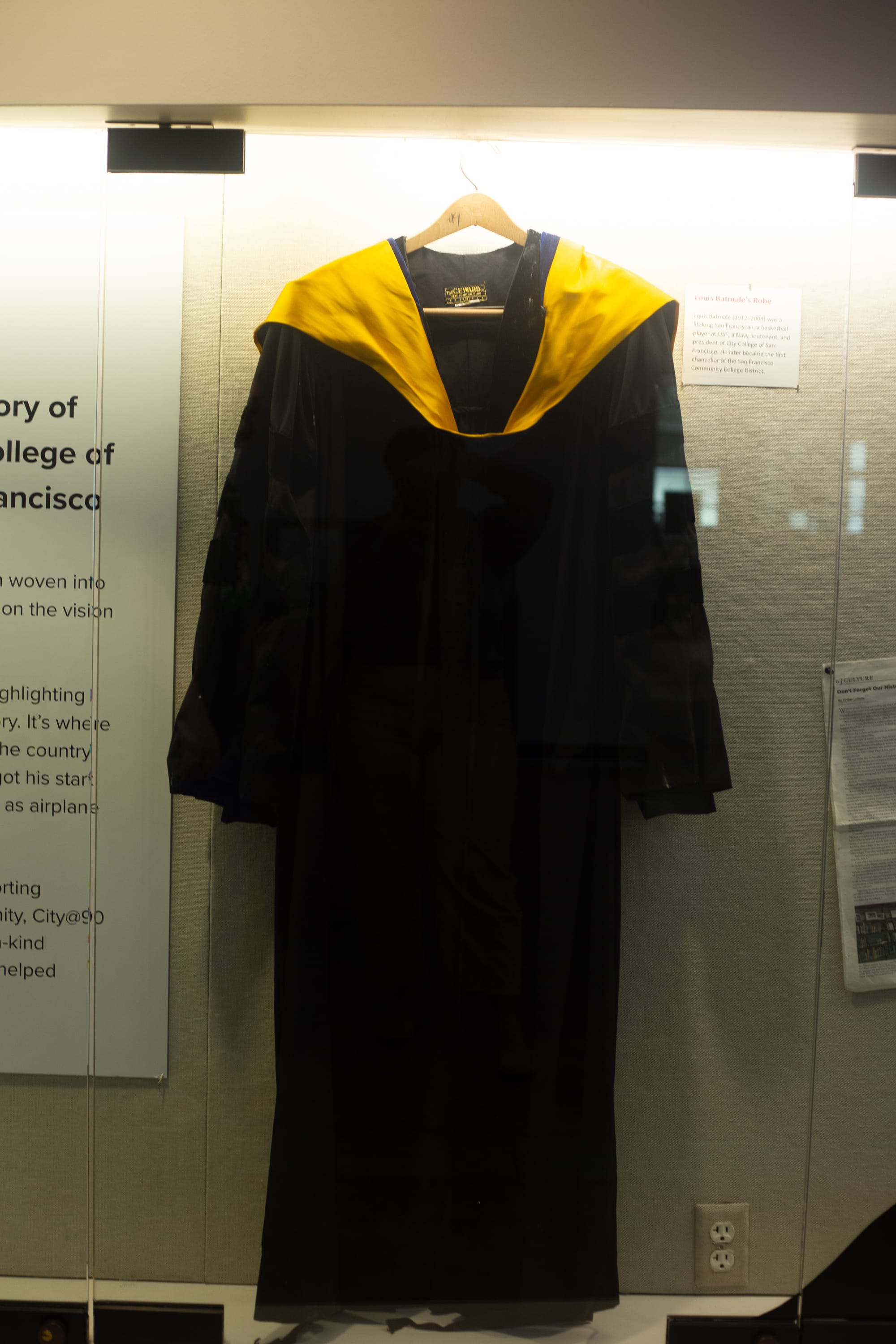
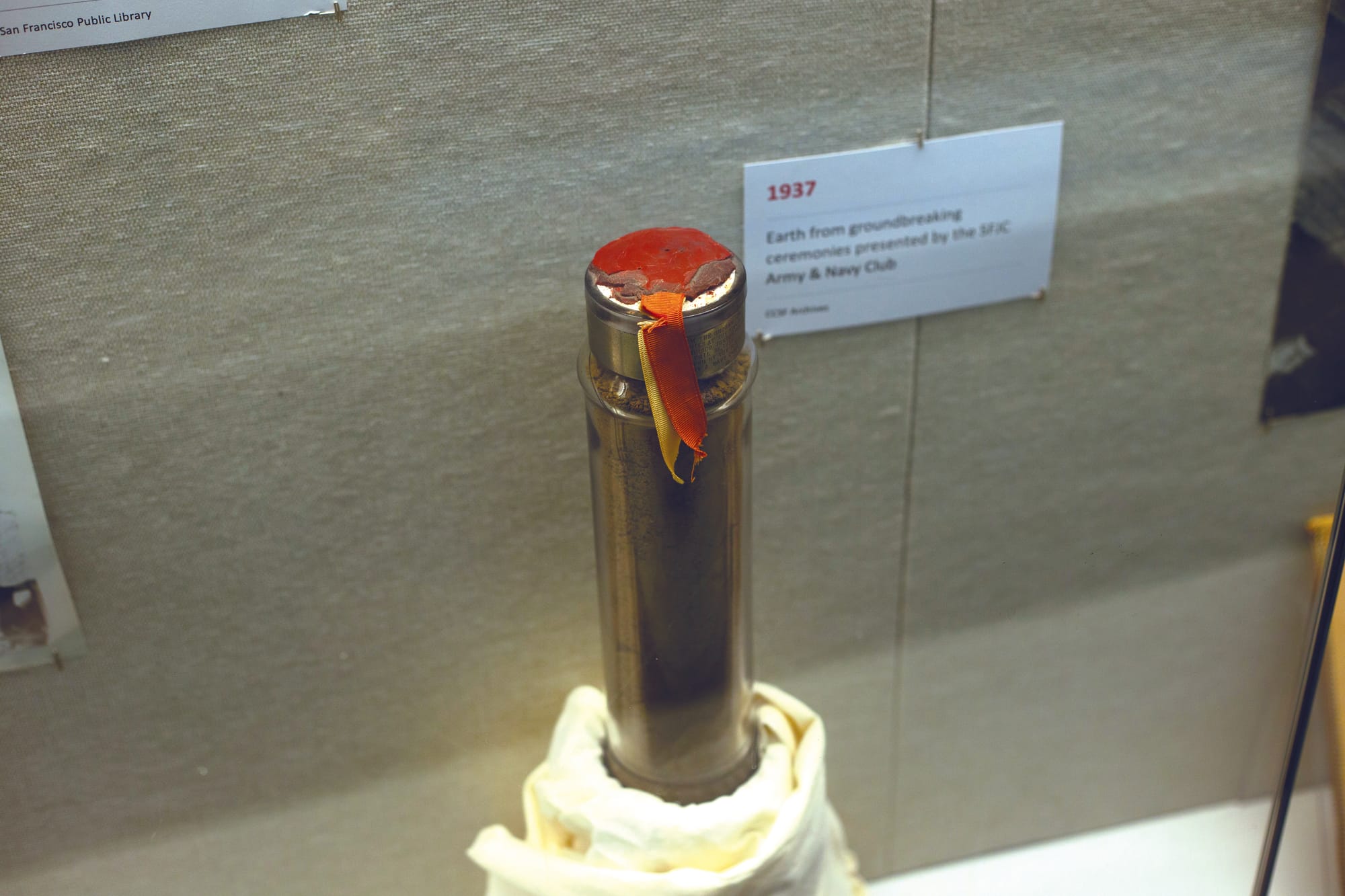
A time capsule of the soil from Science Hall's groundbreaking, a miniature replica of the Olmec head that sits outside STEAM Building, and former Chancellor Louis F. Batmale's robe are just some of the wares you can find in the City @ 90 exhibit.
The exhibit was curated by reference librarians Alan D'Souza, Becky Alexander and Gina Caprari and lays bare City College's 90 years of history, and the trail it's blazed.
Compiling and creating the exhibit was no easy task, in more ways than one. D'Souza and his colleagues began research for the project in the summer of 2025, which involved diving into the multitude of information streams that it ended up sourcing from.
Most of the ephemera and artifacts in the exhibit, unsurprisingly, came from City College's own archives, although the college's Diego Rivera Collection and San Francisco Public Library's History Center also contributed a chunk of what appears in the exhibit.
The display takes the form of a timeline and tells the incredibly dense history of the college, using artifacts, photos and text to complete the story.
“A lot of history is lost or not visible,” said D'Souza “So we're trying to visualize the rich history of what City College has done for our students and our communities.”
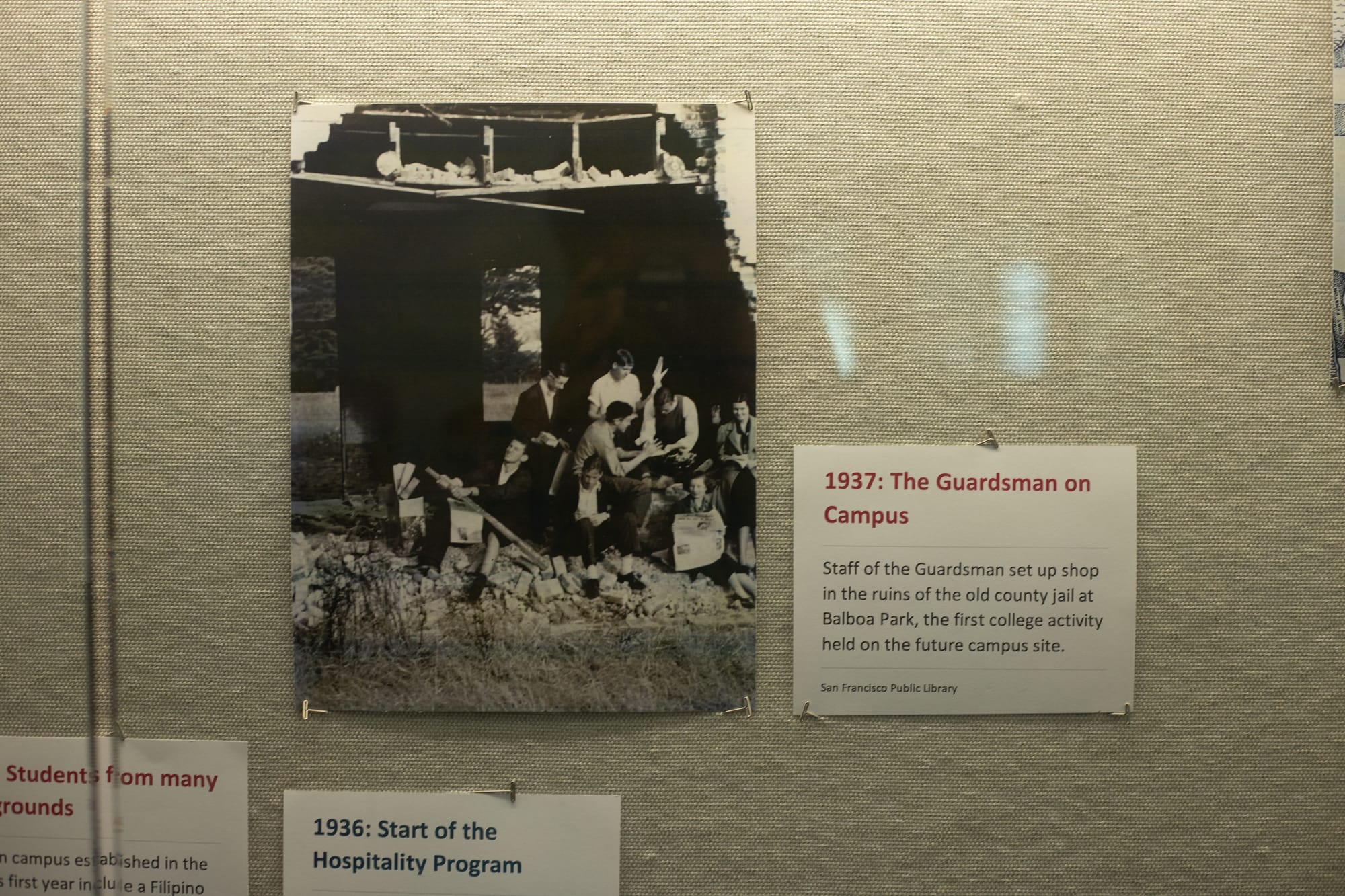
The nodes on the timeline mostly fall into three sections, with colors to match. “Historic Firsts” denotes the unique programs and resources developed at the college, “Creating Careers” follows the career pathways that City College has created, and “Making Meaning” highlights the culture and community of the college.
“The diversity of San Francisco being reflected in the college is really beautiful, and if [we're to] show that story, and to show that it's still alive and something that, as we look at the timeline going forward, we stay consistent and true to,” said D'Souza.
“I'm a big fan of art exhibits, I really like stuff like this,” said Michael, 38, an English major, as he gazed at the exhibit. “I don't stop to read a lot, but when there's a lot of visual stuff that catches my eye, I'm a big fan of that.” He declined to provide his last name.
However, the breadth of information and knowledge City College's archives provides, documenting history and saving artifacts of the college for future generations, is decidedly unsupported, and for some, unappreciated.
The last full-time archivist for City College, Christopher Kox, retired in 2017. Since then, the college has neglected to hire one, despite numerous pleas from library staff.
This has left that staff, which has decreased in size from 23 librarians in 2020 to just 14 today, to care for the archives themselves on top of their listed duties.
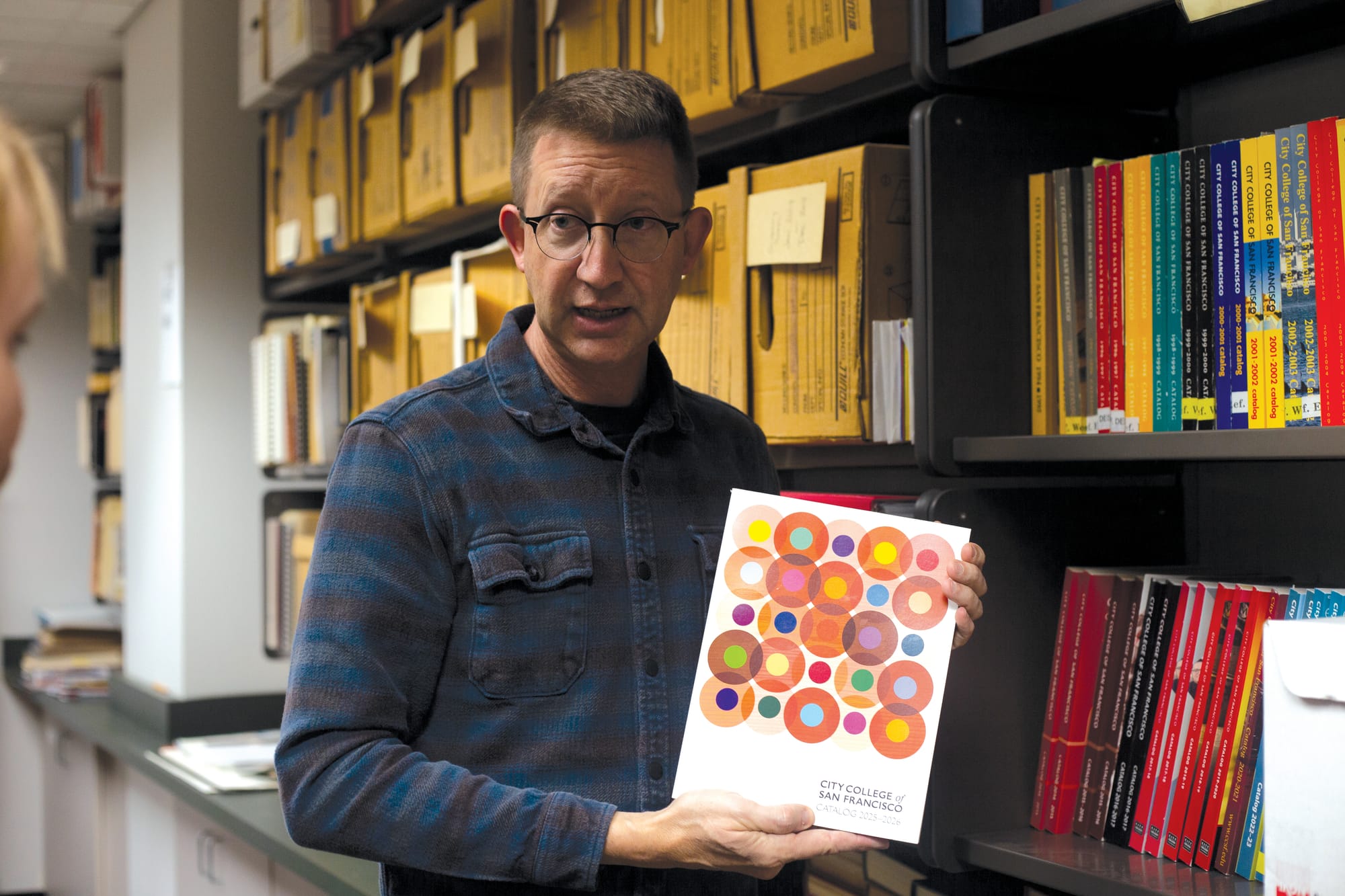
“We have to keep access to it because it's part of the library's holdings, for the public, professionals and students,” said reference librarian Chad Stephenson. “But we don't have funding to pay a person for that, so I'm volunteering to be on the team. We have three other librarians that are also volunteers, but [none] of it's in a paid capacity.”
The exhibit begins on the fourth floor of Rosenberg Library, where you can follow Rocky's footprints down to the second floor, where the timeline is located.
The exhibit will likely run until spring of 2027, according to D'Souza.