Astronomer connects cultural roots and heritage over the course of time with solar observations.
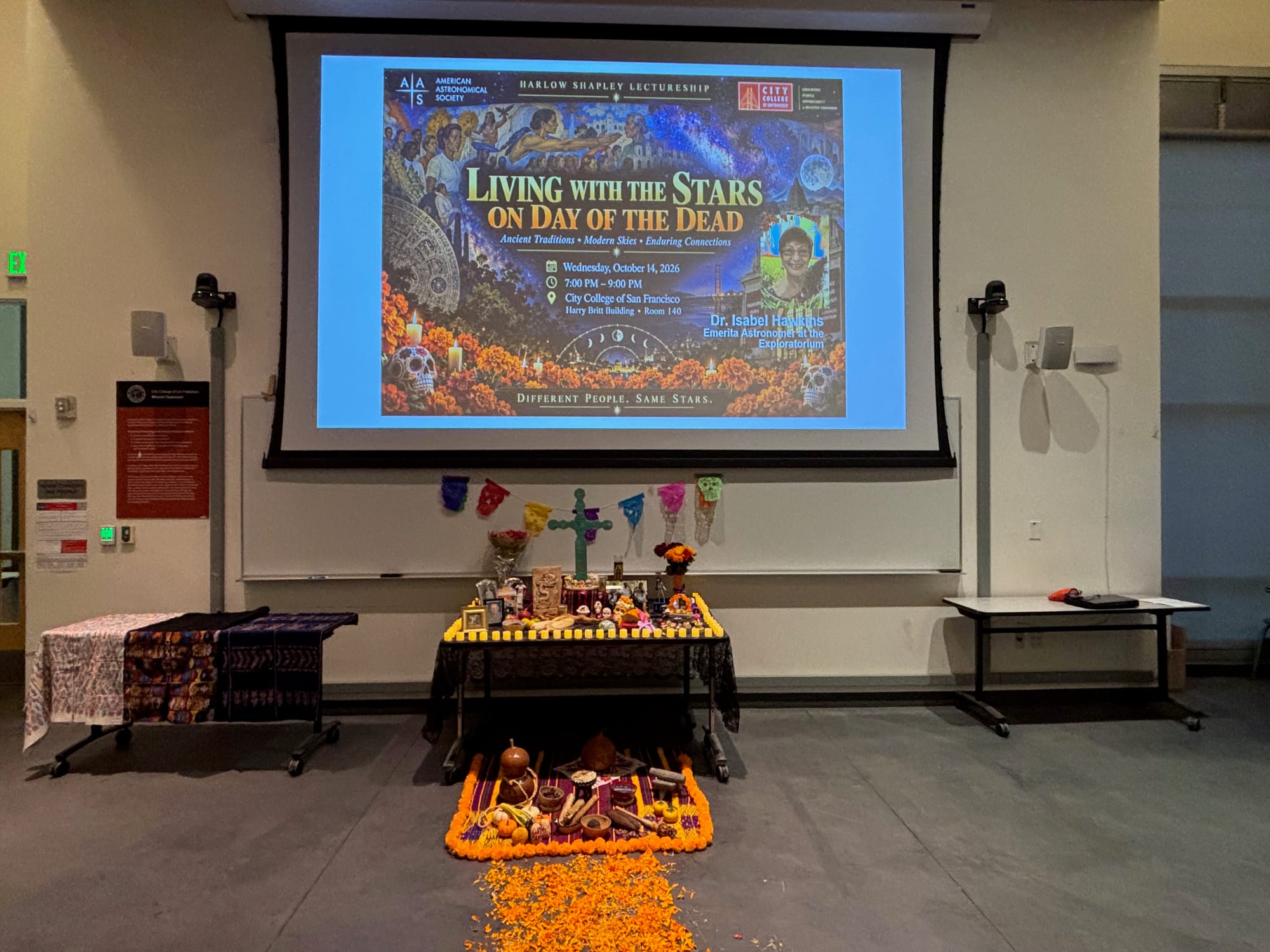
Exploratorium astronomer Isabel Hawkins described the link between indigenous Mayan culture, astronomy and Diego Rivera’s “Pan American Unity” mural to over 30 students and faculty gathered in Harry Britt Building Room 140 on Oct. 14.
The American Astronomical Society’s Harlow Shapley Program organized the lecture by reconnecting Hawkins with City College’s Astronomy Department Chair Lancelot Kao and mural historian Will Maynez. Her talk aimed to “animate the cultural roots” of past, present and personal astronomical observations.
Every day for a year, Hawkins observed the sunset from her former office at University of California, Berkeley’s Space Science Lab. The sun’s position shifted along the horizon from its southernmost point at December’s winter solstice to its northernmost point during June’s summer solstice.
“I studied Mesoamerican astronomy and noticed that Maya communities had those solar milestones along the horizon as part of their indigenous languages,” Hawkins said. “That means these observations have been part of the community for thousands of years.”
In Yucatec Maya, the word for solstice is “xulbej’ k’in” which means “the end of the road of the sun.” The halfway points between the solstices, equinoxes, are called “la’aket k’in yetel a’akab’” which translates to “equal day and night.”
Mayan astronomers also recorded the day halfway between the solstice and equinox, what modern scientists call cross-quarter day. In the tropics of Mexico and Guatemala, CQDs correspond to the zenith passage when the sun is directly overhead at noon and the nadir passage when the sun is directly below at midnight.
Dia de los Muertos, a late fall holiday widely celebrated throughout Mexico, falls on the day of nadir passage. In Mexico’s Yucatan peninsula, people build an underground oven called “píib” and cook “mukbilpollos,” head-sized tamale-like dishes colored red-orange with ground achiote seeds. Burying the orange mukbilpollo represents the sun descending below the Earth and into the underworld or land of the dead.
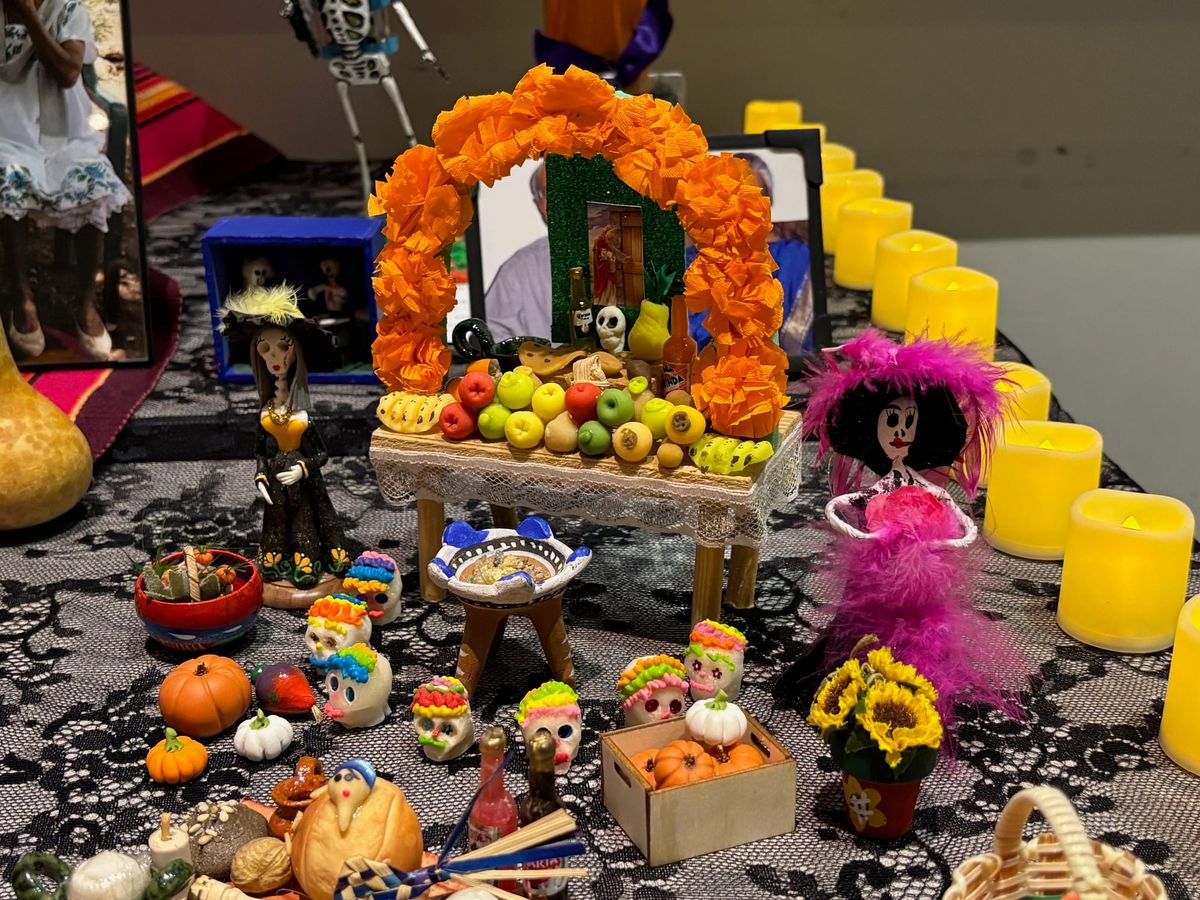
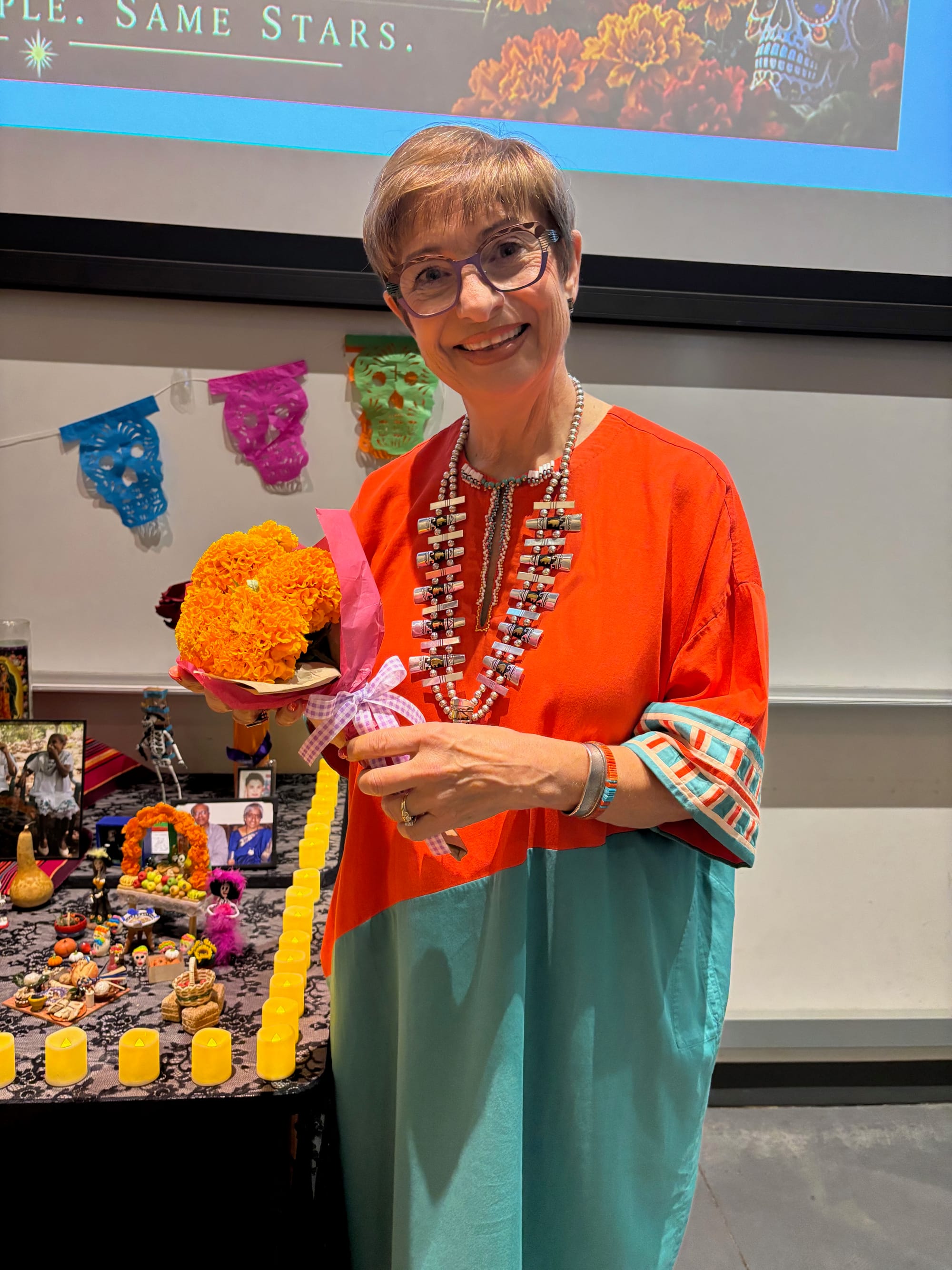
Celebrators also create altars or “ofrendas” with photos of deceased loved ones, corn-based beverages, orange marigolds and food offerings like “pan de muertos” and “calaveras” — bread of the dead and sugar skulls. Attendees of Hawkins’ lecture brought their own handwritten notes, portraits and gourds for an ofrenda at the front of HBB 140.
“My favorite holiday, Dia de los Muertos, the Day of the Dead, reminds us that we steward the knowledge left to us by our ancestors and will convey it to the future enhanced with new insights we may learn along the way,” Maynez said. “If we’re lucky, that can lead to wisdom.”
Hawkins acknowledged Maynez’s 30-year stewardship of Rivera’s “Pan American Unity,” calling the mural “an expression of knowledge and wisdom through the generations.” She closed by exploring each panel starting with a complex of ancient temples used to observe solar phenomena and ending with the exchange between indigenous culture and modern technology.
“I invite us all to see the mural through a new lens where time is not linear, but cyclical, and past and future meet in the present by imagining its two ends joining,” Hawkins said.
Physics major Ziky Zhang connected with Hawkins’ lecture through his own cultural lens.
“I was sitting here thinking about what I knew from my country,” Zhang said. “I’m from China and I grew up hearing stories about our own versions of constellations.”
College of San Mateo student Timothy Jaime Rodriguez Boas reflected on his aspiration to study astrophysics.
“Seeing how these astronomers put effort into keeping that connection between culture and science alive invigorates me to continue down the path of becoming a scientist with respect to culture,” Boas said.