Hundreds of Work Orders Reveal Strain on Campus Maintenance
Three years of maintenance requests uncover persistent issues as the district works to rebuild facilities staffing
A work order filed from Batmale Hall’s fifth floor earlier this semester described an unfortunate scene: feces scattered across the length of a teacher’s desk.
“I, for one, don't feel comfortable being in there, because those [offices] are full of the leavings of rodents,” ESL Instructor Jessica Buchsbaum told the Facilities Committee on Nov. 24.
City College’s work orders from the past three years, obtained by The Guardsman through a public records request, describe similar conditions across multiple buildings, including pest activity, leaks, broken accessibility equipment and long gaps in basic cleaning.
Many of these requests have remained open for extended periods. At the same time, several key facilities and custodial positions remain vacant, including the Director of Buildings and Grounds role, which oversees campus maintenance.
Concerns about facilities are not new. AFT 2121, the faculty union, maintained a public website that tracked facility problems contributing to inhospitable working conditions between 2022 and 2024. Many of the issues described there appear again in the current work order data.
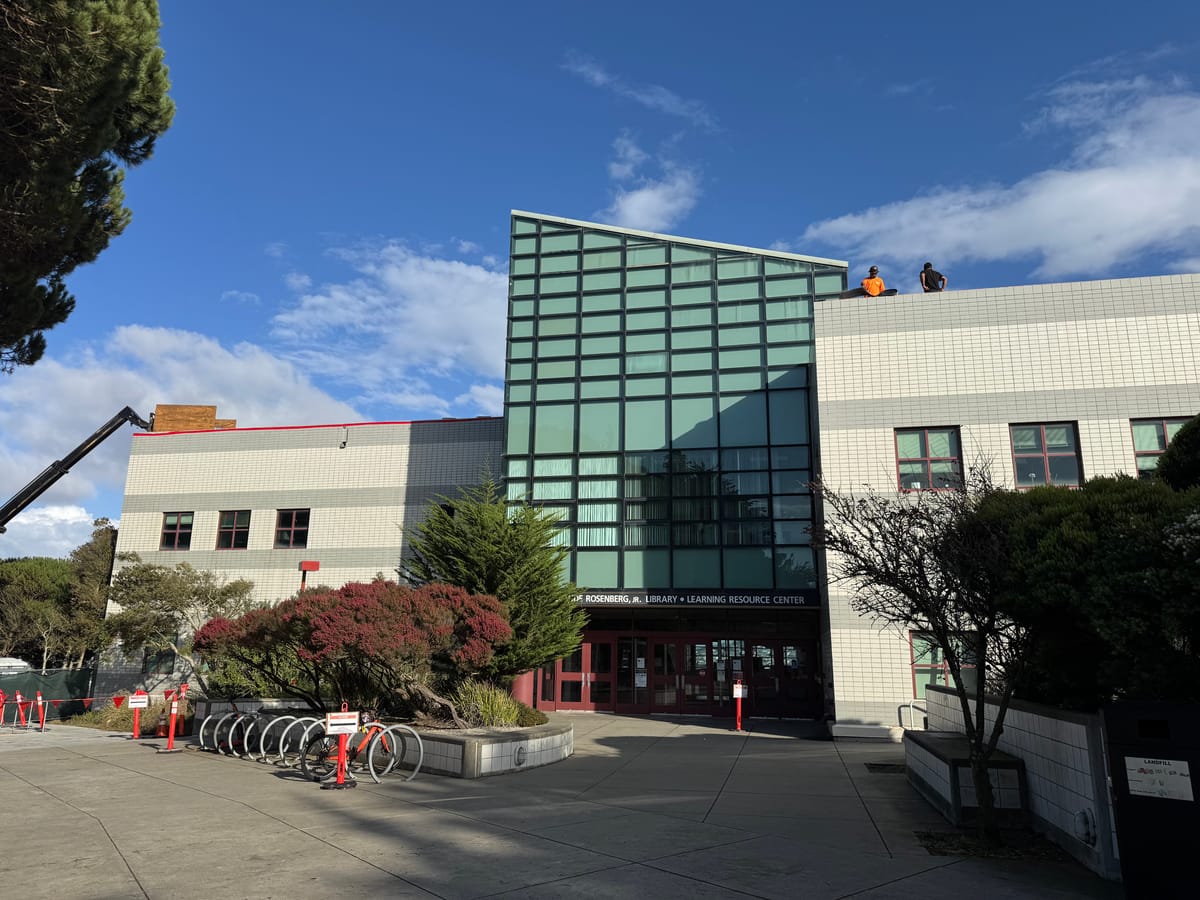
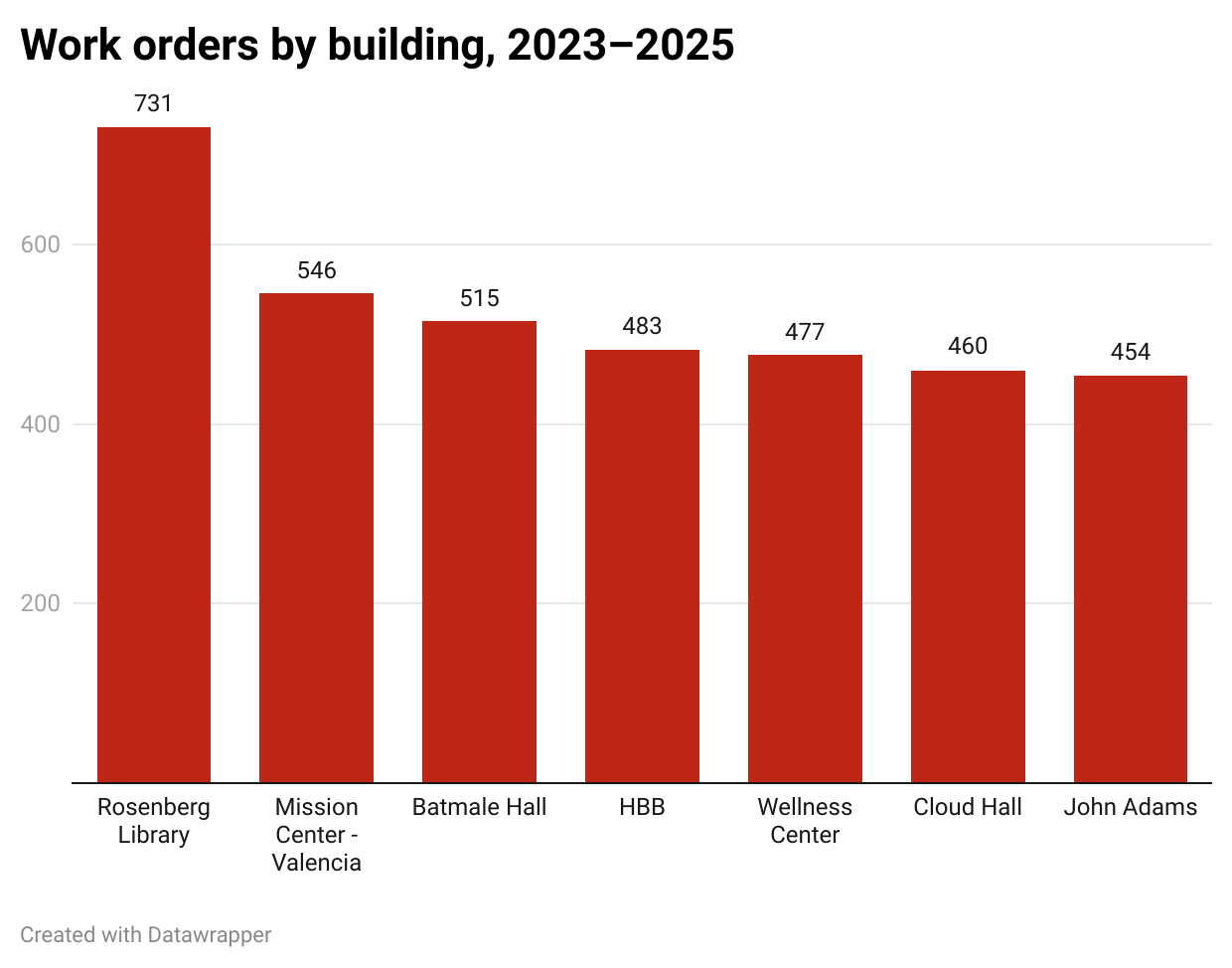
From 2023 to 2025, City College logged over 7000 work orders across 52 buildings. Ocean Campus’ Rosenberg Library, which celebrated its 30th year this month, accounted for roughly 10% of all requests, significantly more than any other site. Other problem buildings included Valencia at Mission Campus, Batmale Hall, the Harry Britt Building, and the Wellness Center.
Rodents appear throughout the records. In Batmale Hall, staff reported droppings “from one end of the desk to the other.” Another request, also in Batmale, described an office “littered with rodent feces and urine.”
In the Smith Hall dining area, rats were reportedly “pushing down the ceiling tiles” and spotted “running through the main kitchen.” At the Wellness Center, a faculty member described mice emerging from the rafters during classes and gym games, accompanied by an ant problem on the bottom floor.
Water intrusion and structural hazards were also common. One office in the brand-new Student Success Center reported “dust and water damage in the ceiling,” causing respiratory irritation. Another request from Conlan Hall described water dripping onto their desk, chair, and body during particularly foggy mornings or rainy days, noting that “these are not appropriate working conditions.”
Glass was reportedly falling from one of the greenhouses over at the Horticulture Center.
Several work orders describe long-term accessibility failures. In Smith Hall, the automatic door openers were removed when the exterior doors were replaced, preventing wheelchair users from easily entering the cafeteria. Another access button outside Batmale Hall’s 4th-floor entrance “has not been working for more than 5 years.”
In the Student Union, staff reported an elevator that opened below the floor level and described it as “a tripping hazard.” Another department in Cloud Hall noted that an elevator outage made their academic department and sexual violence prevention services inaccessible to some students.
At the Dec. 4 Participatory Governance Council meeting, Associate Vice Chancellor for Facilities/Buildings and Grounds Alberto Vasquez explained that the accessible automatic door systems frequently break down. “We have done some repairs to the operable system, the push button, but as soon as we get it repaired, it goes down,” he said. “It doesn't function very well over time. It's got a short lifespan.”
Records also show overall patterns in how long these requests typically take to be fulfilled and which buildings wait the longest. The average completion time across all requests was 31 days, though some buildings experienced more prolonged delays. The Downtown Center had an average wait of 52 days, and the Visual Arts building averaged 47 days.
As of early November, when the records request was fulfilled, over 2,000 work orders remained outstanding, including requests filed in early 2023. The longest completed repair in the dataset took 806 days and involved replacing the ballasts for four fluorescent lights in Science Hall’s Electronic Lab.
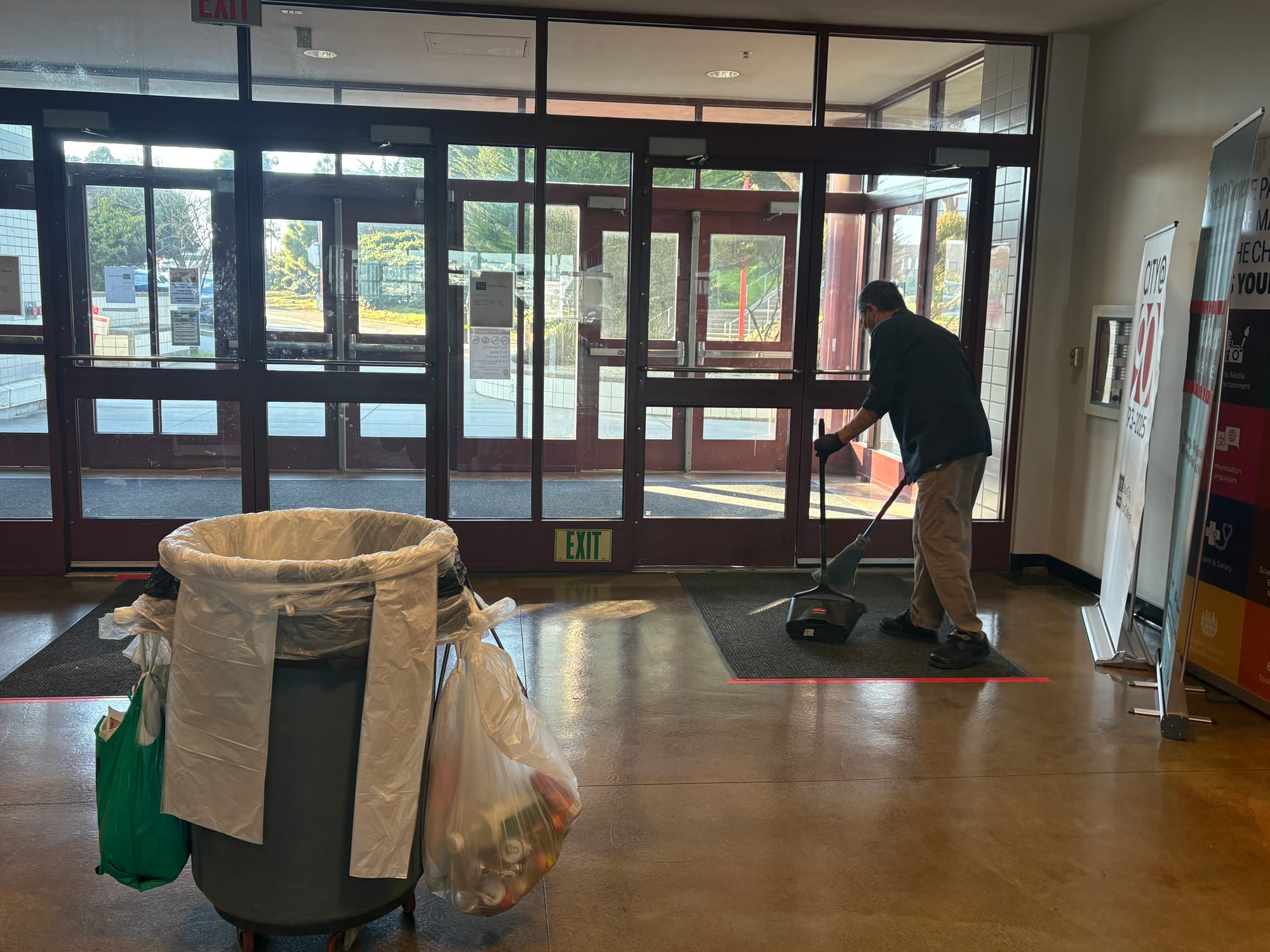
Custodial staffing problems are evident. Room 215 in the Mission Center had “not been cleaned in over a month.” At Rosenberg Library, a work order filed in October reported that the second-floor women’s restroom had been without soap since March and that the hand dryer was moldy.
An administrator at the Evans Center described cockroach activity tied to compost and recycling that had not been picked up. “Our zero-waste stations are full of gnats and mold,” the requester wrote. “One designated worker once a week is not enough.”
According to a City College organizational chart presented at the Nov. 6 Board of Trustees meeting, the Buildings and Grounds departments had 21 vacant positions.
A month later, at the PGC meeting, Vasquez said hiring was underway across several roles. “We’ve been interviewing custodians this week,” he said. He added that they are “looking to hire two engineers to come on board in January, and also two plumbers.”
On Dec. 10, the district posted a job opening for Director of Buildings and Grounds, following a failed hiring attempt earlier this year.