The Science behind the Science Hall Mosaics
The skillfully made mosaics became historical landmarks at City College, embodying the intersection of the arts and sciences in well polished marble stones.
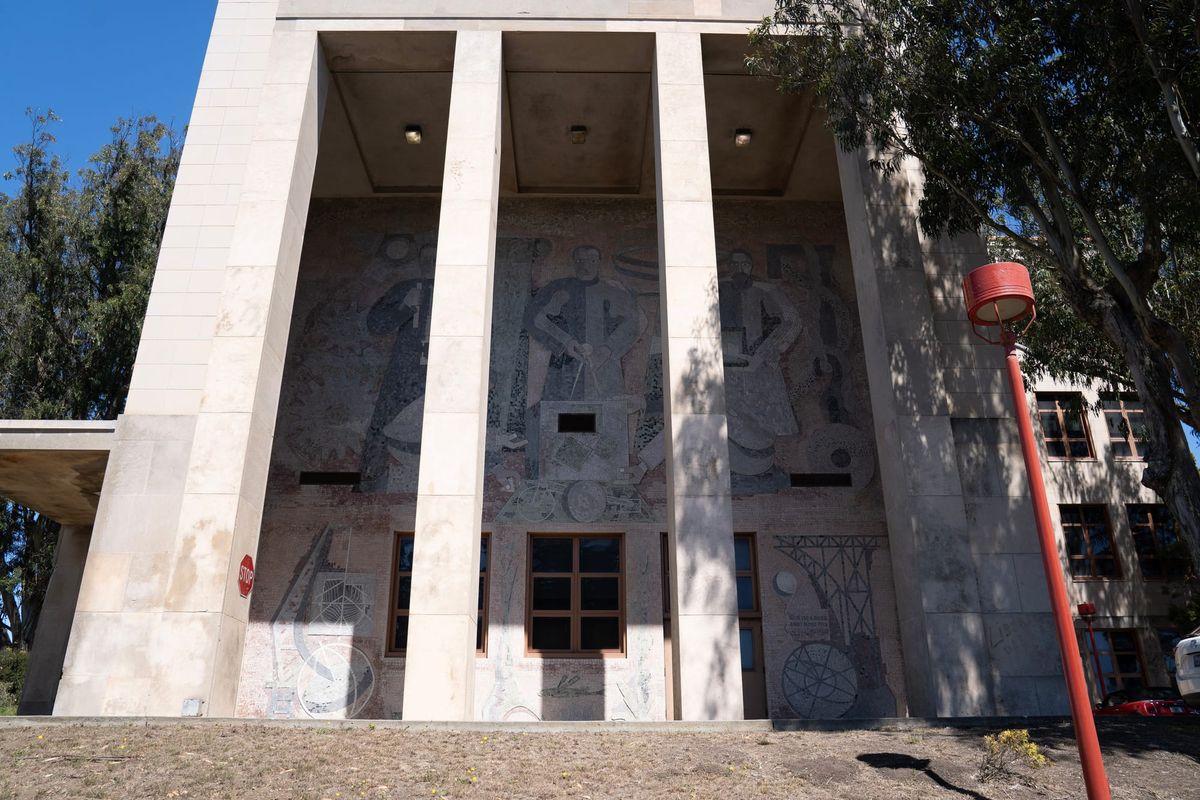
Two vast mosaics whose shadows cover most of the walls of Science Hall Building at Ocean Campus, can often be overlooked, but they have been standing there, right behind imposing pillars, for almost 80 years.
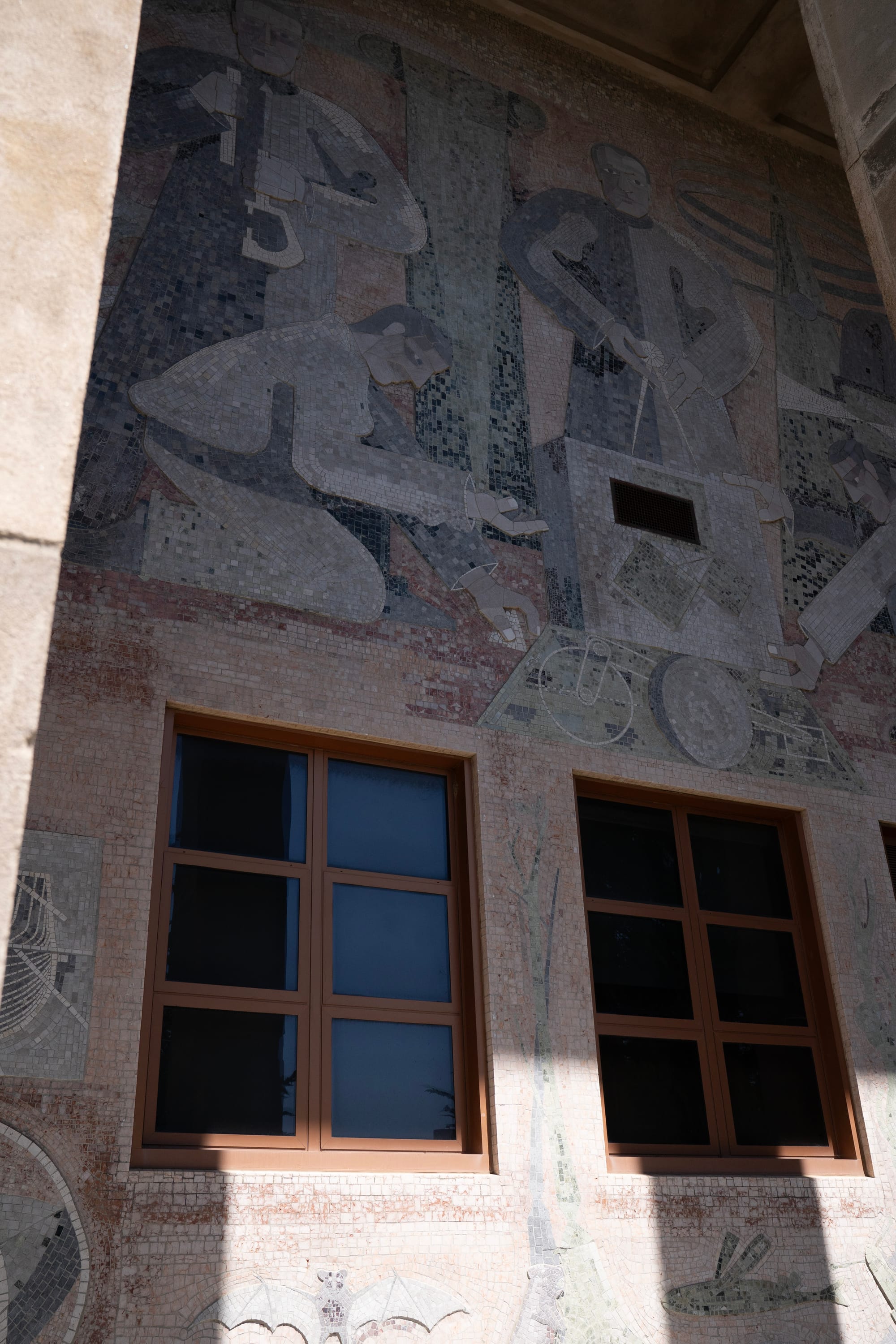
The marble mosaic named “Organic and Inorganic Science" were created between 1940 and 1942 by the Swiss artist Herman Volz and cover the entire north and south external facades of the building.
The north side shows “Man the Geometer” on the bottom left, Charles Darwin in the middle holding a skull, and the 17th century English physician William Harvey on the right.
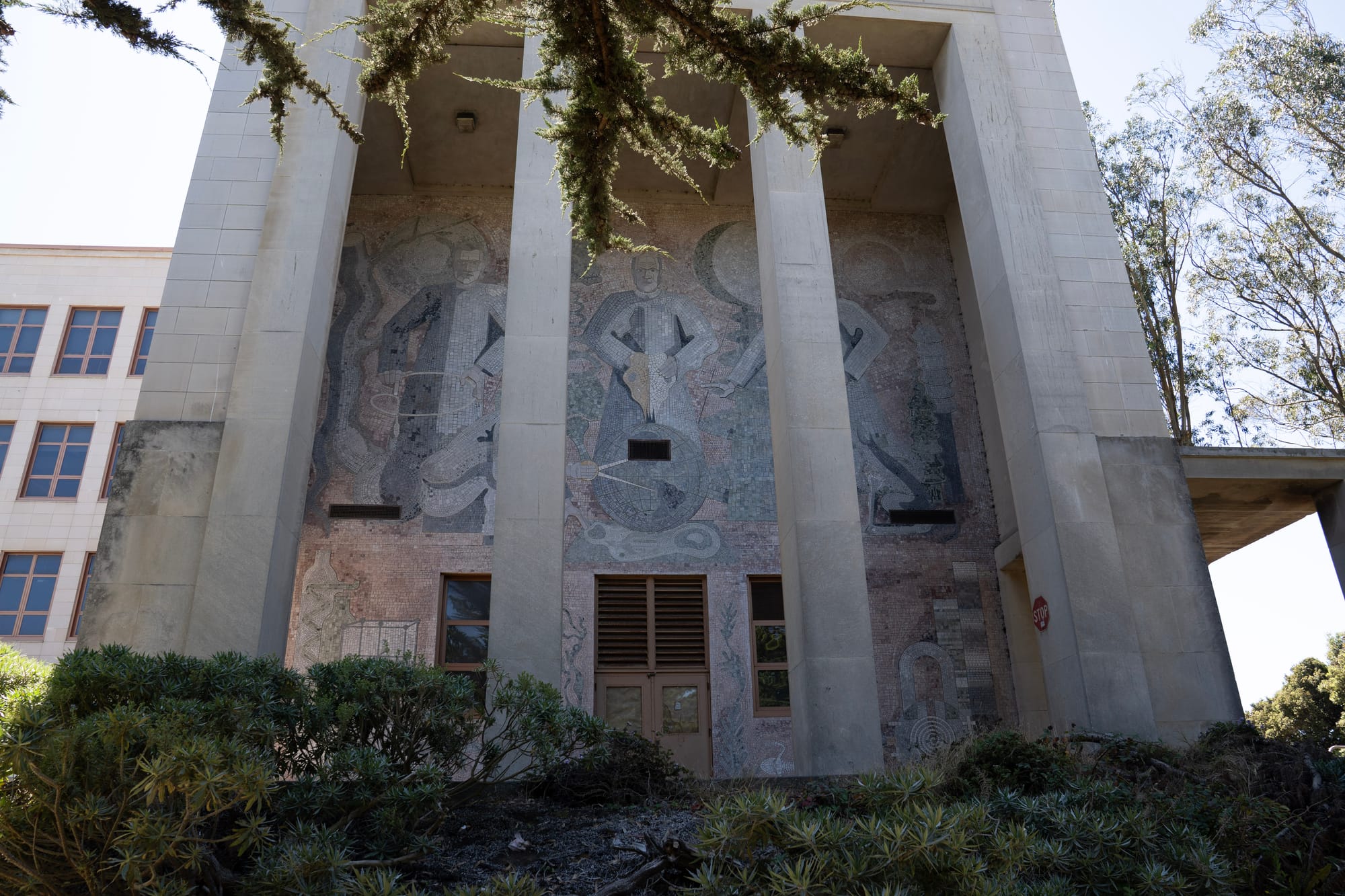
Harvey discovered the full circulation of the blood, through his first experiments with dogs in 1628. Volz decided to pay tribute to those dogs by including a puppy around Harvey’s legs.
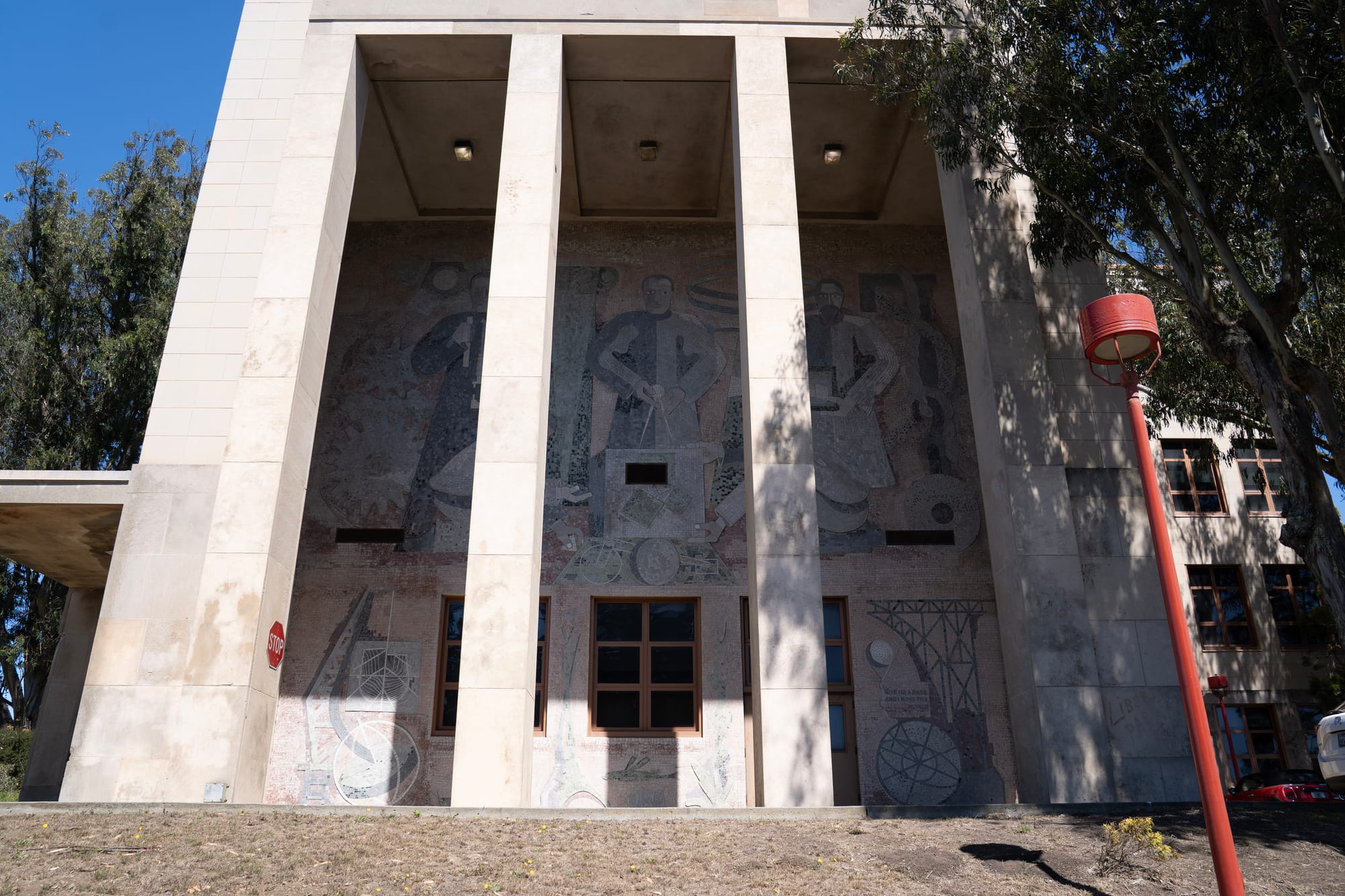
On the south side, three men embody the creators of the inorganic sciences; the discovery and development of knowledge external to human bodies that help advance civilization, such as construction, aeronautics and communication, including radio and TV. Two men on their knees are moving a box on a wheel.
The mosaics began as part of the Art in Action program at the Golden Gate International Exposition (GGIE), created by the Bay Area architect Timothy Pflueger.
Barbara Lass, City College anthropology instructor and chair of the Works of Art Committee, shared that Pflueger was very active in organizing art and action events during the GGIE fair in 1939.
“That’s when he discovered the work of Volz, who was a well known artist and started those [mosaics] at that fair,” Lass added.
It took two years to finish the mosaics, and at the time, there was no extra money. Some of the money came from the San Francisco Board of Education and from a federal government project called the Works Progress Administration (WPA) — established under President Franklin D. Roosevelt’s administration during the Great Depression.
According to William Maynez, member specialist of the City College Diego Rivera Project, much of the mosaic's layout and construction was done at the Pickle Factory, a former pickle factory at Chestnut Street and Columbus Avenue in North Beach, that was used for most of the WPA projects.
The mosaics got significant maintenance in 2005, when they were cleaned and the stones were polished.
“The good thing is that it is stone, and stone is pretty durable, but it can get dirty and dull. It’s not really fragile, but when it’s cured, it requires special care,” Lass said.
A restoration will not be cheap, and City College doesn't currently have any funding in place for such a restoration.
Hidden in Plain Sight
Both mosaics use a rustic, dusty palette that matches the building's color, and the drawings' shapes evoke the magnificence of the 20th century Mexican Muralism movement, led by Diego Rivera, Clemente Orozco and David Alfaro Siqueiros.
If someone stops to contemplate each detail, they can feel the movement unfolding like marble waves. However, for many students, the mosaics go unnoticed — they remain hidden, surrounded by parking lots, trees and concrete sidewalks.
“Since the beginning, the pillars were there, which means it — the [mosaics] — wasn't meant to be out in your face. But now there are other buildings, so it's not quite as impressive,” Lass said.
After completing the mosaics, Volz became fairly well known in Hollywood, designing sets for both MGM and Paramount, also working as a scenic artist and technical director for the Actors Laboratory theater.
City College is part of the history of San Francisco, and the art that people can find on Ocean Campus is unique, a privilege, and according to Lass, not a lot of other community colleges have this.