Photographer Returns to City College for a Retrospective of Her 50-Year Career
Judi Iranyi started her photography career at City College in the 1970s. Her life’s retrospective walks us down memory lane.

(Note: The exhibition will be open until Oct. 13, in Room 160 of the Visual Arts building on Ocean Campus.)
A retrospective of City College alum Judi Iranyi’s photography work, currently on display at Ocean Campus’s Gallery Obscura, invites viewers into the artist’s most personal memories.
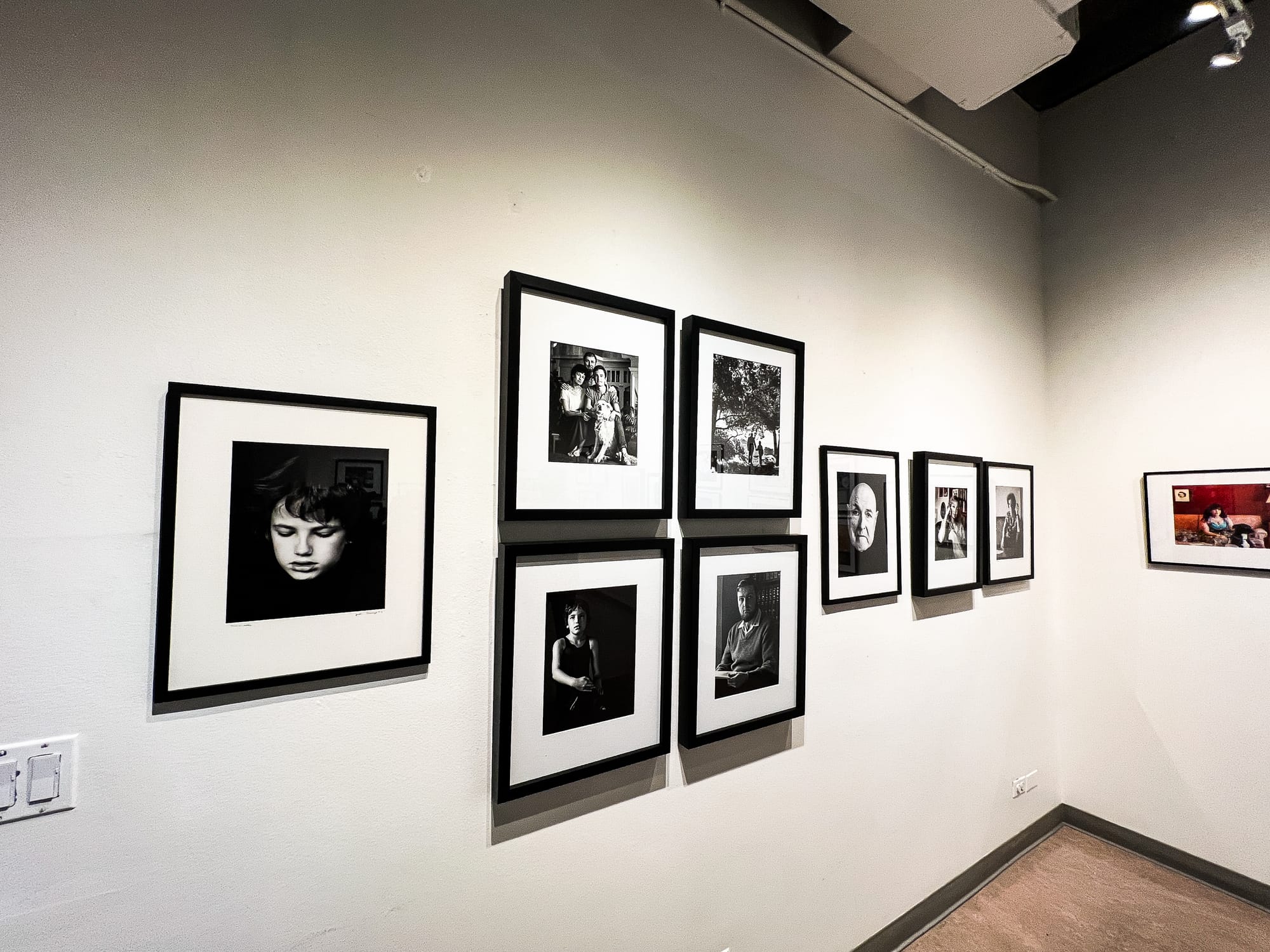
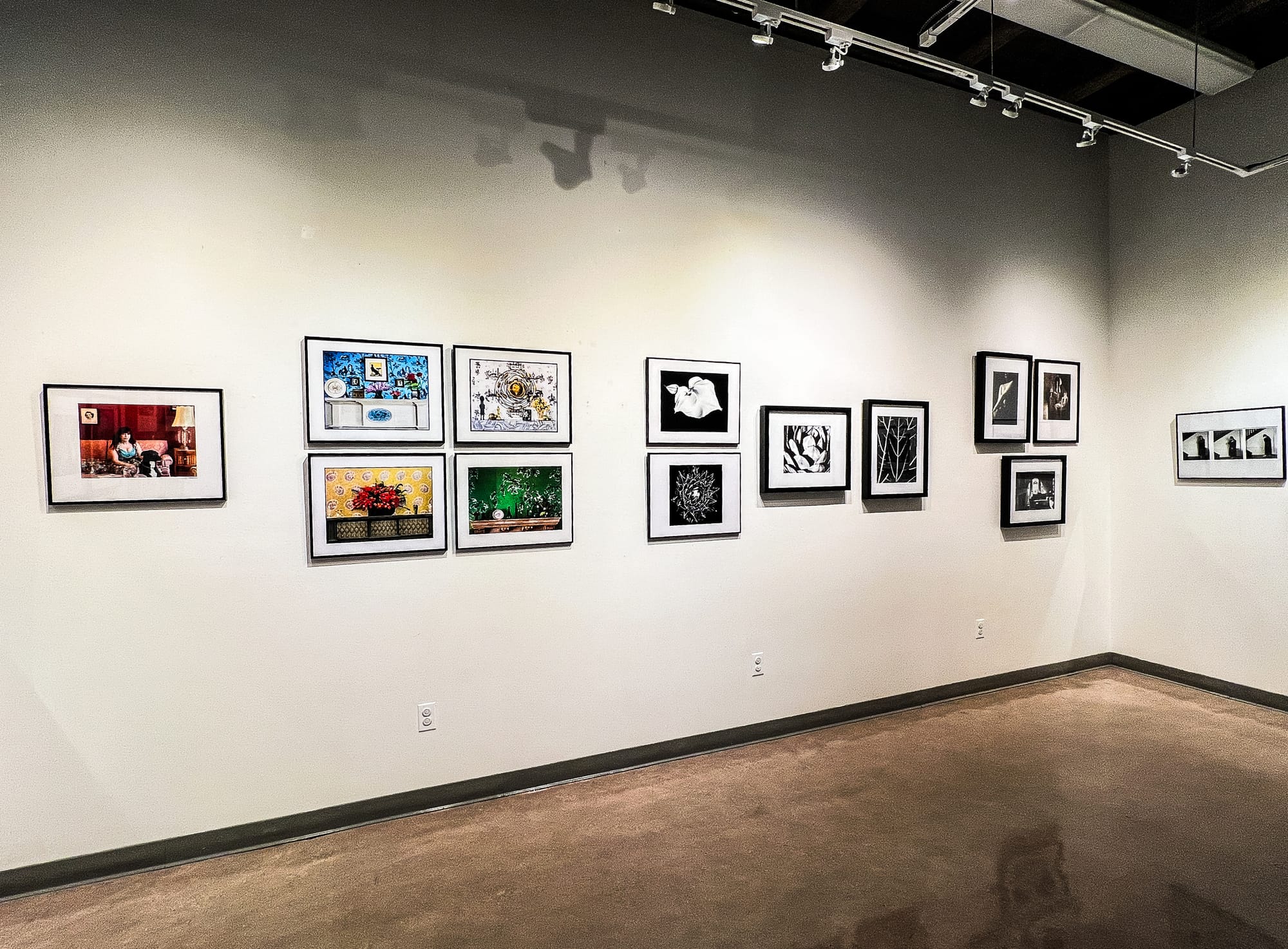
Walk into the gallery, a small room in the Visual Arts building, and you’ll see clusters of photographs along three walls. Each cluster gives a preview of Iranyi’s wide range of work.
The exhibit opens with family photos portraying a quiet, joyful life, resembling an album you might find in the attic of your family home.
Black-and-white Memories
The first photo in the collection is a black-and-white portrait of a young version of her son, Michael. The photo is a close up of his face, suspended in darkness.
Michael died of AIDS in 1984, when he was 19 years old, and his death has significantly impacted Iranyi’s life and work. Her project, “Remembering Michael,” from which these photos were pulled, is a tribute to his life.
This section of the exhibit also features a portrait of her husband of 60 years, Ralph E. Stone, who died in 2024. Similar to Michael, Ralph’s face floats in darkness, evoking a sense of ghostliness.
Next to these photos are some of Iranyi’s more avant-garde works, featuring loud colors and floral patterns. The exhibit then moves into her botanical work — black-and-white detail shots of various flora.
“As a black-and-white photographer, I always love looking at other people’s work,” said Jeff Murray, a third-year photography student. “I like to do portraits. I really enjoyed [the portraits] in [Iranyi’s] work, because it leaned towards a more documentary style of work.”
Self-portraits and Memory
The exhibit closes with Iranyi’s most recent work: self-portraits. These works are different from anything she’s done before. They are Iranyi’s first foray into self-portraiture. They are also edited with Adobe Photoshop.
“I didn't start doing [self-portraits] til COVID,” Iranyi said. “You know, you're stuck at home and you can't go out … I hated having my picture taken. But all of a sudden I decided, well, I'm available.”
These images have a haunting quality to them. In one, Iranyi’s face is transposed onto an abnormally tall figure, shrouded in black. The figure is floating in a cemetery, surrounded by Iranyi’s cats. In another, she appears to be standing in an abandoned house, screaming as a blurred entity whizzes by her.
While these photos are much darker than her family portraits on the opposing wall, they both represent the spectre of memory. One, the memory of her loved ones, the other, the future memory of her aging self.
“Memory is very complex,” she says in her artist’s statement for the exhibit. “Looking at old photos of myself I became flooded with memories of the time the photos were taken. I wonder if I can trust my memories, did I imagine them, did I remember because I heard someone in my family talking about it?”
Iranyi succeeds in creating this sensation for the viewer — looking at her self portraits, it’s difficult to determine what in the image is real and what is altered.
Genesis
Iranyi was born in Hungary in 1943, and emigrated with her family to Venezuela after World War II. She came to San Francisco in 1971, and attended City College to change careers. She had previously been working as an accountant.
Her memories of City College are joyful. “It was a more innocent, happier time, simple,” she said. “The camaraderie among students was very good. The department was three times the size it is now. And there weren't enough lockers, so you had locker partners. And my locker partner to this day is still a friend of mine.”
In 1989, after her son died, Iranyi got a Master of Social Work (MSW) from San Francisco State University and spent many years helping others as a licensed clinical social worker.
She returned to photography after her retirement, around 2012. It was at this time that she met Sarah Christianson, a photographer and teacher in City College’s photography department.
“Everything I know about digital, I learned from her,” Iranyi said. “She is an incredible teacher.”
Christianson is the lead curator at Gallery Obscura, and the two worked closely to curate this exhibit.
“I felt it was important that students see the breadth and depth of [her] photographic life,” Christianson said. “I want others to understand that [she] has never stopped creating and experimenting and trying new things.”
The Gallery Obscura is the Photography Department’s exhibition space, dedicated to showing student work. The gallery currently puts on roughly two exhibitions per semester, and tries to exhibit one alum per year, according to department Chair Erika Gentry.
“It’s good to see where people ended up,” Gentry said. “Especially if they’ve been part of the community for a long time, we want to honor them.”
Iranyi is still working on projects — making collages from digital composites, gathering photos of her husband for a series, and creating a book of photos from her childhood in Venezuela.