Rams Fail to Hold the Line Against Siskiyous Eagles, Losing 17-7
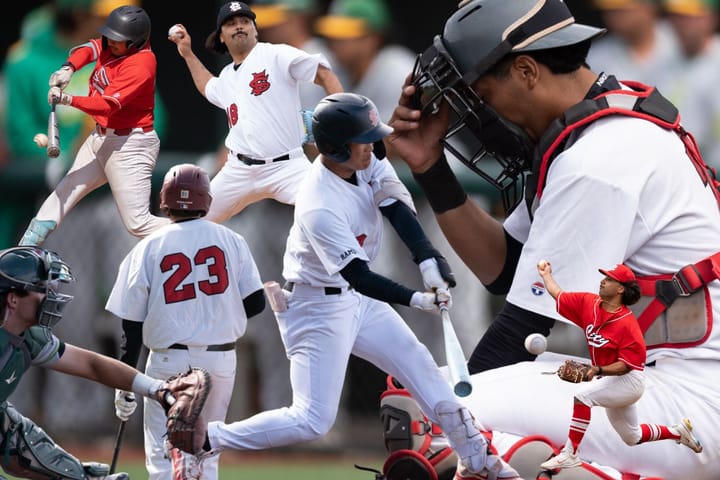
City Ballclub left in the dust by the College of Siskiyous.
By Tom Whitehead
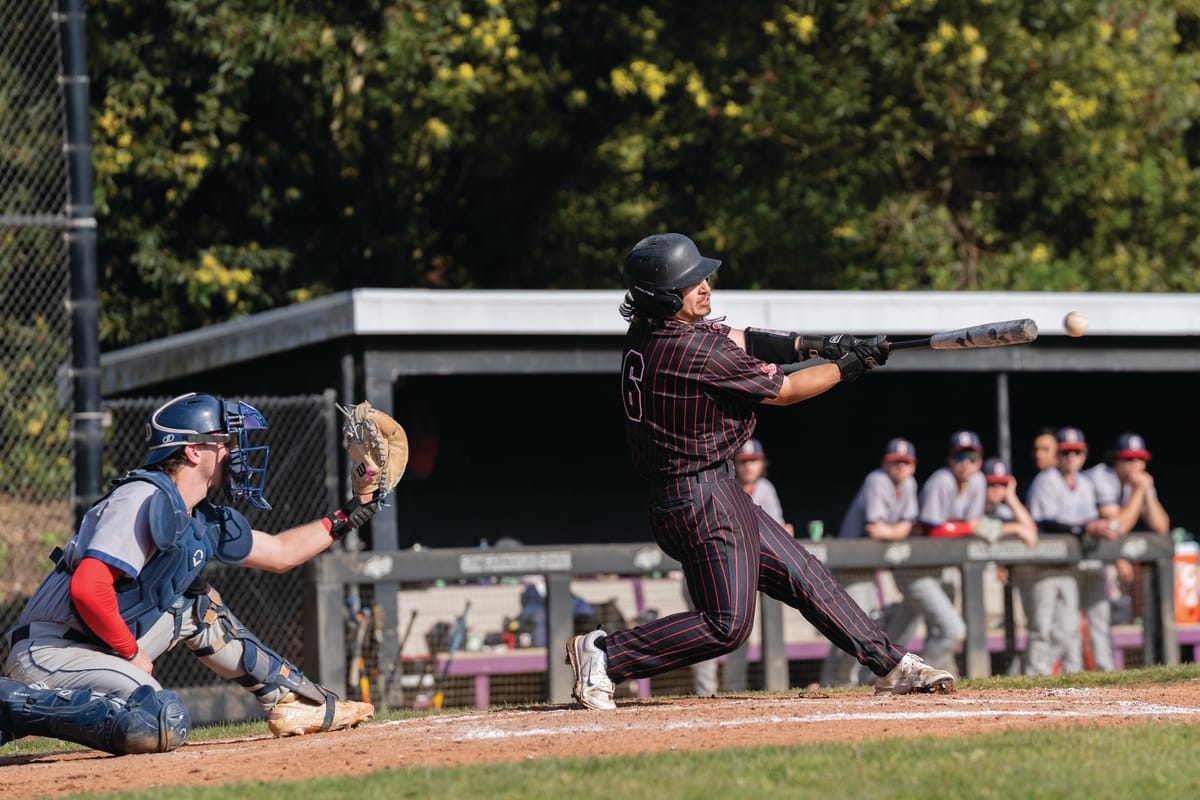
It was one of those rare, sunny, springlike days that make San Franciscans love January, and the ten fans on the bleachers at Maloney Field weren’t regretting their decision to come out to see the game.
Then something happened at the top of the seventh inning in the Rams’ second at-home game of the season, as the Rams took the field just one run behind the Siskiyou Eagles. It wasn’t any one thing, but the Rams’ defense came apart just long enough, and suddenly the Eagles had scored six runs before the Rams regained their composure. Something similar had happened in the previous day’s game against Napa.
The Rams should have had the home-field advantage, of course, “home field” hardly describes a place that you never get to practice on. The Rams’ practice field, Fairmont Field in Pacifica, has an all-turf playing surface, while they play their games at SF State’s Maloney Field, a natural grass field that has affectionately (or unaffectionally, depending on who you ask) been known as “The Swamp," and not just for the Gator connection.
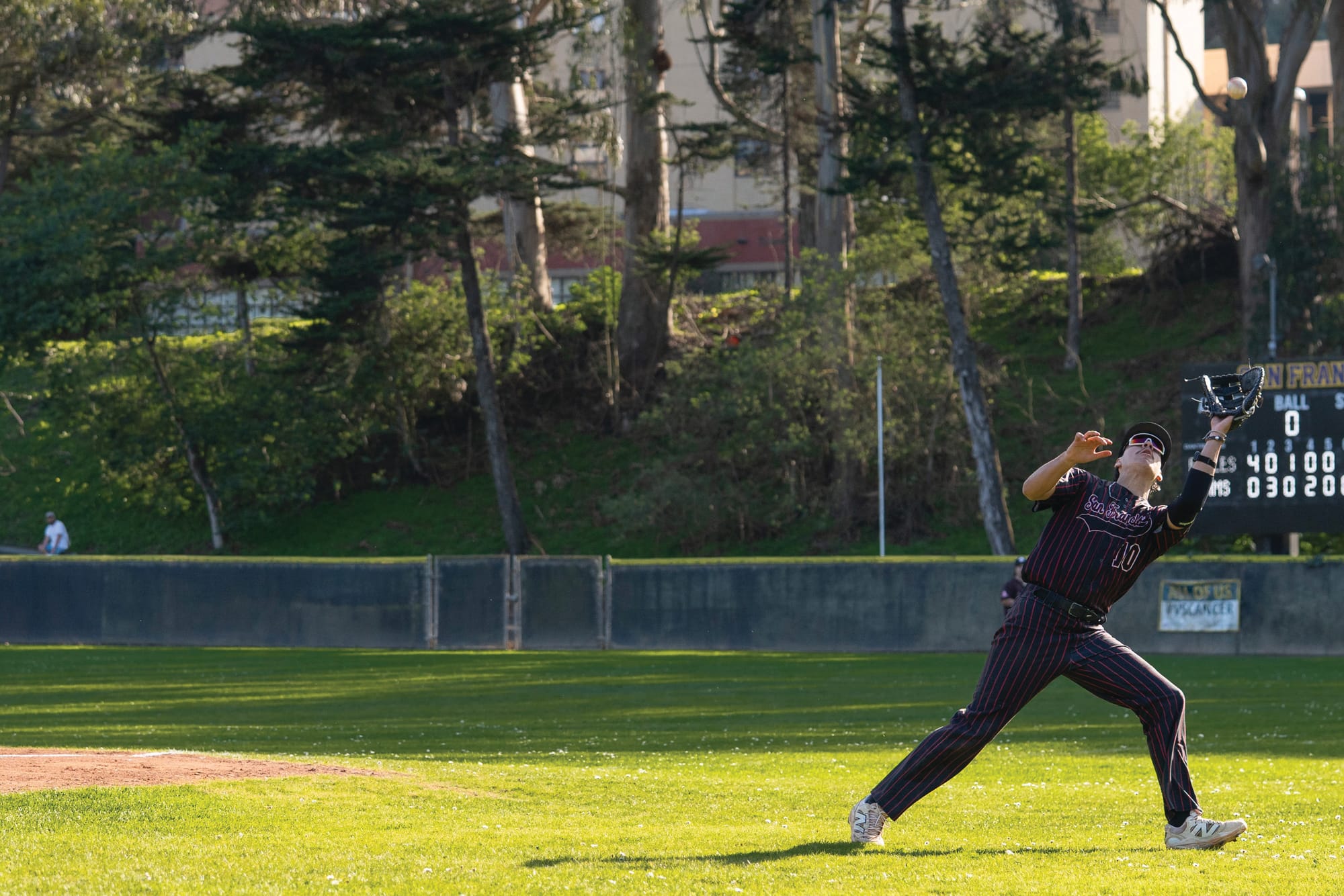
“It’s never fun losing,” said Assistant Coach Drew Healy after the game, which ended with the Eagles 17 to the Rams’ 7. Healy has spent two seasons with the Rams while running his own youth sports program, US Prime Peninsula. “We had a lot of opportunities. They got in some timely hitting. We made a couple of mistakes. But we’ve got good camaraderie here,” said Healy, focusing on the bright side.
And indeed, despite the loss, the Rams’ morale is high. Myles McCabe, the left-handed pitcher/right-handed hitter who is playing his first season for the Rams, spent nine weeks recovering from a labrum tear in his pitching arm, the same injury that cut short the 2024 season of Giants outfielder Jung Hoo Lee, and was upbeat.
“I’m very happy," said McCabe after the game in which he played center field. “We have talent here. I’m just going to enjoy the season and enjoy playing,” he said, and added, “The field is refreshing, with actual walls.”
Kaden Healy, the team’s captain and catcher, is one of the few veterans on the team. He is focusing on the future. “This field is faster, with lots of room,” he said, comparing Maloney Field to Fairmont Field. “We need to learn how to play on our own field.”
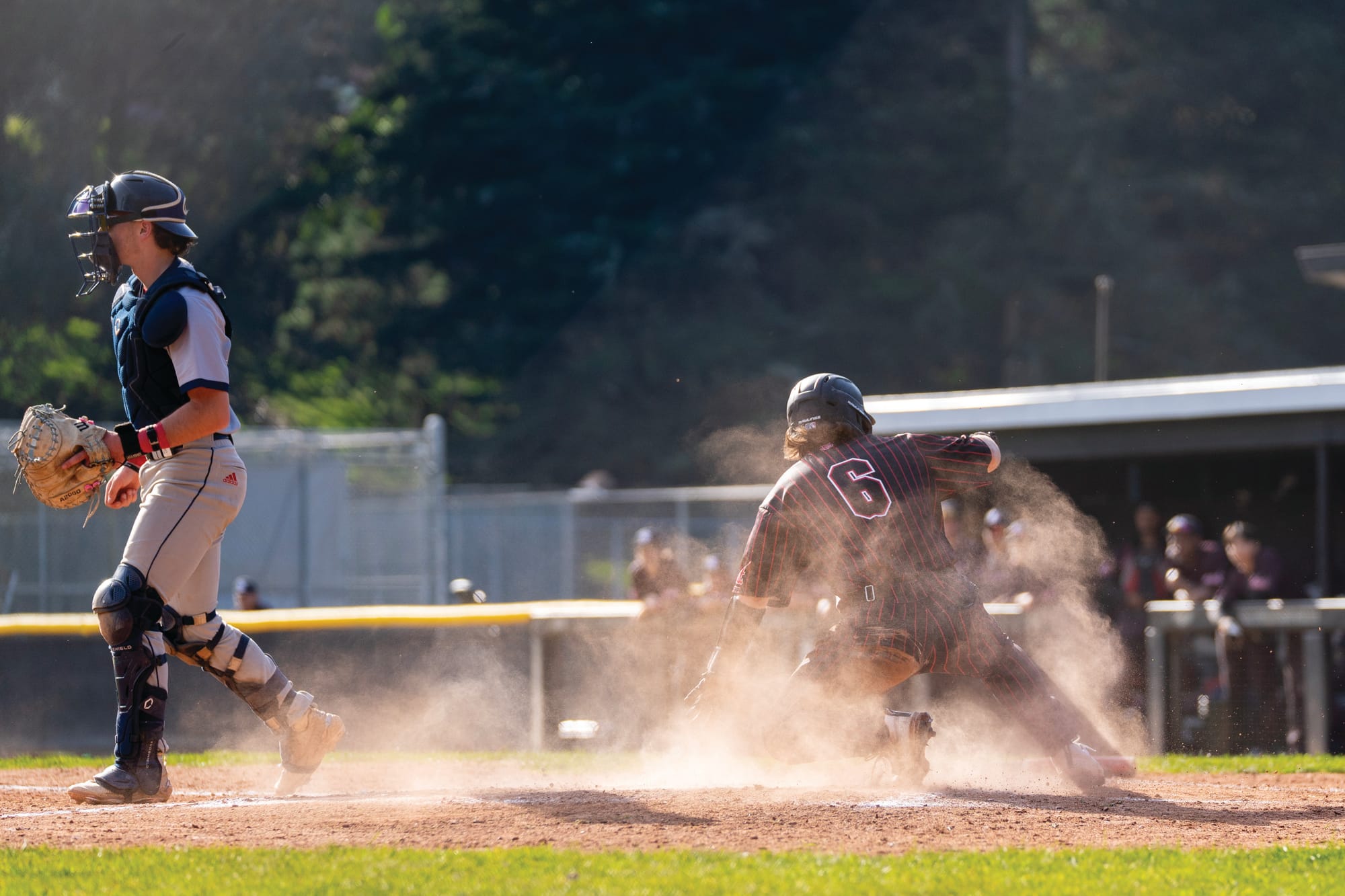
“I have more hope this year,” he said. Asked what he sees as the places to focus, he said, “We need to figure out how to play together. Attacking the strike zone. Our pitchers are giving us a chance. We need to work on situational hitting and defense.”
The coaching staff has its work cut out for it. There’s no clubhouse at the field. No bullpens. The SFSU field is an improvement, but far from ideal. It takes about two hours on each end of a home game to mobilize equipment and personnel and groom the infield. The players have to find their own transportation to the game and practices. It’s harder to recruit players when you don’t have the facilities.
Coach Mendoza noted, “Right now, we’re a little short-handed. A couple of pitchers are coming off injuries.” Making no excuses, he said, “We competed for seven innings. We need to learn to play nine innings.”
Still, he sees a few pluses. “This is the first season where we have 18 games on our home field.” Then he added, “It’s hard to get guys to come to City when they have other options,” he said, “but I tell them - they’ll have an instant chance to play.” That’s what this team wants most.