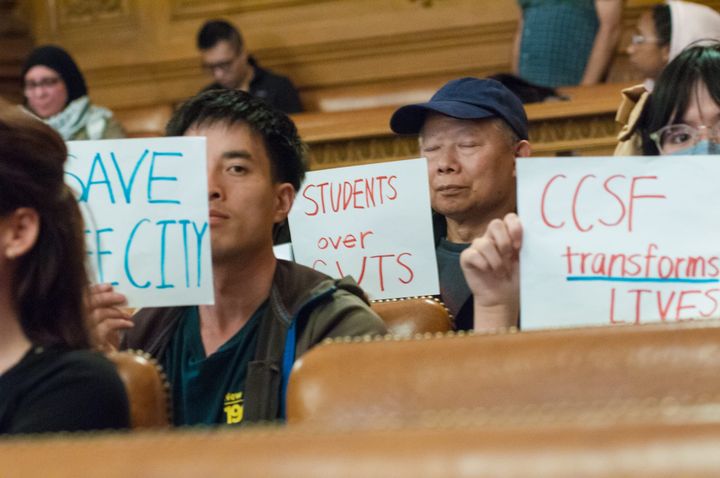
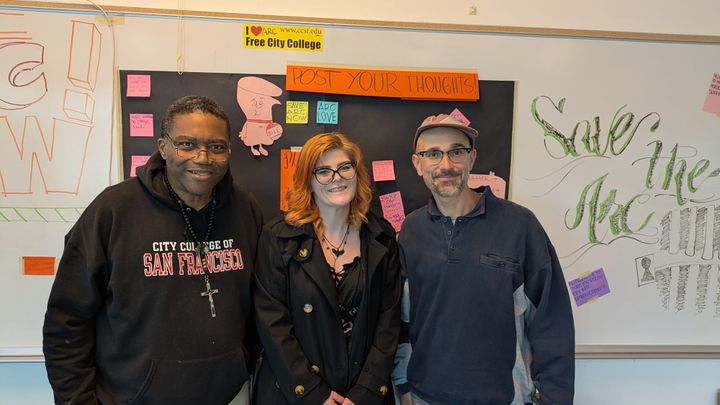
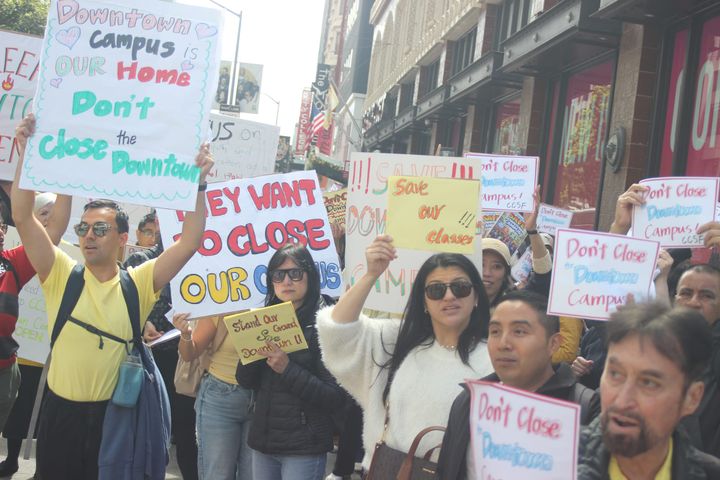
CCSF's Former PR Rep Connie Chan, Now a House Rep. Hopeful
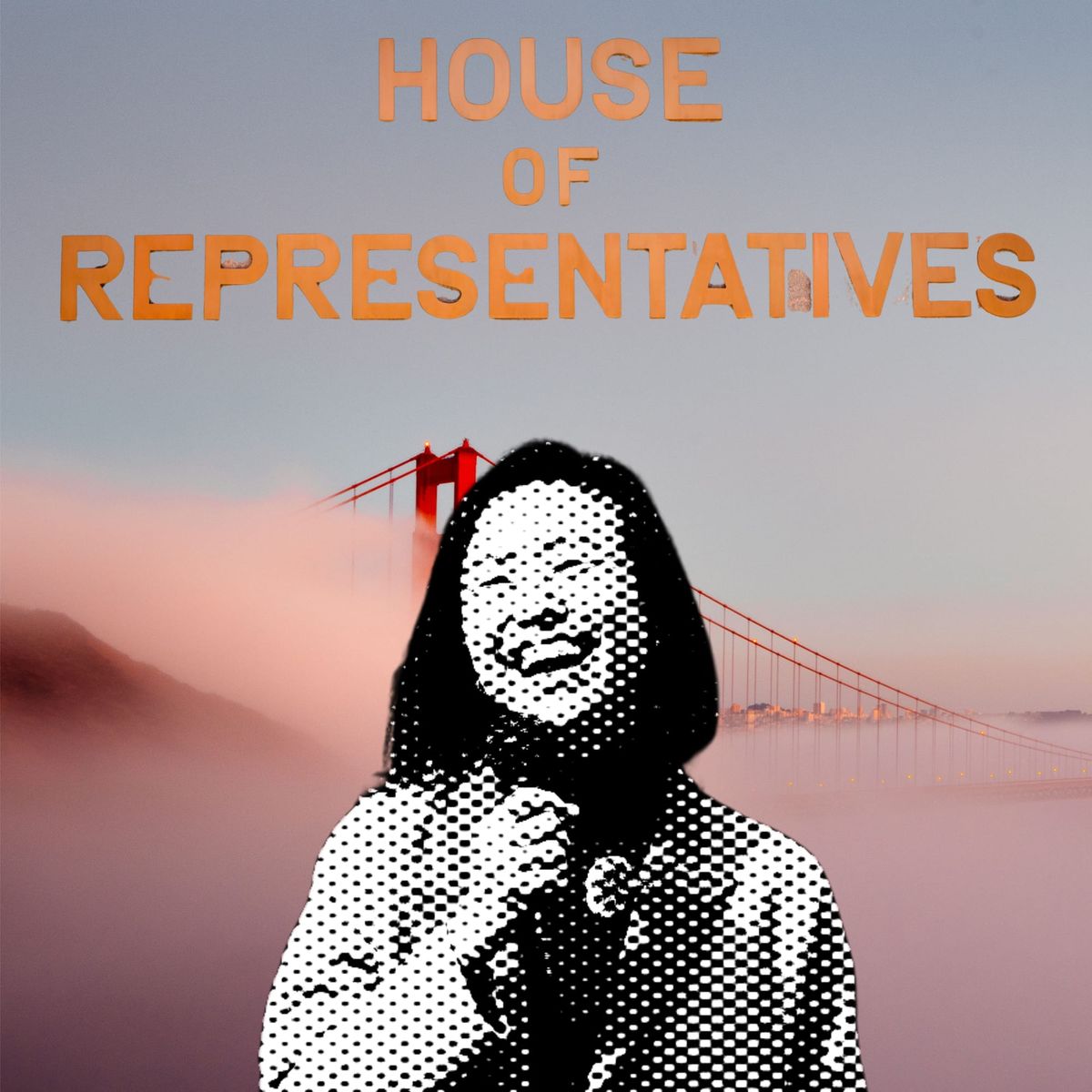
Twenty-termer and Speaker Emerita of the House Rep. Nancy Pelosi (CA-San Francisco) said she will retire from congress, putting her post up on the ballot for the first time in forty years. Rep. Pelosi chose San Francisco District 1 Supervisor Connie Chan, former "speaker of the college" once working for City College as a public relations representative, as her successor.
Chan and Sen. Scott Wiener advanced from the June 2 top-two primary for California’s 11th Congressional District. Sen. Wiener had been running "a shadow campaign" long before Rep. Pelosi announced her retirement.
As Chan aims for the U.S. capitol, her campaign on issues that directly affect City College students drawn from her own family's experience as immigrants in San Francisco.
Over three decades after arriving in Chinatown, Chan became a homeowner in the Richmond District. Now, she says she wants to preserve a path to economic stability for future generations of the city.
As a member of the Free City College Oversight Committee and former member of IFPTE Local 21, a union of the professional and engineering sector, Chan said she would continue advocating for workers and students alike.
Advocacy includes changes to Free City that "account for the rising cost of living."
"It’s amazing to think that, in 2026, there’s still [the possibility of] a single immigrant mom who can come to San Francisco and receive that opportunity," Chan, chair of the committee that oversees the allocation of funding to the program, said that Free City "embodies who we are as a city."
The program, signed by the former Mayor London Breed during her administration in 2019, is funded through a memorandum of understanding, MOU, with the college.
The MOU pledged roughly $15 million a year through 2029 and has been cut in pieces since.
The Mayor’s Office released the signed city budget, set for $9.3 in the FY 2025-26 budget, and allocated $6.48 million to the City College Enrollment Fund as a Department of CHF Children, Youth, and Their Families program in July for FY 2026-27 and $6.85 for FY 2027-28.
During her visit to the college in the spring, where she was honored by the Board of Trustees, Rep. Pelosi spoke in front of the trustees in her support of "keeping" City College.
"We must, must, must keep City College," Rep. Pelosi told the trustees and audience inside a packed room 140 at Harry Britt Building, a building named after one of her thirteen opponents during the first-round primary election that launched her congressional career.
To beneficiaries of Free City, though, Chan said she "will continue to make sure" that she "ushers through amending the MOU to have the best interest of students."
Students like her mother, who "thrived in San Francisco" after given the opportunity to "better her and her children’s lives."
Chan said her mother took computer and English-as-a-second-language classes at City College's formerly rented Chinatown center on Filbert Street, which she credits as a "stepping stone" to a career in healthcare. Chinatown/North Beach campus moved to its Kearny Street location in 2012.
Her mother used her first paycheck from Chinese Hospital to rent a single-room occupancy unit nearby for less than $500 a month.
SROs, which typically provide small individual units with shared facilities, were once a major source of plow-cost housing in San Francisco and other U.S. cities.
As of 2024, the city had more than 500 SRO buildings containing more than 19,000 residential rooms, according to a San Francisco Youth Commission report. About 432 families with children still live in SROs citywide, 350 of them in Chinatown alone. According to a Mayor's Office announcement in June 2024, roughly "270 Chinatown families transitioned" into "stable housing."
For Chan, the experience of families whose incomes have not kept pace with housing costs shows that the problem "doesn’t lie solely on the lack of housing but the lack of affordable housing."
Chan said "building luxury condos in Rincon Hill" will not solve the housing crisis “when families can’t afford it.”
"We see rent rise but wages remain the same," Chan said.
She said it is increasingly difficult to live in San Francisco on one income, particularly for a single-income head of household like her mother once was.
Chan said that it will be "highly unlikely that [residents in rent controlled units] will find another [unit, rent controlled or not,] similar in size [with] similar rent.
"That’s not possible," Chan said. "Not at all."
Defining "The City"
"Sanctuary city is beyond a legal definition," Chan said.
San Francisco's sanctuary status traces to the 1989 "City and County of Refuge" ordinance, which generally prohibits city employees from using municipal funds or resources to help federal immigration authorities enforce immigration law, according to the city's Sanctuary City Ordinance page.
The city has long been a sanctuary in different ways but sometimes it’s the community that keeps it as such.
Chan also mentioned a "long standing history of pollution and segregation, [a history] that San Francisco probably wants to bury," while also highlighting that actions created by Black activists of the neighborhood, "for clean up at the Navy shipyard and protection of the waterfront" are a "legacy" of the southeastern sector of the city that she wants to highlight.
The shipyard cleanup Chan referenced falls under federal, not city, jurisdiction, making it the kind of oversight that would move from her committee gavel to a congressional one if she wins.
Her office is in the Mission District, as "reminder of the long fought activism in San Francisco" as well as reminding her staff that activism is "still thriving and alive" in the city.
She added that South of Market and the Fillmore districts are among some areas in San Francisco that should be protected from growth that the city "simply cannot absorb in the short time expected of it."
"There needs to be more affordable housing," Chan said and that Mayor Daniel Lurie’s Family Zoning Plan "lacked protections against displacement of tenants and small businesses."
"We gotta do at least two things: one, within the zoning regulation, that we protect tenants and small businesses, and the second piece is to actually have investments. [For example,] if a small business is forced to relocate because of mixed development, [are we] providing resources to reopen in the very same space. If tenants are being evicted from a rent-controlled unit, are we able to compensate or find a capable unit."
The Family Zoning Plan concentrates new housing capacity, of about 36,000 units, in the Sunset, Richmond and Marina districts.
The plan largely skips out on areas, according to planners, that were flagged as "priority equity" areas like Chinatown, the Mission, Bayview and the Tenderloin.
Although Chan voted against the zoning plan, it passed 7‑4 in December 2025.
Proposition D, which she said "should’ve helped fix this" did not pass in the June 2026 ballot but that she "urges everyone to look into" Proposition 3 and Proposition 40.
Proposition 40 arrives on the heels of San Francisco's failed Proposition D, known as Overpaid CEO Tax, this June as part of a broader statewide push this year to tax wealthy individuals and corporations. Under Proposition 3, community colleges would receive an estimated 11% of its revenue, on top of 89% for K-12 schools.
She said "the city has to continue to be vigilant about our investment[s]."
She said sometimes the focus diverts from who to benefit to how to profit, resulting in "speculative investors" whose "backgrounds we’re unsure" about, "whether it be developers in housing to insurance in healthcare."
If she wins in November, the portfolio Chan describes at City Hall, including Free City, tenant protections, SRO preservation, all move with her to a Congress that funds community colleges and will decide whether Free City's federal counterparts survive the next round of cuts.
How to vote
The college's Visual Arts building lobby will have a polling booth open at 7 a.m. on Election Day, November 3. The last day to register to vote and receive a ballot by mail is 15 days before Election Day.
Eligible teens can pre-register through the California Secretary of State's office. For other registration cases, San Francisco's Department of Elections has its own guide. Voters who have already registered can confirm their status through the Secretary of State's lookup tool.